Introduction
Documentation in molecular diagnostics often sits between clinical consultation, test intent, sample handling, interpretation, and follow-up communication. That makes note quality important, but it also adds pressure on clinicians, pathologists, and diagnostic teams who already manage high information density. An AI medical scribe in India can help reduce manual documentation effort by turning consultation and discussion audio into structured draft notes that are easier to review, edit, and finalize. For hospitals, specialty clinics, and diagnostic centers, the goal is practical: save time on repetitive note creation, improve consistency in documentation, and support cleaner handoffs across teams.
MedScribe is designed as an AI documentation copilot for day-to-day OPD and specialty workflows. In molecular diagnostics, it can support conversations around test indication, prior reports, family history, sample-related context, result explanation, and next-step planning. Instead of replacing clinician judgment, it helps create a usable first draft with structured sections such as SOAP notes and coding suggestions for review. This makes AI medical scribe in India relevant not only for general consultations, but also for high-detail specialties where documentation quality affects downstream coordination.
Department workflow
Molecular diagnostics workflows in India can vary by setting, but many teams follow a similar pattern. A patient may arrive with a referral, prior pathology or imaging reports, and a question about test selection or interpretation. The clinician or specialist discusses symptoms, disease history, treatment context, family history, and the reason for ordering a molecular test. In some cases, the interaction includes pre-test counselling, explanation of sample requirements, or discussion of turnaround expectations.
After the conversation, the team often needs to document the encounter in a structured way: presenting concern, relevant history, assessment, test rationale, and plan. If the patient is returning with results, the note may also include interpretation, implications for treatment planning, and follow-up recommendations. This is where an AI medical scribe in India can fit naturally into the workflow by capturing the consultation, organizing the transcript, and drafting a note that reflects the clinical discussion without forcing the doctor to type everything from scratch.
For molecular diagnostics departments, the challenge is not just speed. It is also consistency across clinicians, support for multilingual interactions, and the ability to review drafts before they become part of the record. A practical AI medical scribe India healthcare workflow should therefore support human review, edits, and final sign-off rather than fully automated record creation.
Features mapped to workflow
Conversation capture and transcription: During OPD or specialist discussions, the system captures the consultation audio and converts it into text. This is useful when the encounter includes detailed history, prior test references, or counselling points that are easy to miss in manual note-taking.
Speaker diarization: In molecular diagnostics, both clinician and patient may contribute important details. Speaker diarization helps separate who said what, making the draft easier to review and reducing confusion in complex conversations.
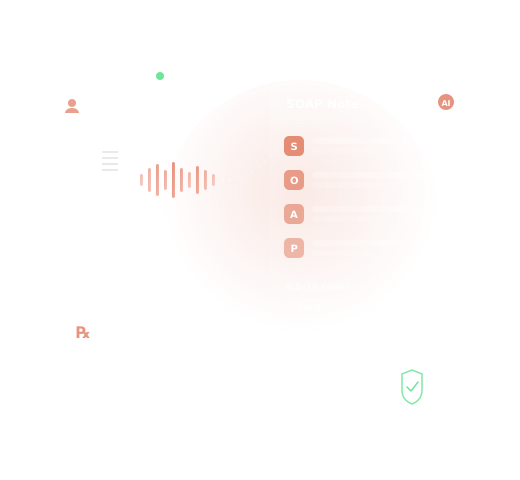
Automatic SOAP note generation: The transcript is structured into a draft SOAP note so clinicians can quickly review subjective history, objective context, assessment, and plan. This is especially helpful when test rationale and follow-up planning need to be documented clearly.
ICD-10 and CPT suggestions: Coding support can help teams prepare cleaner documentation for downstream administrative workflows. Suggestions remain reviewable and should be validated by the clinician or coding team before final use.
Multilingual support: Many consultations in India move between English and regional languages. Multilingual support helps preserve the flow of the encounter while still producing a structured draft note.
On-premise or private deployment options: Some hospitals and diagnostic networks prefer deployment choices that support internal governance and infrastructure preferences. These options are best viewed as workflow and data-handling decisions designed to align with institutional requirements.
How It Works
The product workflow is built around real consultation documentation rather than generic dictation. For molecular diagnostics teams, the process typically looks like this:
- Capture the consultation: The clinician starts the encounter as usual while the system records the conversation from the OPD room, specialist desk, or supported device setup. This can include test indication discussions, prior report review, counselling, and follow-up planning.
- Transcribe and structure the discussion: The audio is converted into text with speaker separation, helping distinguish patient statements from clinician explanations. The transcript is then organized into clinically relevant sections instead of remaining a raw conversation log.
- Draft the SOAP note automatically: Based on the structured transcript, the system prepares a draft SOAP note that can include history, relevant findings discussed, assessment context, and plan. In molecular diagnostics, this may cover why a test is being considered, what result is being explained, and what next steps were advised.
- Add coding support: The platform can surface ICD-10 and CPT suggestions linked to the documented encounter. These are intended as reviewable prompts, not final coding decisions, so the care team can validate relevance before use.
- Review, edit, and sign off: The clinician checks the draft, makes corrections, adds nuance where needed, and approves the final version before it is entered into the record. This human review checkpoint is essential for accuracy and workflow control.
Deployment posture can also be chosen based on operational needs. For example, a hospital group may prefer a private or on-premise setup to support internal governance, while another organization may prioritize faster rollout. In either case, the workflow remains centered on capture, draft generation, coding support, and clinician approval.
Local context
In India, molecular diagnostics services are delivered across standalone labs, multispecialty hospitals, oncology centers, fertility clinics, and tertiary care institutions. Documentation needs can differ across these settings, but common pressures remain the same: high patient volumes, mixed-language consultations, specialist coordination, and the need for clear records that support continuity of care. An AI medical scribe in India is useful when teams want to reduce repetitive typing while keeping the final note under clinician control.
For India-based healthcare organizations, practical adoption often depends on whether the tool fits existing OPD routines, supports multilingual conversations, and can be deployed in a way that aligns with internal IT preferences. That is why AI medical scribe India healthcare solutions should be evaluated not only for transcription quality, but also for review workflows, note structure, and deployment flexibility.
Use cases
Test selection consultations: Draft notes for encounters where the clinician explains why a molecular test is being ordered and what information is needed from the patient.
Result explanation visits: Capture detailed discussions around findings, interpretation, treatment relevance, and follow-up recommendations.
Genetic or family-history-heavy encounters: Support documentation when family history and prior records are discussed at length.
Multidisciplinary specialty clinics: Help standardize notes where oncology, pathology, and treating clinicians need clearer documentation handoffs.
High-volume OPD settings: Reduce time spent on repetitive note drafting while preserving clinician review and final sign-off.
FAQ
Can this be used in molecular diagnostics consultations?
Yes. It is suited to conversations involving test rationale, prior reports, counselling, result explanation, and follow-up planning, where structured notes are useful.
Does the system replace clinician review?
No. The draft note is meant to be reviewed, edited, and approved by the clinician before finalization.
Can it support multilingual consultations in India?
Yes. Multilingual support is useful for consultations that move between English and regional languages during routine care.
Does it help with coding?
It can provide ICD-10 and CPT suggestions as workflow support, but coding should still be validated by the clinician or authorized team.
CTA
If your molecular diagnostics team wants faster documentation without losing clinical oversight, explore how an AI medical scribe in India can fit into your OPD and specialty workflows. Review the core product at /medscribe, compare capabilities at /medscribe/features, and assess whether the workflow matches your consultation, review, and deployment needs.