Introduction
Mortuary Services teams handle sensitive documentation, handoffs, and record review under time pressure. An AI medical scribe in India can support this work by turning spoken discussions and dictated observations into structured draft notes that are easier to review, edit, and finalize. For hospitals and healthcare groups, the goal is not to replace professional judgment. It is to reduce repetitive typing, improve consistency in documentation, and help staff move from conversation to usable records with fewer manual steps.
MedScribe is designed as an AI documentation copilot for healthcare environments that need practical workflows. In Mortuary Services, this can include case discussions, internal coordination, documentation summaries, and clinician-led review of records connected to hospital processes. The product focuses on structured note creation, coding support, multilingual capture, and review checkpoints before final sign-off. For organizations evaluating an AI medical scribe in India, the value is in making documentation more usable for daily operations while keeping humans in control of the final record.
Department workflow
Mortuary Services documentation often involves multiple participants, careful terminology, and a need for clear chronology. Teams may capture details from clinician conversations, handover discussions, case summaries, and administrative coordination. In many settings, staff still rely on handwritten notes, fragmented dictation, or delayed data entry into hospital systems. That creates avoidable rework and can slow internal communication.
An AI medical scribe India healthcare workflow is useful when the department needs a more consistent path from spoken interaction to structured documentation. Instead of starting from a blank screen, staff and clinicians can begin with an AI-generated draft that reflects the conversation, separates speakers, and organizes information into a usable format. This is especially helpful when records need to be reviewed by senior clinicians or aligned with broader hospital documentation practices.
For Mortuary Services, the workflow benefit is practical: capture the discussion, structure the content, review the draft, make edits, and finalize the record. That sequence supports better turnaround without removing the need for human oversight. Hospitals considering an AI medical scribe in India often look for this balance between speed and control.
Features mapped to workflow
Conversation capture and transcription: MedScribe can convert spoken consultations or dictated discussions into text, helping teams avoid delayed manual transcription. This supports documentation when multiple stakeholders contribute information.
Speaker diarization: When more than one person is involved, speaker separation helps identify who said what. In Mortuary Services, this can make internal reviews clearer and reduce ambiguity in draft notes.
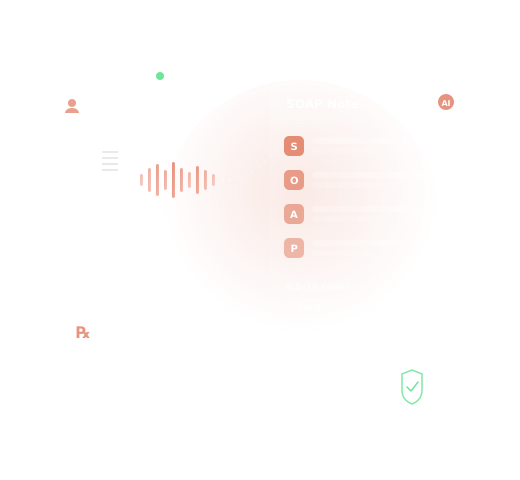
Automatic SOAP note generation: The platform can organize captured information into structured clinical note formats. Even when the final record needs department-specific edits, starting with a structured draft saves time.
ICD-10 and CPT suggestions: Coding support can help clinicians and administrative teams review likely coding options alongside the note. These suggestions are intended to support review, not replace professional coding decisions.
Multilingual support: In Indian healthcare settings, discussions may shift between English and regional languages. Multilingual support can improve capture quality and reduce the need to re-explain details for documentation.
On-premise or private deployment options: Some hospitals prefer deployment choices that fit internal governance and IT workflows. MedScribe is designed to support deployment approaches aligned with organizational preferences, including on-premise considerations where appropriate.
These capabilities make an AI medical scribe in India relevant not only for OPD-style consultations but also for departments like Mortuary Services that need structured, reviewable documentation tied to hospital operations.
How It Works
The workflow below reflects how MedScribe supports documentation from conversation capture to final clinician-approved record.
- Capture the discussion: A clinician or authorized staff member records the relevant conversation, dictation, or case discussion during the documentation process. The system is designed to capture multilingual speech and identify different speakers where needed.
- Transcribe and structure the content: MedScribe converts the audio into text and organizes the material into a structured draft. Instead of raw transcript alone, the output is prepared for clinical review and easier editing.
- Generate a SOAP-style draft note: The platform creates a draft note using a structured clinical format. For Mortuary Services, this can provide a consistent starting point for summaries, observations, and internal documentation workflows.
- Surface coding suggestions: The system can present ICD-10 and CPT suggestions alongside the draft note. These are review aids for clinicians or coding teams and should be validated before use in any finalized record.
- Review, edit, and sign off: A clinician or designated reviewer checks the draft, corrects terminology, adds missing context, and approves the final version before it becomes part of the record. Human review is the operational checkpoint that keeps the workflow accurate and accountable.
- Choose the deployment posture: Hospitals can evaluate whether a private or on-premise setup better fits internal governance, infrastructure, and workflow needs. This is a practical implementation decision that supports workflows aligned with organizational policies.
Local context
Healthcare organizations in India often manage documentation across mixed digital maturity levels. Some hospitals have established systems, while others still depend on partial digitization and manual note preparation. In this environment, an AI medical scribe in India needs to be practical, not theoretical. It should fit around existing workflows, support multilingual communication, and help clinicians reduce time spent on repetitive documentation tasks.
For Mortuary Services, local relevance also means understanding that documentation may involve coordination across departments, not just one user at one workstation. A useful solution should support hospital teams that need clear drafts, review checkpoints, and deployment options suited to internal IT preferences. That is why many buyers looking for an AI medical scribe India healthcare solution focus on workflow fit, reviewability, and implementation flexibility rather than generic automation claims.
Use cases
Case summary drafting: Convert spoken summaries into structured drafts for internal review.
Handover documentation: Capture key details from shift changes or departmental coordination discussions.
Clinician-led note preparation: Help doctors create usable draft notes faster, then edit and approve them before finalization.
Coding review support: Surface likely ICD-10 or CPT suggestions to support downstream review workflows.
Multilingual documentation support: Reduce friction when discussions include English and regional language usage in the same interaction.
Private deployment planning: Support hospitals that want an AI medical scribe in India with deployment choices aligned to internal governance and infrastructure decisions.
FAQ
Can this replace clinician review?
No. MedScribe is intended to create draft documentation and support review. Final edits and sign-off should remain with the responsible clinician or authorized reviewer.
Is it useful outside standard OPD consultations?
Yes. While the product is well suited to consultation documentation, the same workflow can support structured note creation for departments such as Mortuary Services where spoken discussions need to become reviewable records.
Does it support multilingual conversations?
Yes. Multilingual support is part of the product design, which can be helpful in Indian healthcare settings where users may switch between English and regional languages.
How should hospitals think about deployment?
Deployment should be evaluated as a workflow and governance decision. Organizations may consider private or on-premise approaches based on internal IT, operational, and data-handling preferences.
CTA
If your hospital is evaluating an AI medical scribe in India for Mortuary Services or broader clinical documentation, start with the workflow. Assess how conversations are captured, how drafts are reviewed, and where human sign-off happens. MedScribe is designed to help clinics and hospitals move from spoken interaction to structured notes with practical controls, coding support, and deployment flexibility. Explore the product pages for features, integrations, and pricing to see how the workflow can fit your documentation environment.