Introduction
An AI medical scribe in India can help nephrology clinics and hospital departments reduce documentation burden during busy OPD sessions, follow-ups, dialysis reviews, and inpatient consults. For nephrologists, documentation often spans symptom history, comorbidities such as diabetes or hypertension, medication changes, lab trends, fluid status, dialysis details, and care plans that must be captured clearly. MedScribe is designed as an AI documentation copilot that converts consultation conversations into structured clinical notes and coding suggestions, while keeping the clinician in control of review and sign-off.
In nephrology, the value is practical: less time spent typing repetitive notes, more consistent SOAP drafting, and a clearer path from conversation to usable documentation. Rather than changing how doctors practice, the product supports existing workflows with conversation capture, transcription structuring, speaker diarization, multilingual support, and deployment options such as private or on-premise setups for organizations that prefer tighter governance over data handling.
Department workflow
Nephrology documentation has recurring patterns, but each encounter still requires careful clinical judgment. A typical workflow may include registration, consultation, review of prior records, discussion of symptoms such as edema or reduced urine output, interpretation of creatinine and electrolyte trends, medication reconciliation, and planning for investigations or dialysis adjustments. In many Indian clinics and hospitals, these steps happen quickly across high patient volumes, making note completion a common bottleneck.
An AI medical scribe in India is useful here because it supports the daily rhythm of OPD and hospital practice. During a first visit, the clinician may need a detailed history, risk factors, and baseline assessment. During follow-up, the focus may shift to blood pressure control, CKD progression, transplant follow-up, or dialysis tolerance. The documentation burden remains high in both cases. A nephrology team also often coordinates with nurses, technicians, and front-office staff, so clear notes help continuity across the care pathway.
For India healthcare settings, multilingual interactions are common. Patients may describe symptoms in one language while the clinician documents in English. This is where AI-assisted transcription and structured drafting can support more complete capture of the encounter without forcing the doctor to manually reconstruct every detail after the visit.
Features mapped to workflow
MedScribe is built around practical documentation tasks rather than generic automation. Automatic SOAP note generation helps convert consultation dialogue into a draft that clinicians can quickly review. Speaker diarization helps distinguish doctor and patient speech, which is useful when the encounter includes counseling, history taking, and treatment explanation. ICD-10 and CPT suggestions can support coding workflows, especially when teams want a starting point for review rather than manual lookup from scratch.
For nephrology, these capabilities map well to common scenarios: CKD follow-up notes, acute kidney injury consults, dialysis review summaries, hypertension management visits, transplant monitoring, and medication adjustment discussions. Multilingual support is relevant for clinics serving diverse patient populations, while private or on-premise deployment options can support organizations that want infrastructure choices aligned with internal governance preferences.
The result is not a replacement for clinical reasoning. Instead, the product helps create a usable first draft, so the nephrologist can focus on verifying findings, refining the assessment, and finalizing the plan. This makes an AI medical scribe in India especially relevant for departments looking to improve note consistency without adding more manual admin work.
How It Works
The workflow is designed to move from live conversation to reviewed documentation in a controlled, clinician-led sequence:
- Capture the consultation conversation: During the nephrology visit, the system records the doctor-patient interaction through the configured setup. This may include OPD reviews, dialysis counseling, or inpatient consult discussions. Speaker diarization helps separate who said what, which improves clarity in the draft output.
- Transcribe and structure the encounter: The audio is converted into text and organized into clinically relevant segments. Instead of leaving the team with a raw transcript, the system prepares structured content that reflects history, symptoms, observations, and plan-related discussion.
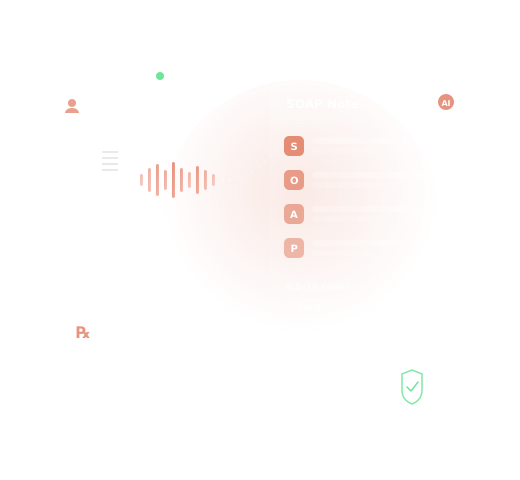
- Draft a SOAP note automatically: Based on the structured transcript, MedScribe generates a SOAP-style draft note. For nephrology, this can help organize subjective complaints, objective findings discussed during the visit, assessment themes, and the proposed management plan into a format clinicians already use.
- Add coding support for review: The system can surface ICD-10 and CPT suggestions based on the documented encounter. These are intended as review aids, not final coding decisions, so the clinician or authorized team member can validate relevance before use.
- Review, edit, and sign off: The nephrologist reviews the draft, corrects any missing context, confirms medication and diagnosis details, and finalizes the record. Human review is the operational checkpoint that ensures the note reflects actual clinical judgment before it becomes part of the patient record.
- Choose deployment posture for operations: Depending on organizational needs, teams can evaluate deployment approaches such as private or on-premise environments. This is a workflow and governance decision that can support internal IT preferences, integration planning, and data handling processes.
Local context
In India, nephrology practices often manage a mix of chronic disease follow-up, acute referrals, dialysis-related reviews, and coordination with diagnostics. Documentation needs can vary between independent clinics, multispecialty hospitals, and larger institutions with internal IT requirements. An AI medical scribe in India should therefore be practical, adaptable, and easy to evaluate against real OPD conditions rather than positioned as a one-size-fits-all tool.
For many teams, the immediate need is simple: reduce after-hours note completion, improve consistency in consultation summaries, and support cleaner handoffs across care settings. The product is designed with these operational realities in mind. It also fits India healthcare environments where multilingual communication and variable infrastructure are part of routine practice.
Use cases
Nephrology departments can use MedScribe across several recurring scenarios. In CKD follow-up visits, it can help capture symptom updates, blood pressure discussions, medication adherence, and progression planning. In dialysis reviews, it can support documentation of tolerance issues, access-related concerns, and changes to treatment discussion. For inpatient consults, it can help organize the initial history, relevant findings, and recommendations into a draft note that is easier to finalize quickly.
Other use cases include transplant follow-up documentation, hypertension and proteinuria management visits, diabetic kidney disease reviews, and second-opinion consultations where prior records need to be summarized alongside the current conversation. In each case, the goal is not to automate judgment, but to reduce repetitive typing and support a more efficient path to complete documentation.
For organizations comparing options, an AI medical scribe in India is most valuable when it fits existing clinical habits, supports review before finalization, and complements broader documentation processes. That is particularly relevant for AI medical scribe India healthcare buyers who need a practical tool for doctors, clinics, and hospital departments rather than a generic voice product.
FAQ
Can this be used in nephrology OPD and hospital settings?
Yes. The workflow is suitable for outpatient consultations, follow-up visits, dialysis-related reviews, and inpatient consult documentation, subject to how the organization chooses to implement it.
Does the product replace clinician review?
No. The draft note and coding suggestions are meant to support the workflow. The clinician reviews, edits, and signs off before the record is finalized.
Can it support multilingual consultations?
Yes. Multilingual support is part of the product description, which can be useful in India healthcare settings where patient conversations and clinical documentation may not always happen in the same language.
Are deployment options available for organizations with internal IT preferences?
Yes. Teams can evaluate private or on-premise deployment approaches based on operational and governance needs. These options support workflows aligned with internal requirements, without implying any guaranteed compliance outcome.
CTA
If your nephrology team wants to reduce documentation effort without disrupting clinical workflow, MedScribe offers a practical starting point. Explore how an AI medical scribe in India can support SOAP drafting, coding review, and clinician-led finalization for everyday nephrology care. Review the product pathways for MedScribe, compare capabilities on features, and assess fit for your clinic or hospital workflow.