Introduction
Neuro rehabilitation teams manage complex, longitudinal care. A single visit may include physician assessment, therapy updates, medication review, caregiver inputs, functional scoring, and follow-up planning. That makes documentation detailed but time-consuming. An AI medical scribe in India can help reduce manual note-taking by turning consultation conversations into structured draft documentation that clinicians can review, edit, and finalize. For hospitals, rehab centres, and specialist clinics, the goal is practical: spend less time typing and more time focusing on patient interaction, interdisciplinary coordination, and continuity of care.
MedScribe is designed as an AI documentation copilot for daily OPD and follow-up workflows. It supports automatic SOAP note drafting, coding suggestions, speaker diarization, multilingual conversations, and deployment choices such as private or on-premise setups depending on operational needs. In neuro rehabilitation, where visits often involve repeated assessments over time, an AI medical scribe in India can support more consistent documentation without changing the clinician's final authority over the record.
Department workflow
Neuro rehabilitation documentation is rarely linear. A typical encounter may begin with the patient's current complaints, then move into motor recovery, speech or swallowing concerns, spasticity review, gait observations, therapy adherence, caregiver feedback, and medication tolerance. Clinicians may also need to capture prior stroke, traumatic brain injury, spinal cord injury, Parkinsonian symptoms, neuropathy, or post-operative recovery context. This creates a high documentation burden across first visits, progress reviews, and multidisciplinary follow-ups.
In many Indian care settings, the workflow also includes mixed-language conversations, variable consultation lengths, and the need to summarize findings quickly for EMR entry or handover. An AI medical scribe India healthcare workflow is useful here because it can capture the consultation, separate speakers, structure the transcript, and prepare a draft note that reflects the encounter flow. Instead of writing from scratch after every visit, the clinician starts with a structured draft and refines it before sign-off.
For neuro rehabilitation departments, this is especially relevant when documenting functional changes over time. Small changes in mobility, cognition, speech, pain, tone, or activities of daily living matter clinically. A documentation copilot helps preserve these details in a usable format while keeping the final review with the treating clinician.
Features mapped to workflow
Conversation capture and transcription: During a consultation, the system captures the discussion and converts speech into text. This is useful for detailed rehab reviews where multiple observations are discussed in one sitting.
Speaker diarization: Neuro rehabilitation visits often involve the doctor, patient, and caregiver. Speaker separation helps organize who said what, improving clarity in the draft note.
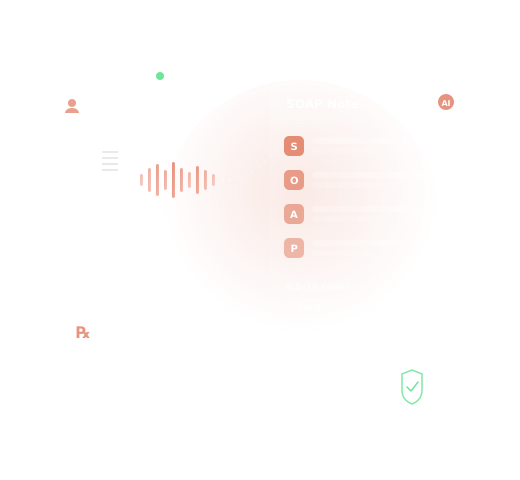
Automatic SOAP note generation: The transcript is structured into a SOAP-style draft, helping clinicians move from raw conversation to usable documentation faster.
ICD-10 and CPT suggestions: Coding support can assist teams during review, especially when encounters involve recurring diagnoses, procedures, or therapy-linked documentation. Suggestions remain reviewable rather than final.
Multilingual support: In India, consultations may shift between English and regional languages. This is valuable in neuro rehabilitation, where caregiver narratives and patient responses may not be in one language throughout.
On-premise or private deployment options: Some hospitals prefer deployment choices that support internal governance and infrastructure preferences. These options should be treated as workflow and IT decisions, not as blanket compliance claims.
Clinician review before finalization: The product supports workflows aligned with human review, edits, and final sign-off so the medical record remains under clinician control.
How It Works
The workflow is designed to fit real consultation patterns rather than forcing clinicians into rigid templates.
- Capture the consultation conversation: During the neuro rehabilitation visit, the doctor speaks naturally with the patient and caregiver. The system records the encounter audio and identifies different speakers through diarization, which is useful when history, symptom updates, and caregiver observations are all part of the same session.
- Transcribe and structure the discussion: The captured conversation is converted into text and organized into clinically relevant sections. Mixed-language interactions can be processed into a more usable draft, helping teams handle practical OPD conversations common in India.
- Generate a SOAP draft note: Based on the structured transcript, the system prepares a SOAP-style note draft. For neuro rehabilitation, this may include symptom progression, functional concerns, therapy response, examination highlights, and follow-up planning. The draft is meant to save time, not replace clinical judgment.
- Add coding support for review: The platform can surface ICD-10 and CPT suggestions linked to the documented encounter. These suggestions support the review process and can help standardize documentation workflows, but the clinician or authorized team member should confirm what is appropriate.
- Review, edit, and sign off: The clinician checks the draft note, corrects wording, adds missing findings, and confirms the final assessment and plan. Human review is the operational checkpoint before any record is finalized.
- Store or route based on deployment choice: Depending on the organization's setup, teams may use private or on-premise deployment pathways to support internal governance preferences and integration planning. This step is about operational fit, especially for hospitals evaluating documentation workflows at scale.
Local context
For providers evaluating an AI medical scribe in India, practical fit matters more than generic automation claims. Neuro rehabilitation clinics often work with high follow-up volumes, caregiver-heavy consultations, and documentation that must reflect gradual progress over weeks or months. Teams may also need flexibility for standalone clinics, rehab centres, and hospital departments with different IT environments.
An AI medical scribe in India should therefore support multilingual conversations, variable consultation styles, and deployment choices that align with local operational realities. In some settings, the priority may be faster OPD documentation. In others, it may be better interdisciplinary summaries or more consistent note structure across clinicians. The value comes from fitting into existing care delivery rather than asking teams to redesign every step.
For India healthcare organizations, this also means keeping policy references pragmatic. Documentation tools can support workflows aligned with internal governance and record-keeping practices, but implementation decisions still depend on each institution's process, review standards, and technology environment.
Use cases
Stroke rehabilitation follow-ups: Capture changes in motor recovery, speech, swallowing, spasticity, and caregiver-reported function across repeated visits.
Traumatic brain injury reviews: Summarize cognitive, behavioural, mobility, and therapy adherence updates into a structured draft note.
Spinal cord injury clinics: Document pain, mobility, bladder or bowel concerns, pressure sore discussions, and rehabilitation planning.
Movement disorder rehabilitation: Support note drafting for gait issues, tremor-related functional limitations, medication response, and therapy recommendations.
Multidisciplinary rehab OPD: Help clinicians create cleaner summaries when physician, patient, and caregiver inputs are all part of the encounter.
Across these scenarios, an AI medical scribe in India is most useful when it reduces repetitive documentation effort while preserving clinician oversight.
FAQ
Can this replace clinician documentation review?
No. The draft output should be reviewed, edited where needed, and signed off by the clinician before finalization.
Is it suitable for multilingual consultations?
Yes, multilingual support is relevant for Indian clinical settings where conversations may move between English and regional languages.
Does it support coding workflows?
It can provide ICD-10 and CPT suggestions to support review, but coding decisions should still be confirmed by the appropriate clinician or team member.
Can hospitals choose a private deployment model?
Yes, deployment options may include private or on-premise approaches depending on workflow, infrastructure, and governance preferences.
CTA
If your neuro rehabilitation team wants more consistent notes with less manual typing, explore how an AI medical scribe India healthcare workflow can fit your OPD and follow-up process. Review the core product at /medscribe, compare capabilities at /medscribe/features, and assess how an AI medical scribe in India can support practical documentation improvement for clinics and hospitals.