Introduction
An AI medical scribe in India can help neurology clinics and hospitals reduce documentation load during busy OPD sessions while keeping the clinician in control of the final record. For neurologists, consultations often involve detailed symptom timelines, medication history, examination findings, and follow-up planning. Capturing all of that accurately takes time. MedScribe is designed to convert consultation conversations into structured clinical documentation that supports daily practice without changing how doctors think through cases.
This page focuses on practical neurology workflows in India, where clinicians may manage high patient volumes, multilingual conversations, and detailed follow-up notes for chronic conditions. The product value is straightforward: capture the encounter, structure the conversation, draft usable notes, suggest coding support, and leave the final review and sign-off to the clinician. That makes an AI medical scribe in India useful not as a replacement for clinical judgment, but as a documentation copilot for routine and complex encounters alike.
For hospitals and clinics evaluating an AI medical scribe India healthcare workflow, the key question is not whether notes can be generated, but whether they fit real OPD operations. In neurology, that means supporting long histories, symptom progression, examination detail, and clear assessment and plan documentation.
Department workflow
Neurology documentation has a different rhythm from many other specialties. A typical visit may include headache history, seizure frequency, movement disorder progression, neuropathy symptoms, stroke follow-up, cognitive concerns, or medication titration. The clinician often needs to document onset, duration, triggers, associated symptoms, prior imaging, current treatment, neurological examination findings, and next-step recommendations.
In a busy Indian OPD, this can create friction at several points: listening while typing, switching between patient interaction and note entry, summarising long narratives, and preparing records that are usable for follow-up visits. An AI medical scribe in India is most valuable when it supports these exact moments in the workflow. Instead of asking the doctor to manually reconstruct the visit after the consultation, the system helps organise the conversation into a structured draft that can be reviewed quickly.
For neurology teams, this is especially relevant in follow-up-heavy care models. Patients with epilepsy, migraine, Parkinsonism, neuropathy, stroke sequelae, or dementia often return with incremental changes that need careful comparison against prior visits. Structured notes can make those changes easier to track and easier to communicate across the care team.
Features mapped to workflow
MedScribe is built around practical documentation tasks that map well to neurology care delivery:
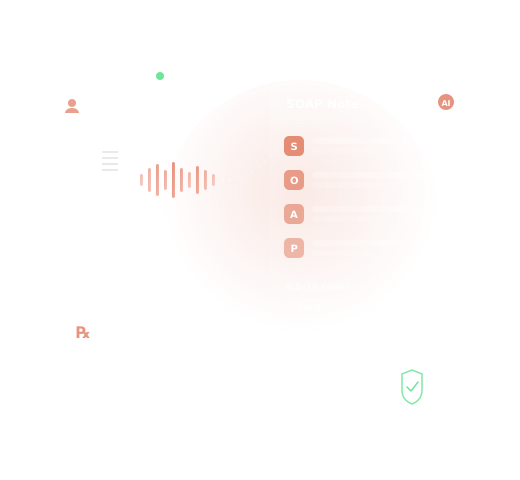
- Automatic SOAP note generation: Converts consultation dialogue into a structured draft with subjective history, objective findings, assessment, and plan.
- Speaker diarization: Separates clinician and patient speech, which is useful when histories are long and involve caregiver input.
- Multilingual support: Helps in settings where the consultation may move between English and Indian languages during history taking and counselling.
- ICD-10 and CPT suggestions: Provides coding support based on the documented encounter, with clinician review before use.
- On-premise deployment options: Supports organisations that prefer private or on-premise deployment choices as part of internal governance and workflow design.
These capabilities matter because neurology notes are rarely one-line summaries. A headache consult may require trigger history, red flag review, prior treatment response, and examination detail. A seizure follow-up may need event frequency, medication adherence, adverse effects, and counselling points. A movement disorder visit may involve progression, gait observations, medication timing, and functional impact. The system is designed to help structure this information into a usable draft rather than leaving the clinician with a blank screen after the visit.
How It Works
The workflow below reflects how MedScribe is designed to support real consultation documentation from start to finish:
- Capture the consultation conversation: During the neurology visit, the consultation audio is captured through the configured workflow. This may include patient history, caregiver input, symptom chronology, examination discussion, and treatment planning.
- Transcribe and structure the encounter: The system converts speech into text, applies speaker diarization to distinguish participants, and organises the conversation into clinically relevant sections. This is especially useful when the visit includes long symptom narratives or mixed-language dialogue.
- Draft a SOAP note automatically: Based on the structured transcript, MedScribe generates a draft SOAP note. For neurology, this can help summarise history of present illness, relevant examination points, assessment themes, and the planned next steps in a format clinicians already use.
- Suggest coding support: The platform can surface ICD-10 and CPT suggestions linked to the documented encounter. These are intended as support for the clinician or billing workflow, not as final coding decisions without review.
- Review, edit, and sign off: The clinician reviews the draft, corrects details, refines wording, and confirms the final note before record finalization. Human review is the operational checkpoint that keeps the doctor in control of accuracy and completeness.
- Choose deployment posture for workflow governance: Depending on organisational needs, teams can evaluate private or on-premise deployment options. This is a workflow and governance decision that can support internal data handling preferences and IT planning.
Local context
In India, neurology practices often balance detailed consultations with high patient throughput. That creates a practical need for documentation tools that fit existing OPD patterns rather than forcing a new process. An AI medical scribe in India should therefore support multilingual communication, variable consultation lengths, and the need for quick review between appointments.
For enterprise hospitals, deployment posture may be part of the evaluation process, especially where IT teams prefer private infrastructure choices. For independent clinics, the priority may be faster note completion and more consistent documentation. In both settings, the value of an AI medical scribe India healthcare solution depends on whether it reduces administrative friction while preserving clinician oversight.
Use cases
- Headache and migraine clinics: Summarising symptom patterns, triggers, prior therapies, and follow-up plans.
- Epilepsy follow-up: Documenting seizure frequency, medication adherence, side effects, and counselling.
- Stroke review visits: Capturing recovery progress, deficits, rehabilitation updates, and secondary prevention planning.
- Movement disorder consultations: Structuring progression history, medication timing, gait observations, and functional concerns.
- Neuropathy and chronic neurology OPD: Recording symptom evolution, examination findings, investigations, and treatment adjustments.
These use cases show why an AI medical scribe in India can be relevant for neurology teams: the documentation burden is repetitive in format but detailed in content, making structured drafting especially useful.
FAQ
Below are common implementation questions from clinics and hospitals evaluating this workflow.
Can it handle long neurology consultations?
Yes, the workflow is designed for detailed encounters where symptom chronology and follow-up context matter. The clinician still reviews and edits the final note.
Does it replace the doctor's documentation judgment?
No. It supports drafting and structuring, but the clinician remains responsible for review, corrections, and final sign-off before the record is completed.
Can it support multilingual consultations common in India?
MedScribe includes multilingual support, which can help when consultations move between English and Indian languages during history taking and counselling.
Is coding automated?
The product provides ICD-10 and CPT suggestions as documentation support. Coding should still be reviewed by the clinician or the relevant operational team.
CTA
If your neurology department is exploring a practical AI medical scribe in India for OPD documentation, start by evaluating how it fits your current consultation flow, review process, and deployment preferences. MedScribe is designed to help clinics and hospitals turn conversations into structured notes with coding support and clinician-controlled sign-off. Explore the core product, features, integrations, and pricing paths to assess fit for your team.