Introduction
Neurosurgery documentation often demands close attention to symptoms, neurological findings, imaging references, procedure planning, follow-up instructions, and careful continuity across OPD, inpatient, and post-operative visits. An AI medical scribe in India can help neurosurgery teams reduce manual note-taking during consultations by turning doctor-patient conversations into structured draft documentation for review. For hospitals, specialty clinics, and individual consultants, the goal is practical: spend less time typing, maintain clearer records, and support more consistent documentation without changing how clinicians think through complex cases.
MedScribe is designed as an AI documentation copilot for daily clinical use. It listens to the consultation workflow, structures the conversation, drafts SOAP notes, and provides coding suggestions that clinicians can verify before finalizing the record. For neurosurgery, this is useful when visits include headache history, seizure review, spine symptoms, motor deficits, sensory changes, gait concerns, trauma follow-up, imaging discussion, and surgical counselling. Rather than replacing clinical judgment, the system supports documentation workflows aligned with how specialists already work in India.
Department workflow
Neurosurgery clinics typically move through a high-information workflow: registration, history taking, symptom chronology, neurological examination, review of prior records, imaging discussion, treatment planning, and follow-up instructions. In many settings, the same doctor may need to document OPD visits, pre-operative assessments, post-operative reviews, and referral summaries in a single day. This creates repetitive documentation load, especially when the consultation includes detailed findings such as weakness grading, radicular pain patterns, cranial nerve observations, bowel or bladder symptoms, seizure frequency, or progression of intracranial complaints.
An AI medical scribe in India fits into this workflow by capturing the consultation conversation, separating speakers, extracting clinically relevant details, and drafting a structured note that the clinician can edit. In neurosurgery, this can support common documentation patterns such as cervical or lumbar spine evaluations, brain tumour follow-up, hydrocephalus review, head injury follow-up, and post-surgical wound or symptom checks. The value is not only speed; it is also consistency in how histories, assessments, and plans are recorded across repeat visits.
Features mapped to workflow
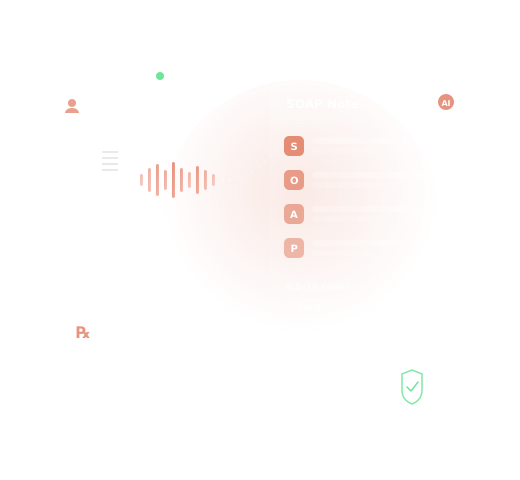
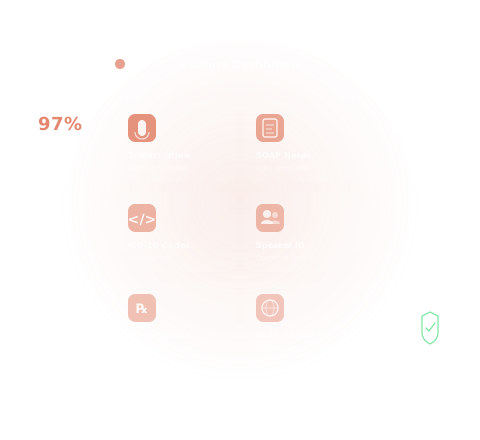
Automatic SOAP note generation: After the consultation, the platform drafts Subjective, Objective, Assessment, and Plan sections so the clinician starts from a usable structure instead of a blank screen. This is especially helpful for neurosurgery visits that combine symptom history with examination findings and imaging-based decision-making.
Speaker diarization: The system distinguishes between doctor and patient speech, helping preserve context when symptoms, prior treatment history, and counselling points are discussed in detail.
Multilingual support: In Indian practice, consultations may shift between English and regional languages. Multilingual support helps teams document more naturally while still producing structured clinical output for review.
ICD-10 and CPT suggestions: Coding support can assist administrative and billing workflows by surfacing likely code suggestions based on the drafted note. These suggestions are meant for clinician or staff verification, not automatic finalization.
On-premise deployment options: For organizations that prefer tighter infrastructure control, deployment posture can be chosen as an operational and governance decision. This is useful for hospitals evaluating internal data handling preferences.
Workflow alignment: The product complements broader product pages such as /medscribe, /medscribe/features, /medscribe/integrations, and /medscribe/pricing by focusing here on practical neurosurgery usage in India.
How It Works
The workflow is built around real consultation documentation, with clinician review before any record is finalized.
- Capture the consultation conversation: During an OPD or follow-up visit, the consultation audio is captured through the configured workflow. This may include symptom history, neurological complaints, prior surgery discussion, medication review, and treatment planning.
- Transcribe and structure the interaction: The system converts speech to text, applies speaker diarization, and organizes the conversation into clinically relevant segments. For neurosurgery, this can help separate patient-reported symptoms from clinician observations and counselling.
- Draft a SOAP note automatically: Based on the structured transcript, MedScribe generates a draft SOAP note. Subjective content may include pain duration, seizure history, weakness progression, or headache pattern; Objective content may reflect documented examination points and referenced findings; Assessment and Plan are drafted for clinician review.
- Surface coding suggestions: The platform can suggest ICD-10 and CPT codes linked to the documented encounter. These are support prompts for staff or clinicians to verify against the final note and actual services rendered.
- Review, edit, and sign off: The clinician checks the draft, corrects nuances, adds missing findings, refines the assessment, and confirms the final plan. Human review is the operational checkpoint before the note becomes part of the patient record.
- Choose deployment posture for workflow governance: Depending on organizational needs, teams can evaluate private or on-premise deployment approaches. This supports workflows aligned with internal governance preferences rather than offering blanket guarantees.
Local context
In India, neurosurgery practices often manage a mix of high-volume OPD consultations and detailed case discussions that require careful documentation. Teams may work across private clinics, multispecialty hospitals, tertiary centers, and outreach settings where documentation quality must remain consistent despite time pressure. An AI medical scribe in India is relevant in this environment because it supports practical note creation during multilingual consultations and helps standardize records across varied visit types.
The local need is usually operational rather than theoretical: reduce after-hours charting, improve note completeness, and support smoother handoffs between consultants, residents, nursing teams, and front-office staff. For organizations evaluating infrastructure choices, an AI medical scribe in India may also be considered in the context of private or on-premise deployment preferences, depending on internal IT and workflow requirements.
Use cases
Spine OPD: Draft notes for cervical spondylosis, lumbar radiculopathy, disc prolapse, myelopathy, and post-operative spine follow-up visits.
Brain and cranial cases: Support documentation for headache evaluation, tumour follow-up, hydrocephalus review, seizure-related consultations, and post-craniotomy follow-up.
Trauma and emergency follow-up: Help structure head injury or spine trauma follow-up conversations into usable clinic notes.
Pre-operative counselling: Capture discussion around symptoms, imaging review, risks explained, and next-step planning for surgery scheduling.
Post-operative reviews: Document wound status, pain changes, neurological recovery, medication adjustments, and rehabilitation advice.
Referral and continuity notes: Create clearer summaries that can be reviewed and shared within the care team.
Across these scenarios, AI medical scribe India healthcare workflows are most useful when they remain clinician-led: the system drafts, the doctor verifies, and the final record reflects the clinician's judgment.
FAQ
Can this be used in a busy neurosurgery OPD?
Yes. The workflow is designed for practical consultation capture and draft note creation, which can help reduce manual typing during high-volume clinic sessions.
Does it replace the doctor's documentation responsibility?
No. The platform creates draft notes and coding suggestions, but clinician review, edits, and final sign-off remain essential before record finalization.
Can it handle multilingual consultations common in India?
It is designed with multilingual support so consultations that move between English and regional languages can still be structured into usable draft documentation.
Is it relevant only for large hospitals?
No. Specialty clinics, individual consultants, and hospital departments can all evaluate the workflow depending on consultation volume, documentation burden, and infrastructure preferences.
CTA
If your neurosurgery team wants more consistent notes with less manual documentation effort, explore how an AI medical scribe in India can fit into your OPD and follow-up workflow. Review the core product at /medscribe, compare capabilities at /medscribe/features, and assess integration options at /medscribe/integrations. For clinics and hospitals looking for a practical documentation copilot, MedScribe offers a workflow-focused starting point for specialist care in India.