Introduction
AI medical scribe in India is becoming a practical option for hospitals and clinics that want to reduce documentation burden without disrupting clinical judgment. In Nuclear Medicine, documentation often spans referral context, indication, tracer details, imaging notes, impression drafting, follow-up recommendations, and coding support. An AI medical documentation copilot can help convert consultation and reporting conversations into structured notes that are easier to review, edit, and finalize.
For Nuclear Medicine teams, the value is not just faster typing. It is better workflow continuity across OPD discussions, pre-scan counselling, reporting conversations, and clinician review. MedScribe is designed to capture spoken interactions, structure them into usable clinical documentation, and support coding suggestions while keeping the doctor in control of edits and sign-off. This makes AI medical scribe in India relevant for departments that need practical support for daily documentation, multilingual communication, and deployment choices that fit internal governance preferences.
The product focus is operational: reduce repetitive note creation, support structured SOAP-style documentation where relevant, and help clinicians move from conversation to reviewed record with less manual effort. For Nuclear Medicine departments in India, this can support more consistent documentation across busy schedules while keeping final decisions with the treating clinician.
Department workflow
Nuclear Medicine workflows combine clinical consultation, imaging coordination, interpretation, and communication. A typical day may include referral review, patient history capture, indication confirmation, discussion of prior imaging, tracer or procedure planning, post-procedure notes, and reporting conversations between clinicians and staff. Documentation may be created in fragments across systems, which can increase rework.
An AI medical scribe in India can fit into this environment by helping clinicians document the parts of the workflow that are conversation-heavy. During patient interactions, the system can capture relevant details such as symptoms, prior treatment history, reason for referral, and follow-up advice. During internal discussions, it can help organize findings into structured drafts for review. This is especially useful when departments handle multilingual patient communication and need consistent note formatting.
In Nuclear Medicine, documentation quality matters because the clinical story often shapes interpretation and downstream care decisions. A documentation copilot can support cleaner handoffs, more complete notes, and easier review before records are finalized.
Features mapped to workflow
MedScribe is built as an AI medical documentation copilot for doctors and clinics. For Nuclear Medicine teams, its capabilities map to common workflow needs:
- Conversation capture and transcription: Supports turning clinician-patient or clinician-staff conversations into text that can be organized for documentation.
- Speaker diarization: Helps separate speakers so the note reflects who said what during the interaction.
- Automatic SOAP note generation: Drafts structured notes from the conversation, giving clinicians a usable starting point instead of a blank screen.
- ICD-10 and CPT suggestions: Provides coding support to assist documentation workflows, subject to clinician review and internal billing processes.
- Multilingual support: Useful in Indian healthcare settings where patient interactions may shift between English and regional languages.
- On-premise deployment options: Supports organizations that prefer private or on-premise deployment as a workflow and governance choice.
These features are relevant to Nuclear Medicine because the department often needs concise but complete records that connect indication, procedure context, findings discussion, and next-step recommendations. Rather than replacing reporting systems, the tool supports the documentation layer around them.
How It Works
The workflow is designed to move from conversation capture to clinician-approved documentation in a clear sequence:
- Capture the consultation or reporting conversation: During OPD review, pre-procedure counselling, or follow-up discussion, the system records the conversation with appropriate operational controls. It can be used for patient-facing and clinician-facing documentation moments where spoken information would otherwise need manual typing later.
- Transcribe and structure the interaction: The audio is converted into text, with speaker diarization helping distinguish clinician and patient inputs. The transcript is then organized into clinically relevant sections so the documentation is easier to review.
- Draft a SOAP-style note: Based on the structured transcript, MedScribe generates a draft note. For Nuclear Medicine, this may include history, indication, relevant symptoms, prior imaging context, assessment discussion, and plan or follow-up instructions where applicable.
- Add coding support: The system can suggest ICD-10 and CPT codes to support downstream documentation and billing workflows. These are suggestions only and should be checked by the clinician or authorized team before use.
- Review, edit, and finalize: The clinician reviews the draft, corrects wording, adds findings or interpretation details, and confirms the final version. Human review is an operational checkpoint before any record is finalized.
- Choose deployment posture: Organizations can evaluate cloud, private, or on-premise deployment approaches based on workflow, IT, and governance needs. This supports workflows aligned with internal data handling preferences rather than offering blanket guarantees.
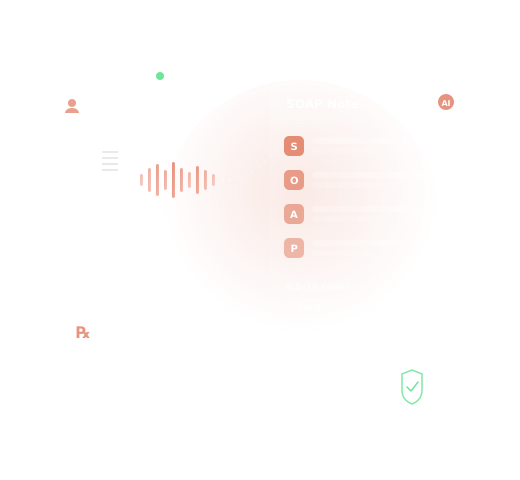
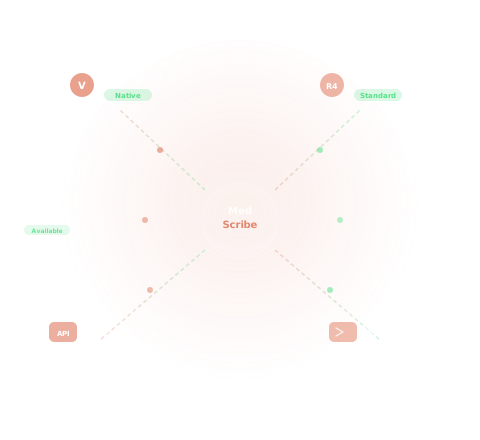
This practical flow is why many teams evaluating an AI medical scribe in India look beyond transcription alone. The real value comes from structured drafting, coding support, and a clear review step before sign-off.
Local context
In India, Nuclear Medicine departments often work across mixed documentation environments, from standalone clinics to multispecialty hospitals. Teams may manage high patient volumes, varied language preferences, and documentation expectations that differ by institution. An AI medical scribe India healthcare solution should therefore be practical, flexible, and easy to fit into existing routines.
For this reason, AI medical scribe in India should support multilingual interactions, clinician oversight, and deployment choices that match the organization’s operating model. In some settings, a private or on-premise setup may be preferred for internal governance reasons. In others, the priority may be faster note turnaround for busy OPD schedules. The common requirement is usability in real clinical workflows, not generic automation.
For Nuclear Medicine specifically, local relevance also means supporting documentation around referrals, patient counselling, and follow-up communication in a way that is understandable to both specialists and referring clinicians.
Use cases
- OPD consultations: Draft notes from patient history and referral discussions before imaging or therapy planning.
- Pre-procedure counselling: Capture explanations, precautions, and patient questions in a structured format.
- Follow-up visits: Summarize symptom changes, treatment response, and next-step recommendations.
- Internal case discussions: Organize spoken clinical context into documentation drafts for review.
- Coding support workflows: Assist teams with ICD-10 and CPT suggestions linked to documented encounters.
These use cases show how an AI medical scribe in India can support Nuclear Medicine teams without changing who owns the final clinical record. The clinician remains responsible for review, edits, and sign-off.
FAQ
Common questions from hospitals and clinics evaluating this workflow are answered below.
CTA
If your Nuclear Medicine department wants to reduce manual note-taking and improve documentation consistency, MedScribe offers a practical path from conversation to reviewed clinical note. Explore how an AI medical scribe in India can support OPD efficiency, multilingual documentation, coding assistance, and clinician-controlled finalization. Review the product overview, features, integrations, and pricing to assess fit for your hospital or clinic workflow.