Introduction
Obstetrics teams manage high-volume consultations, repeat follow-ups, antenatal documentation, and time-sensitive decision-making. In this setting, an AI medical scribe in India can help reduce manual note-taking during OPD visits while keeping the clinician in control of the final record. MedScribe is designed as an AI medical documentation copilot that converts consultation conversations into structured clinical notes and coding suggestions that can be reviewed before sign-off.
For obstetricians, documentation often spans history taking, trimester-specific observations, symptoms, risk factors, examination findings, counselling, investigations, and follow-up plans. Instead of relying on fragmented handwritten notes or delayed data entry, teams can use AI-assisted drafting to create usable SOAP notes faster. The goal is practical workflow support: capture the conversation, structure it into a draft, suggest relevant codes, and let the doctor edit and approve the final version.
This page focuses on how an AI medical scribe in India fits everyday obstetrics workflows in clinics and hospitals, with attention to multilingual consultations, operational review steps, and deployment choices such as private or on-premise setups.
Department workflow
Obstetrics documentation is rarely limited to a single complaint. A typical visit may include menstrual and obstetric history, prior pregnancy outcomes, current symptoms, blood pressure trends, fetal movement concerns, medication review, scan references, and counselling on warning signs. In busy OPD settings, clinicians often need to maintain eye contact with the patient while still producing complete notes.
Common workflow stages include registration, consultation, history capture, examination, assessment, care plan, coding support, and record finalization. Follow-up visits add another layer because the clinician may need to compare current findings with prior notes and update the plan quickly. In many Indian healthcare settings, the conversation may shift between English and regional languages, and the documentation burden can increase when the same doctor handles both clinical care and note completion.
An AI medical scribe in India is most useful when it supports this real sequence rather than forcing a new process. It should fit into OPD routines, help organize spoken information into structured drafts, and preserve a clear checkpoint for clinician review before the note becomes part of the patient record.
Features mapped to workflow
Conversation capture: The platform listens to the consultation audio and prepares it for transcription. This is useful when the doctor wants to focus on the patient instead of typing throughout the visit.
Speaker diarization: By separating clinician and patient speech, the draft can better reflect who reported symptoms, who gave advice, and what was discussed during counselling.
Multilingual support: Obstetrics consultations in India often involve mixed-language conversations. Multilingual support helps teams work with more natural patient interactions while still generating structured documentation.
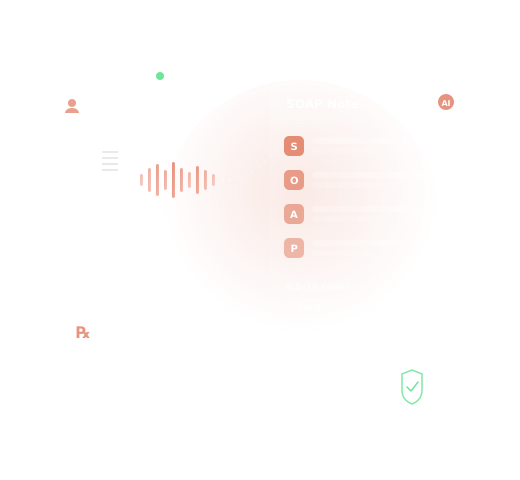
Automatic SOAP note generation: The system drafts Subjective, Objective, Assessment, and Plan sections from the consultation. This can be especially helpful for antenatal follow-ups where repeated documentation patterns are common but still require individualized review.
ICD-10 and CPT suggestions: Coding suggestions can support downstream billing and record organization. These suggestions are intended as workflow aids and should be reviewed by the clinician or authorized staff.
Deployment posture options: Some organizations may prefer private or on-premise deployment models based on internal governance, IT architecture, or data handling preferences. These choices support workflows aligned with institutional requirements without changing the need for clinician oversight.
How It Works
The product workflow is designed around end-to-end clinical documentation support for daily OPD use.
- Capture the consultation conversation: During the obstetrics visit, the consultation audio is captured through the configured workflow. The system is built to support natural doctor-patient interaction, including multilingual exchanges common in Indian clinics.
- Transcribe and structure the discussion: The audio is converted into text, and speaker diarization helps distinguish patient statements from clinician questions, findings, and counselling. This creates a cleaner base for documentation rather than a raw transcript alone.
- Draft a SOAP note automatically: The structured transcript is used to generate a SOAP-format draft. In obstetrics, this may include presenting concerns, relevant history, examination details, assessment points, and the immediate care plan or follow-up instructions.
- Suggest coding support: Based on the documented encounter, the system can surface ICD-10 and CPT suggestions to support coding workflows. These are suggestions for review, not automatic final coding decisions.
- Clinician review, edit, and sign-off: The doctor reviews the draft, corrects details, adds missing context, and confirms the final note before record finalization. Human review is the operational checkpoint that keeps the clinician in control.
- Choose deployment aligned with operations: Depending on the organization, the workflow can be implemented in a private or on-premise posture. This is a governance and infrastructure decision that supports internal processes while preserving the same review-and-approve documentation flow.
Local context
In India, obstetrics practices often balance high patient volumes, mixed digital maturity, and multilingual communication. A practical AI medical scribe in India should therefore support day-to-day OPD realities rather than assume a uniform setup across all hospitals and clinics. Some teams may want a lightweight documentation assistant, while others may evaluate deeper workflow integration over time.
For independent clinics, the main value may be faster note completion and more consistent follow-up documentation. For hospitals and larger maternity centers, the focus may include standardization across clinicians, coding support, and deployment choices that align with internal IT preferences. In both cases, the product should remain consultative in use: assist with drafting, support review, and fit existing care delivery patterns.
This is where an AI medical scribe in India becomes relevant for obstetrics teams that want to reduce after-hours documentation without removing clinician judgment from the process.
Use cases
Antenatal OPD visits: Draft notes for routine pregnancy follow-ups, including symptoms, vitals discussed, counselling points, and next-visit plans.
High-risk pregnancy reviews: Help organize complex histories and repeated monitoring discussions into a structured draft for clinician refinement.
First consultation documentation: Capture detailed history-taking conversations and convert them into a more usable starting note.
Postnatal follow-ups: Support documentation of recovery concerns, medication review, breastfeeding counselling, and follow-up advice.
Clinic groups and hospitals: Use standardized note drafting and coding suggestions to support more consistent documentation across providers.
Across these scenarios, an AI medical scribe in India is most effective when it reduces repetitive documentation effort while preserving the doctor's final review and sign-off.
FAQ
Can this be used for multilingual obstetrics consultations?
Yes. The product emphasizes multilingual support, which is useful for consultations where doctors and patients switch between English and regional languages.
Does it create final notes automatically?
It creates draft notes automatically, but the clinician reviews, edits, and approves the final record before it is finalized.
What kind of notes does it generate?
The core workflow emphasizes automatic SOAP note generation from consultation conversations, along with coding suggestions to support documentation workflows.
Is it suitable for clinics as well as hospitals?
Yes. The workflow can support individual specialists, maternity clinics, and larger hospital departments, depending on operational needs and deployment preferences.
CTA
If your obstetrics team is evaluating an AI medical scribe in India, start with the practical questions: how consultations are captured, how drafts are reviewed, and how the workflow fits your OPD routine. MedScribe is built to support conversation-to-note documentation, coding assistance, and clinician-controlled finalization for real clinical use. Explore the product pathways through /medscribe and feature details at /medscribe/features to assess fit for your clinic or hospital.