Introduction
Occupational therapy teams often balance detailed functional assessments, goal tracking, caregiver communication, and daily documentation across busy OPD and rehabilitation settings. An AI medical scribe in India can support this work by turning consultation conversations into structured draft notes that clinicians can review, edit, and finalize. For occupational therapists, the value is practical: less time spent typing repetitive details, better continuity across sessions, and more focus on patient interaction during evaluations and follow-ups.
This page is designed for clinics and hospitals looking at documentation support for occupational therapy in India. Rather than replacing clinical judgment, the product acts as a documentation copilot. It captures the encounter, structures the transcript, drafts SOAP-style notes, and surfaces coding suggestions for clinician review. The result is a workflow that supports more consistent records while keeping the therapist in control of final sign-off.
Department workflow
Occupational therapy documentation is often more nuanced than a standard visit summary. Sessions may include developmental history, sensory observations, ADL performance, fine motor findings, cognitive or behavioral notes, home program instructions, and progress against functional goals. In many Indian healthcare settings, therapists also need to coordinate with pediatricians, neurologists, physiotherapists, psychologists, and front-desk teams.
A typical workflow starts with registration and case history review, followed by assessment or therapy interaction, therapist observations, family discussion, and a written note entered into the clinic system. In high-volume environments, this can create delays between the session and final documentation. An AI medical scribe in India helps reduce that lag by converting the live or recorded conversation into a structured draft that reflects the encounter flow. This is especially useful for repeat sessions where progress notes need to be concise but clinically meaningful.
For occupational therapy departments, the goal is not just faster notes. It is better documentation hygiene across evaluations, treatment sessions, reassessments, and multidisciplinary handoffs. That makes the tool relevant for standalone therapy centres, multispecialty clinics, and hospital rehab units.
Features mapped to workflow
Conversation capture and transcription: The system listens to the consultation or therapy discussion and converts speech into text. This is useful when therapists want to stay engaged with the patient or caregiver instead of documenting every detail manually.
Speaker diarization: In occupational therapy, multiple voices may be involved, including therapist, patient, and parent or caregiver. Speaker separation helps organize the transcript so the draft note reflects who said what more clearly.
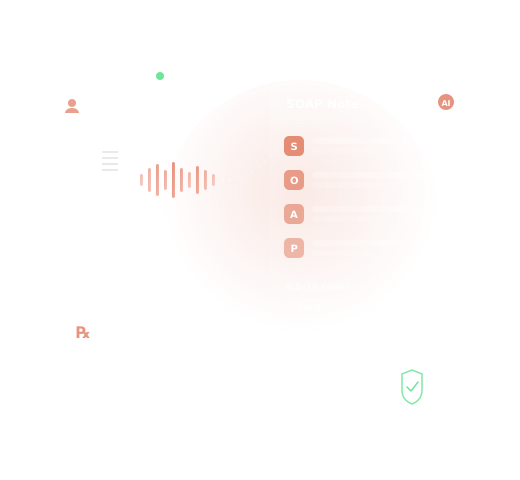
Automatic SOAP drafting: The product generates draft SOAP notes from the encounter. For OT teams, this can support subjective history, observed performance, assessment summary, and plan documentation in a familiar structure.
ICD-10 and CPT suggestions: Coding support can help clinicians and admin teams review likely codes associated with the documented encounter. Suggestions are meant to assist review, not replace clinician or billing judgment.
Multilingual support: Many therapy interactions in India move between English and regional languages. Multilingual capability supports workflows where history-taking, caregiver counseling, and therapist observations may not happen in a single language.
On-premise or private deployment options: Some hospitals and larger provider groups prefer infrastructure choices that support internal governance and data handling preferences. Deployment posture can be selected based on workflow, IT, and operational needs.
Together, these capabilities make AI medical scribe in India relevant for occupational therapy teams that need practical documentation support without changing how clinicians evaluate and treat patients.
How It Works
The workflow is designed around real clinical documentation steps, from conversation capture to final sign-off.
- Capture the encounter: During an OT evaluation or therapy session, the conversation is captured through the configured setup. This may include therapist-patient interaction, caregiver input, and functional observations discussed aloud.
- Transcribe and structure the discussion: The system converts speech into text and applies speaker diarization to separate participants. It then organizes the transcript into clinically useful sections so the raw conversation is easier to review.
- Draft a SOAP note automatically: Based on the structured transcript, the product creates a draft SOAP note. For occupational therapy, this can include presenting concerns, observed task performance, therapist assessment, and the next-step plan or home program guidance.
- Surface coding suggestions: The platform provides ICD-10 and CPT suggestions linked to the documented encounter. These suggestions support downstream review by clinicians or billing teams and are not intended as automatic final coding.
- Review, edit, and approve: The therapist or authorized clinician reviews the draft note, makes corrections, adds missing clinical nuance, and confirms the final version. Human review is the operational checkpoint before the record is finalized.
- Finalize based on deployment workflow: Depending on the organization setup, the note can move through a private or on-premise deployment pathway aligned with internal governance preferences. This is a workflow and infrastructure decision, not a guarantee of compliance.
Local context
In India, occupational therapy services are delivered across pediatric centres, neuro-rehab programs, hospital outpatient departments, and independent therapy clinics. Documentation needs can vary widely by setting, but common challenges include limited time between sessions, mixed-language conversations, and the need to maintain clear progress notes over long treatment plans. An AI medical scribe in India can fit these realities by supporting practical OPD documentation rather than forcing a rigid template-first workflow.
For provider organizations evaluating technology, the more useful question is often operational: how easily can the tool fit into existing note review habits, coding review processes, and IT preferences? That is why deployment flexibility, multilingual support, and clinician review checkpoints matter in the Indian healthcare environment. The product is designed to support workflows aligned with internal documentation standards used by clinics and hospitals.
Use cases
Pediatric OT assessments: Capture parent history, developmental concerns, sensory observations, and therapist findings into a structured draft note.
Neuro-rehabilitation follow-ups: Document functional progress, task performance, caregiver feedback, and updated therapy plans across repeat visits.
ADL and hand therapy sessions: Summarize observed limitations, intervention response, and home exercise or activity recommendations.
Multidisciplinary rehab settings: Create clearer documentation that can be reviewed alongside notes from other departments.
High-volume OPD workflows: Reduce after-hours documentation burden by preparing draft notes for clinician review soon after the encounter.
These scenarios show how AI medical scribe in India can support both standalone OT practices and larger hospital-based rehab teams.
FAQ
Can this be used only for doctors?
No. While the product is built for medical documentation workflows, occupational therapists and rehab teams can use it to support structured note drafting and review.
Does it replace therapist documentation judgment?
No. The system creates drafts and suggestions, but the clinician reviews, edits, and signs off before the record is finalized.
Can it handle multilingual consultations?
Yes. Multilingual support is useful for Indian healthcare settings where patient and caregiver conversations may shift between English and regional languages.
Does it support coding workflows?
It can provide ICD-10 and CPT suggestions to support review. Final coding decisions should remain with the appropriate clinical or billing team.
CTA
If your occupational therapy department is looking for a practical way to reduce documentation effort while keeping clinicians in control, explore how an AI medical scribe in India can fit your daily workflow. Review the core product at /medscribe, compare capabilities at /medscribe/features, and assess how the workflow can support your clinic or hospital documentation process.