Introduction
AI medical scribe in India is becoming a practical option for clinics and hospitals that want to reduce documentation load without disrupting patient care. In oculoplasty, consultations often involve detailed history taking, examination findings, procedure planning, follow-up instructions, and coordination across OPD, minor procedure rooms, and surgical workflows. An AI medical documentation copilot can help convert doctor-patient conversations into structured clinical notes that are easier to review, edit, and finalize.
For oculoplasty specialists, documentation needs are often nuanced. Notes may include eyelid complaints, lacrimal symptoms, orbital findings, trauma details, pre-operative counselling, and post-procedure instructions. MedScribe is designed to support these workflows by turning consultation audio into draft SOAP notes, suggesting ICD-10 and CPT-aligned coding options, and separating speakers during the encounter. The result is not a replacement for clinical judgment, but a faster first draft that supports clinician review and sign-off.
This page focuses on how an AI medical scribe in India can fit into day-to-day oculoplasty practice in a practical way: less time spent typing, more consistent note structure, and smoother handoff between consultation and record completion.
Department workflow
Oculoplasty workflows can vary between standalone eye clinics, multispecialty hospitals, and tertiary eye centres, but the documentation pattern is often similar. A patient may present with ptosis, eyelid lesions, watering, thyroid eye disease, socket concerns, trauma, or orbital symptoms. The clinician gathers history, examines periocular structures, reviews prior treatment, discusses imaging or procedures, and documents a plan.
In many settings, this process creates fragmented records. Key findings may be written partly in the EMR, partly in free text, and partly remembered for later completion. When OPD volumes are high, doctors may finish notes after clinic hours. For oculoplasty teams, this can affect consistency in documenting laterality, symptom duration, examination details, procedure counselling, and follow-up plans.
An AI medical scribe in India can support this workflow by capturing the consultation conversation, structuring it into a usable draft, and presenting it for clinician review before finalization. This is especially useful when the encounter includes multilingual discussion, caregiver participation, or a mix of clinical and procedural counselling. Instead of starting from a blank screen, the doctor reviews a structured draft and edits what matters.
Features mapped to workflow
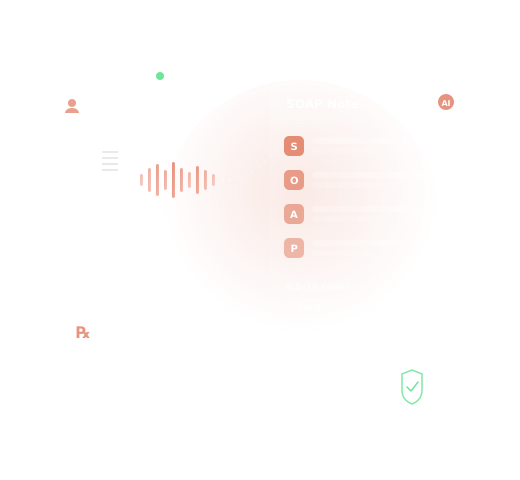
Automatic SOAP note generation: Oculoplasty consultations often require clear separation of symptoms, examination findings, assessment, and treatment plan. Automatic SOAP drafting helps create a consistent note framework that clinicians can quickly refine.
Speaker diarization: In eye care settings, attendants or family members may contribute to the history. Speaker separation helps distinguish clinician prompts from patient responses and caregiver inputs, making the draft easier to review.
Multilingual support: Many clinics in India conduct consultations in a mix of English and regional languages. Multilingual capture can support more natural conversations while still producing structured documentation.
ICD-10 and CPT suggestions: Coding support can help teams move from narrative notes toward more structured billing and reporting workflows. Suggestions should still be reviewed by the clinician or authorized staff before use.
On-premise or private deployment options: Some hospitals prefer deployment choices that fit internal IT and governance requirements. These options are workflow and infrastructure decisions that can support data handling preferences aligned with institutional policies.
Review-first design: The draft note is not the final record. Human review, edits, and sign-off remain central, which is important for specialty documentation where subtle findings can change management.
How It Works
Below is a practical view of how MedScribe fits into an oculoplasty consultation from start to finish.
- Capture the consultation conversation: During the OPD visit, the conversation between clinician and patient is captured through the configured workflow. This may include history, symptom progression, examination narration, counselling, and treatment discussion. Speaker diarization helps separate who said what, which is useful when attendants are involved.
- Convert speech into structured transcript: The system transcribes the encounter and organizes the content into a clinically usable structure. Multilingual support helps when the consultation shifts between English and local language usage common in Indian practice.
- Draft SOAP notes automatically: Based on the conversation, MedScribe generates a draft SOAP note with sections such as presenting complaint, relevant history, examination details, assessment, and plan. For oculoplasty, this can help organize findings related to eyelids, lacrimal pathways, orbit, trauma, or post-operative review.
- Suggest coding support: The platform can surface ICD-10 and CPT-aligned suggestions based on the documented encounter. These are intended as support for the workflow, not as a substitute for clinician or billing review.
- Clinician reviews and edits: Before anything becomes part of the final record, the doctor reviews the draft, corrects specialty-specific details, adds missing findings, and confirms the assessment and plan. This checkpoint is essential for accuracy and safe documentation.
- Finalize within the chosen deployment setup: After review and sign-off, the note can move into the clinic or hospital documentation workflow. Depending on organizational needs, deployment posture may be configured in on-premise or private environments to support internal governance preferences.
Local context
For eye care providers in India, documentation tools need to work in real OPD conditions: variable consultation lengths, mixed language conversations, high patient throughput, and different levels of digital maturity across clinics and hospitals. That is why the value of an AI medical scribe in India is often operational rather than theoretical. Teams want faster note completion, clearer structure, and less after-hours typing.
In oculoplasty, local context also matters because patient explanations may involve cosmetic concerns, functional symptoms, trauma history, or surgery-related counselling. A practical documentation copilot should support these conversations without forcing rigid templates too early in the encounter. For hospitals evaluating infrastructure choices, deployment models such as on-premise or private setups may be considered as part of broader IT planning.
The broader AI medical scribe India healthcare conversation is increasingly about workflow fit: how well the tool supports clinicians, how easily notes can be reviewed, and whether the system complements existing documentation habits.
Use cases
High-volume OPD clinics: Reduce the burden of typing detailed consultation notes after each patient and create a more consistent first draft for review.
Pre-operative counselling: Capture discussions around procedure options, expected outcomes, risks, and follow-up instructions in a structured format.
Post-operative follow-up: Document symptom changes, wound status, medication advice, and next review plans with less manual effort.
Trauma and urgent visits: Organize fast-moving consultations into a clearer note structure that can be edited and finalized quickly.
Multilingual consultations: Support encounters where patients switch between English and regional languages during history taking and counselling.
Hospital departments standardizing documentation: Use an AI medical scribe in India to support more uniform note quality across consultants, fellows, and clinical teams.
FAQ
Can this work for specialty consultations like oculoplasty?
Yes. The workflow is useful for specialty encounters that involve detailed history, examination findings, counselling, and follow-up planning. Clinician review remains essential before final sign-off.
Does it replace the doctor's documentation responsibility?
No. It creates a draft note and coding support, but the clinician reviews, edits, and approves the final record.
Can it support multilingual consultations in India?
Yes. Multilingual support is designed for real-world consultations where doctors and patients may use a mix of English and regional language speech.
Is deployment flexible for hospitals?
Deployment options such as on-premise or private environments can be considered based on workflow, IT, and governance needs. These choices support organizational preferences rather than guarantee any legal status.
CTA
If your eye clinic or hospital is evaluating documentation tools for specialty OPD workflows, MedScribe offers a practical path to structured notes, coding support, and clinician-first review. Explore how an AI medical scribe in India can fit your oculoplasty workflow, then continue to the product, features, integrations, and pricing pages to assess implementation fit for your team.