Introduction
Ophthalmology consultations often move quickly between history taking, visual symptoms, refraction details, slit-lamp findings, diagnosis discussion, treatment planning, and follow-up instructions. In busy OPD settings, clinicians and support teams may spend significant time converting these interactions into structured records after the patient encounter. An AI medical scribe in India can help ophthalmology clinics and hospitals reduce manual documentation effort by turning consultation conversations into draft clinical notes that are ready for review, editing, and sign-off.
MedScribe is designed as an AI documentation copilot for practical daily use. It captures the consultation conversation, structures the transcript, drafts SOAP-style notes, and supports coding suggestions such as ICD-10 and CPT where relevant to the workflow. For eye care teams, this can support more consistent documentation across cataract consults, glaucoma follow-ups, retina visits, cornea evaluations, pediatric ophthalmology encounters, and general OPD reviews. The goal is not to replace clinician judgment, but to reduce repetitive typing and help teams finalize records faster with human oversight.
For providers evaluating an AI medical scribe in India, the key question is whether the tool fits real clinic operations: multilingual conversations, variable OPD load, specialist terminology, and the need for clinician review before records are finalized. This page focuses on that practical fit for ophthalmology workflows.
Department workflow
Ophthalmology documentation has a distinct rhythm. A patient may arrive with blurred vision, redness, watering, floaters, headache, diabetic eye concerns, or post-operative questions. The encounter can include symptom history, prior treatment, medication review, visual acuity discussion, examination findings, imaging references, diagnosis explanation, and treatment or follow-up planning. In many clinics, the doctor must then summarize all of this into a usable note while also keeping the OPD moving.
An AI medical scribe in India for ophthalmology should support this sequence rather than forcing a generic template. It should help organize subjective history, objective findings discussed during the visit, assessment, and plan into a draft that mirrors how eye specialists document. It should also support multilingual interactions common in Indian healthcare settings, where the patient conversation may happen in one language while the final note is maintained in clinical English.
For hospitals and larger eye centers, workflow needs may also include standardization across consultants, support for coding review, and deployment choices that align with internal IT and governance preferences. That is why documentation support should be practical, reviewable, and adaptable to both standalone clinics and multi-site institutions.
Features mapped to workflow
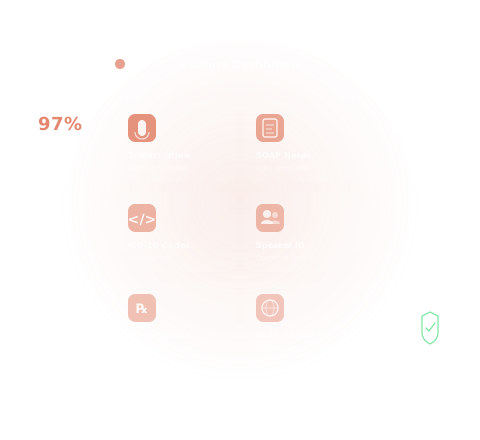
Conversation capture and transcription: During the consultation, the system captures the doctor-patient interaction and converts speech into text. This is useful in ophthalmology where symptom descriptions, duration, prior procedures, and treatment adherence all matter to the final note.
Speaker diarization: The platform separates speakers so the clinician's questions and the patient's responses are easier to interpret in context. This helps when drafting a cleaner history from a natural conversation.
Automatic SOAP note generation: Instead of starting from a blank screen, the clinician receives a structured draft note. This can help eye care teams document common OPD encounters more consistently.
ICD-10 and CPT suggestions: Coding support can assist teams during review by surfacing likely coding options based on the documented encounter. Suggestions should still be checked by the clinician or billing team before final use.
Multilingual support: In Indian ophthalmology practice, patients may describe symptoms in Hindi, English, or regional languages. Multilingual support helps preserve the flow of the consultation while still producing a usable draft.
On-premise or private deployment options: Some organizations prefer deployment choices that support workflows aligned with internal data handling and IT governance requirements. These decisions are operational and organization-specific.
These capabilities make an AI medical scribe in India relevant not just as a transcription tool, but as a documentation workflow layer that supports review-ready output for eye care teams.
How It Works
The workflow is designed to follow the actual consultation lifecycle in ophthalmology, from conversation capture to final clinician sign-off.
- Capture the consultation conversation: The doctor-patient interaction is recorded through the configured workflow during the OPD visit. This may include symptom history, prior treatment discussion, examination commentary, diagnosis explanation, and treatment planning.
- Transcribe and structure the encounter: The system converts speech to text and uses speaker diarization to distinguish clinician and patient voices. It then organizes the transcript into clinically relevant sections so the encounter is easier to review.
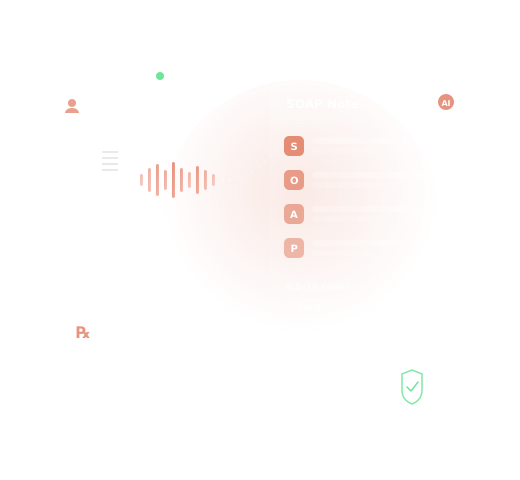
- Draft a SOAP note automatically: Based on the structured conversation, MedScribe generates a draft SOAP note. For ophthalmology, this can help summarize presenting complaints, relevant history, discussed findings, assessment, and plan in a usable format.
- Add coding support suggestions: The platform surfaces ICD-10 and CPT suggestions linked to the documented encounter. These are intended to support review workflows, not replace coding judgment.
- Clinician reviews and edits the draft: The doctor or authorized team member checks the note, corrects terminology, adds missing examination details if needed, and confirms that the assessment and plan reflect the actual visit.
- Finalize the record with sign-off: After human review, the clinician signs off on the final documentation. Depending on organizational preference, deployment can be configured in on-premise or private environments to support workflow and governance choices.
Local context
In India, ophthalmology practices often manage high outpatient volumes, mixed payer environments, and multilingual patient communication. Documentation tools need to be practical in this setting. An AI medical scribe in India should support fast-moving OPD workflows without adding complexity for doctors, optometrists, or front-office teams.
For smaller clinics, the value may come from reducing after-hours note completion and improving consistency in routine consult documentation. For hospitals and specialty eye centers, the value may include standardizing note quality across departments, supporting coding review, and choosing deployment models that fit internal infrastructure. The most useful approach is one that complements existing systems and daily habits rather than requiring a complete workflow reset.
This is also why an AI medical scribe India healthcare solution should be evaluated on practical criteria: note quality, editability, multilingual performance, review checkpoints, and fit with existing documentation processes.
Use cases
General ophthalmology OPD: Draft notes for common complaints such as blurred vision, redness, itching, watering, headache, or refractive concerns.
Cataract consultations: Summarize symptoms, prior history, lens-related discussion, counseling points, and next-step planning.
Glaucoma follow-up: Help document medication adherence discussion, symptom updates, and treatment plan review.
Retina visits: Support structured notes for diabetic retinopathy, macular issues, or follow-up discussions around investigations and treatment planning.
Post-operative reviews: Capture recovery updates, medication instructions, warning signs discussed, and follow-up advice.
Multi-language consultations: Maintain natural patient communication while producing a structured draft note for clinician review.
FAQ
Can this replace the doctor's documentation responsibility?
No. The platform is intended to create draft documentation and support review workflows. The clinician remains responsible for reviewing, editing, and signing off on the final record.
Is it useful for ophthalmology-specific consultations?
Yes, it is designed to support specialty workflows by converting consultation conversations into structured notes that can be adapted to ophthalmology encounters and reviewed by the clinician.
Does it support coding workflows?
It can provide ICD-10 and CPT suggestions based on the documented encounter. These suggestions should be reviewed by the clinician or billing team before use.
Can clinics choose how the system is deployed?
Yes. Deployment posture can be considered as part of workflow and governance planning, including on-premise or private environment options depending on organizational needs.
CTA
If your eye clinic or hospital wants to reduce manual note-taking and improve documentation consistency, MedScribe offers a practical path to evaluate an AI medical scribe in India for ophthalmology. Explore how conversation capture, SOAP drafting, coding support, and clinician review can fit your OPD workflow. You can also review related product information on /medscribe, feature details on /medscribe/features, integration considerations on /medscribe/integrations, and planning options on /medscribe/pricing.