Introduction
Orthodontic consultations often involve detailed case history, treatment planning, appliance discussions, follow-up adjustments, and patient education. An AI medical scribe in India can help orthodontists reduce manual documentation time by turning consultation conversations into structured clinical notes that are easier to review and finalize. For busy clinics and hospital dental departments, the goal is not to replace clinical judgment, but to support faster, more consistent documentation during OPD and review visits.
MedScribe is designed as an AI documentation copilot for doctors and care teams. In orthodontics, it can support note creation from chairside conversations, organize findings into SOAP-style documentation, and assist with coding suggestions for downstream workflows. This makes it useful for practices that want cleaner records, less after-hours typing, and a more streamlined handoff between clinicians, assistants, and front-desk teams. The value is practical: capture the conversation, structure the note, review the draft, and sign off only after clinician approval.
Department workflow
Orthodontic workflows are documentation-heavy because each visit may include assessment of alignment, appliance status, oral hygiene observations, patient-reported discomfort, treatment progress, and next-step instructions. Initial consultations may require longer narrative capture, while follow-up visits need concise but accurate updates. In many settings, clinicians document after the patient leaves, which can create delays, incomplete details, or variation in note quality.
An AI medical scribe in India fits into this workflow by supporting documentation across first consults, treatment planning visits, appliance placement, adjustment appointments, retention reviews, and interdisciplinary referrals. Instead of relying only on memory or fragmented shorthand, the system helps convert spoken interactions into structured drafts. This is especially useful when multiple speakers are involved, such as the orthodontist, assistant, patient, and parent or guardian.
For Indian healthcare settings, multilingual conversations are common. A patient may describe symptoms in one language while the clinician summarizes findings in English. A practical AI scribe should therefore support multilingual capture and speaker separation so the final note remains clinically usable. It should also fit both independent clinics and larger hospital environments where documentation standards and deployment preferences may differ.
Features mapped to workflow
Conversation capture: During orthodontic consultations, the platform can capture the interaction and prepare it for transcription. This supports more complete recall of patient concerns, treatment explanations, and consent-related discussions without forcing the clinician to type continuously.
Speaker diarization: In orthodontics, multiple voices are common. Speaker diarization helps distinguish between clinician, patient, and accompanying family member, making the draft note easier to interpret and edit.
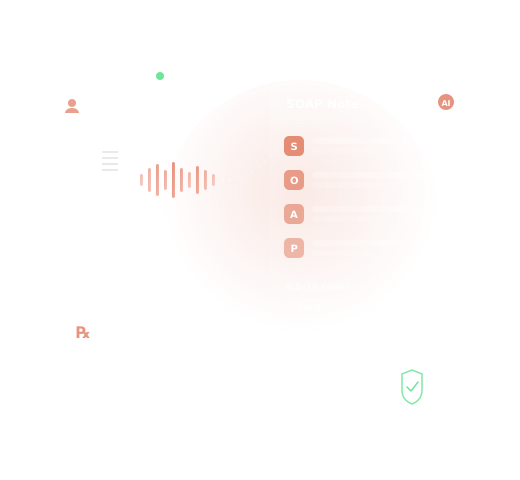
Automatic SOAP note generation: The system can organize the consultation into a SOAP-style draft, helping clinicians review subjective complaints, objective findings, assessment, and plan in a familiar structure.
Coding support: ICD-10 and CPT suggestions can support downstream documentation workflows. These suggestions should be reviewed by the clinician or billing team before use, but they can reduce manual lookup effort.
Multilingual support: Orthodontic practices in India often serve patients across language preferences. Multilingual support helps clinics document more naturally while preserving a structured output for records.
Deployment posture choices: Some organizations may prefer private or on-premise deployment models based on internal governance, IT architecture, or data handling preferences. These options support workflows aligned with organizational requirements rather than a one-size-fits-all setup.
How It Works
The workflow for an AI medical scribe in India should be clear, reviewable, and easy to adopt in day-to-day orthodontic practice.
- Capture the consultation conversation: During an initial orthodontic assessment or follow-up visit, the clinician starts the documentation session. The system captures the conversation between doctor, patient, and any accompanying caregiver, preserving the sequence of discussion for later structuring.
- Transcribe and separate speakers: The audio is converted into text, with speaker diarization used to distinguish who said what. This is useful when the patient describes pain, the parent asks about braces care, and the orthodontist explains treatment progress.
- Structure the transcript into a clinical draft: The platform organizes the consultation into a usable note format, including SOAP-style sections where appropriate. This helps transform a free-flowing conversation into a draft that reflects symptoms, observations, assessment, and treatment plan.
- Generate coding suggestions: Based on the documented encounter, the system can surface ICD-10 and CPT suggestions to support administrative workflows. These are assistive suggestions only and should be checked by the clinician or authorized team member.
- Review, edit, and sign off: The orthodontist reviews the draft note, corrects terminology, adds missing clinical detail such as appliance specifics or treatment milestones, and approves the final version. Human review is the operational checkpoint before the record is finalized.
- Choose the right deployment posture: Depending on clinic or hospital needs, teams can evaluate private or on-premise deployment approaches as workflow and governance decisions. This helps align implementation with internal IT and documentation processes.
Local context
Orthodontic practices in India range from single-chair specialty clinics to multi-specialty dental centers and hospital-based departments. Documentation needs can vary by patient volume, staffing model, and digital maturity. A practical AI medical scribe in India should therefore support flexible adoption: simple enough for daily OPD use, but structured enough for organizations that need standardized records across teams.
In many Indian settings, clinicians balance high patient throughput with detailed counseling on treatment duration, aligners, braces maintenance, oral hygiene, and follow-up schedules. This creates a strong need for documentation support that reduces repetitive typing while preserving clinical oversight. The most useful approach is one that helps the doctor finish notes faster without disrupting patient interaction.
Use cases
New patient orthodontic consults: Capture chief complaints, prior dental history, examination discussion, and treatment options in a structured draft.
Braces or aligner follow-ups: Document progress, discomfort, compliance discussion, appliance adjustments, and next review plan.
Parent-involved pediatric visits: Separate patient and guardian inputs more clearly through speaker-aware transcription.
Hospital dental OPD workflows: Support standardized note drafting across multiple clinicians and shifts.
Administrative support: Provide coding suggestions and cleaner documentation for downstream review and billing preparation.
FAQ
Can this be used during live orthodontic consultations?
Yes. It is designed to support real consultation workflows by capturing the conversation and preparing a draft note for clinician review.
Does it replace the orthodontist's documentation responsibility?
No. The clinician remains responsible for reviewing, editing, and approving the final record before sign-off.
Can it handle multilingual conversations common in India?
Yes. Multilingual support is part of the product design, which can help in clinics where patients and clinicians switch languages during the visit.
Does it support coding workflows?
It can provide ICD-10 and CPT suggestions to assist documentation and administrative teams, but these suggestions should always be reviewed before use.
CTA
If your orthodontic clinic or hospital team wants to reduce documentation burden and improve note consistency, an AI medical scribe in India can be a practical next step. Explore how MedScribe supports conversation capture, SOAP drafting, coding assistance, multilingual workflows, and clinician-led review for everyday orthodontic care. For broader product details, teams can also review the main MedScribe, features, integrations, and pricing pages as part of implementation planning.