Introduction
Orthopedic consultations often move quickly between history taking, pain assessment, physical examination, imaging review, treatment planning, and follow-up instructions. That pace can make documentation feel like a second job for surgeons, sports medicine specialists, joint replacement teams, trauma units, and busy OPD clinicians. An AI medical scribe in India can help reduce manual note-taking by turning consultation conversations into structured clinical drafts that are ready for review. For orthopedic practices, the goal is practical: support faster documentation, clearer records, and more consistent capture of findings without disrupting the doctor-patient interaction.
MedScribe is designed as an AI documentation copilot for clinics and hospitals that want usable notes rather than generic transcripts. It supports automatic SOAP note generation, coding suggestions, speaker diarization, multilingual conversations, and deployment choices such as private or on-premise setups based on operational needs. For teams evaluating an AI medical scribe in India, the value is not replacing clinical judgment. It is supporting the workflow from conversation capture to draft note creation, then keeping the clinician in control for edits and final sign-off.
Department workflow
Orthopedics has documentation patterns that differ from many other specialties. A typical visit may include mechanism of injury, duration of pain, prior treatment, comorbidities affecting mobility, examination findings, range of motion, tenderness, swelling, gait observations, imaging references, procedural advice, rehabilitation plans, and medication or injection discussions. In fracture care, trauma, spine, arthroscopy, or joint replacement pathways, the note must also remain clear enough for follow-up teams and rehabilitation staff.
In daily OPD settings, doctors often switch between new cases, review visits, post-operative checks, and procedure counseling. Manual typing during or after each visit can slow throughput and increase after-hours documentation. An AI medical scribe in India is most useful when it fits this real workflow: listen to the consultation, separate speakers, structure the conversation into a clinical format, suggest relevant coding options, and present a draft that the clinician can quickly verify. This is especially relevant in orthopedic departments where repeated templates are common but each case still needs individualized findings and treatment plans.
Features mapped to workflow
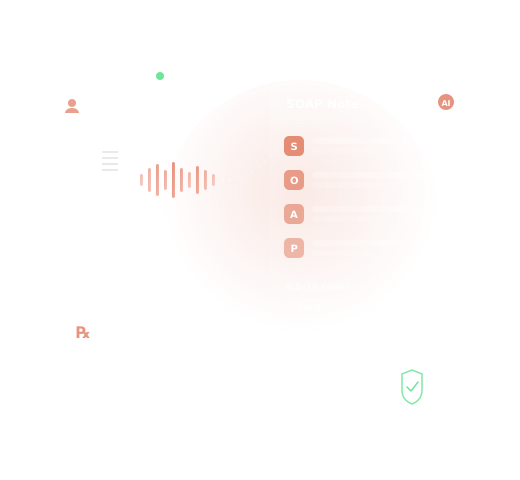
Automatic SOAP note generation: Converts the consultation into a structured draft with subjective history, objective findings, assessment, and plan. For orthopedics, this helps organize pain history, exam findings, imaging references, and treatment recommendations into a familiar format.
Speaker diarization: Distinguishes between clinician and patient voices so the draft better reflects who said what. This is useful when documenting symptom history, injury mechanism, prior treatment response, and patient concerns about surgery or recovery timelines.
ICD-10 and CPT suggestions: Provides coding support based on the documented encounter. These suggestions are intended to assist review, not replace coding validation by the care team.
Multilingual support: Many orthopedic consultations in India involve a mix of English and regional languages. Multilingual capture can support more natural conversations while still producing a structured draft for the clinician.
Private or on-premise deployment options: Some hospitals and larger groups prefer deployment choices aligned with internal IT governance and data handling preferences. These decisions are operational and workflow-driven, especially for organizations standardizing documentation across departments.
Human review before finalization: The draft remains editable. Clinicians review, correct, and sign off before the record is finalized, which is essential for safe use in orthopedic documentation.
How It Works
The workflow for an orthopedic consultation is designed to be straightforward and review-led:
- Capture the consultation conversation: During the OPD visit, the system captures the doctor-patient discussion, including symptom history, injury details, examination commentary, and treatment planning. This can support mixed-language conversations common in Indian clinical settings.
- Transcribe and separate speakers: The audio is converted into text with speaker diarization so the system can distinguish patient statements from clinician observations and recommendations. This helps preserve context for pain history, functional limitations, and prior treatment response.
- Structure the encounter into a SOAP draft: The transcript is organized into a clinical note draft. For orthopedics, this may include presenting complaint, duration, mechanism of injury, examination findings, imaging references, assessment, and plan. The aim is a usable draft rather than a raw transcript.
- Generate coding support: Based on the documented encounter, the system can suggest ICD-10 and CPT options to support downstream documentation workflows. These remain suggestions for clinician or billing-team review.
- Review, edit, and sign off: The clinician checks the draft, updates terminology, confirms findings, and approves the final note before it becomes part of the record. This human checkpoint is central to safe adoption of an AI medical scribe in India.
- Choose deployment posture for operations: Clinics and hospitals can evaluate private or on-premise deployment approaches where needed, based on infrastructure, governance preferences, and integration planning rather than broad compliance claims.
Local context
Orthopedic care in India spans solo practices, specialty centers, multi-specialty hospitals, trauma-focused units, and high-volume OPDs. Documentation needs vary across these settings, but the common challenge is balancing patient interaction with timely note completion. An AI medical scribe in India can be relevant where clinicians want to reduce repetitive typing, support multilingual consultations, and standardize note quality across providers.
For hospital administrators and department heads, the practical questions are usually about workflow fit: how quickly doctors can review drafts, whether the output matches orthopedic note structure, and how deployment choices align with internal IT preferences. For smaller clinics, the focus may be on reducing documentation burden without adding complexity. In both cases, the product should support existing workflows rather than force a new one.
Use cases
General orthopedic OPD: Draft notes for knee pain, back pain, shoulder complaints, osteoarthritis follow-ups, and post-imaging reviews.
Sports injury clinics: Capture injury mechanism, activity limitations, examination findings, and rehabilitation advice in a structured format.
Trauma and fracture follow-up: Support documentation of injury history, immobilization status, healing progress, and next-step planning.
Joint replacement pathways: Help organize pre-operative counseling, post-operative reviews, mobility updates, and medication or physiotherapy plans.
Multi-doctor hospital departments: Improve consistency in note drafting across consultants while keeping final review with the treating clinician.
These scenarios show why an AI medical scribe in India is best evaluated as a workflow tool. It supports documentation quality and speed, but the final clinical record still depends on clinician review and approval.
FAQ
Can this work for mixed-language orthopedic consultations?
Yes. Multilingual support is intended to help when consultations include English and regional language usage, while still producing a structured draft for review.
Does it create final notes automatically?
It creates draft notes and coding suggestions, but the clinician reviews, edits, and signs off before finalization.
Is it useful only for large hospitals?
No. It can be relevant for individual orthopedic clinics, specialty centers, and hospital departments, depending on documentation volume and workflow needs.
Can it support coding workflows?
Yes. The product can suggest ICD-10 and CPT codes based on the encounter, with validation left to the clinician or billing team.
CTA
If your orthopedic team is evaluating documentation tools, start with the daily workflow: consultation capture, note drafting, coding support, review time, and deployment preferences. MedScribe is built to support practical OPD and hospital documentation needs with clinician review at the center. Explore how an AI medical scribe in India can fit orthopedic workflows, improve note consistency, and reduce repetitive documentation effort across clinics and hospitals.