Introduction
Pain medicine consultations often involve long histories, repeat follow-ups, procedure planning, medication review, and functional assessment. That makes documentation important but time-consuming for consultants, fellows, and clinic staff. An AI medical scribe in India can help reduce manual note-taking by turning consultation conversations into structured draft documentation that clinicians can review and finalize. For pain clinics, this is useful across OPD visits, interventional pain assessments, chronic pain follow-ups, and multidisciplinary care discussions.
This page explains how an AI medical scribe supports practical documentation workflows for pain medicine teams in India. The focus is not on replacing clinical judgment. Instead, it is about helping doctors capture relevant history, examination points, assessment summaries, and plan details in a more usable format. MedScribe is designed to convert consultation audio into structured notes, support SOAP drafting, and provide coding suggestions that clinicians can verify before sign-off. For hospitals and clinics evaluating an AI medical scribe in India, the key question is whether it fits daily workflow without adding friction. That is the lens used here.
Department workflow
Pain medicine documentation has a few recurring patterns. New consultations usually require a detailed pain history, prior treatment review, imaging references, medication history, red-flag screening, and functional impact. Follow-up visits may focus on response to therapy, side effects, pain scores, sleep, mobility, work limitations, and next-step planning. Procedure-oriented encounters can add consent discussion, indication summary, target site, technique notes, and post-procedure instructions.
In many Indian clinics, the challenge is not only note creation but note consistency. Doctors may move between high-volume OPD sessions, procedure rooms, and hospital rounds. Staff may need to support billing preparation, coding review, and record completion. A practical AI medical scribe in India should therefore help with three things: capturing the conversation accurately, structuring it into clinically useful sections, and keeping the clinician in control of edits and final approval.
For pain medicine, that means supporting documentation around symptoms such as neuropathic pain, back pain, neck pain, joint pain, cancer pain, post-surgical pain, and chronic pain syndromes without forcing a rigid template. It should also help organize medication changes, intervention planning, rehabilitation advice, and follow-up instructions in a way that is easy to review.
Features mapped to workflow
MedScribe is positioned as an AI medical documentation copilot for doctors and clinics. In pain medicine, its value is strongest when features map directly to the consultation flow rather than acting as a generic transcription tool.
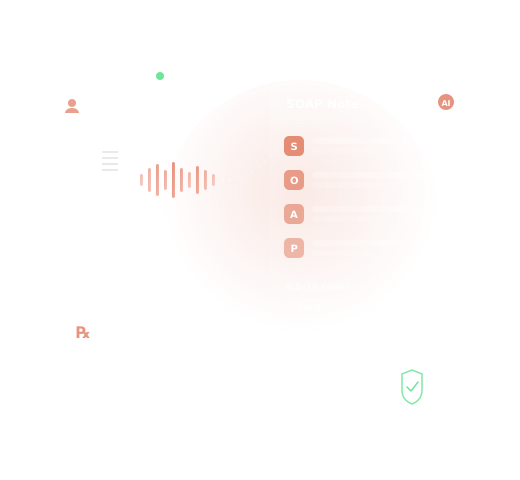
Automatic SOAP note generation: After a consultation, the system can draft subjective, objective, assessment, and plan sections from the captured conversation. This is useful for chronic pain reviews where the same broad structure repeats but the clinical details change each visit.
Speaker diarization: Pain consultations often include the patient, doctor, and sometimes a caregiver. Speaker separation helps the draft note reflect who said what, which improves review quality and reduces confusion during editing.
Multilingual support: Many clinics in India switch between English and regional languages during the same visit. Multilingual support can help preserve context from mixed-language consultations and reduce the burden of reconstructing the visit later.
ICD-10 and CPT suggestions: Coding support can help staff prepare draft coding references based on the documented encounter. These suggestions should be reviewed by the clinician or billing team before use.
On-premise or private deployment options: Some hospitals prefer tighter control over infrastructure and data handling. Deployment posture can be chosen as a workflow and governance decision based on internal IT preferences.
Integration readiness: Because product hubs exist for features and integrations, teams evaluating fit can align note generation with their broader documentation stack rather than treating the scribe as a standalone tool.
How It Works
The workflow below reflects how the product is described and how pain medicine teams typically document encounters.
- Capture the consultation conversation: During the OPD visit or review, the doctor conducts the consultation as usual. The system captures the conversation, including mixed-language exchanges where supported, without requiring the clinician to dictate every line manually.
- Transcribe and structure the interaction: The audio is converted into text and organized using speaker diarization so the draft can distinguish clinician and patient statements. This is especially helpful when discussing pain history, prior interventions, medication response, and caregiver observations.
- Draft a SOAP note automatically: The system converts the structured transcript into a draft SOAP note. For pain medicine, this may include symptom history, relevant examination observations discussed in the encounter, assessment summary, and treatment plan points such as medicines, physiotherapy advice, investigations, or intervention planning.
- Generate coding suggestions: Based on the documented encounter, the product can surface ICD-10 and CPT suggestions for review. These are intended as support for documentation and billing workflows, not as final coding decisions.
- Clinician review and edit: The doctor reviews the draft note, corrects details, adds missing findings, and confirms that the assessment and plan reflect clinical judgment. Human review is the operational checkpoint before anything becomes part of the final record.
- Finalize within the chosen deployment model: After sign-off, the note can move into the clinic's documentation workflow. Teams may choose on-premise or private deployment approaches based on internal governance, IT architecture, and workflow preferences.
Local context
In India, pain medicine practices may operate across standalone clinics, multispecialty hospitals, day-care procedure settings, and academic departments. Documentation needs can vary by setup, but common pressures include high patient volume, mixed digital maturity, multilingual communication, and the need to keep records usable for follow-up continuity. An AI medical scribe in India is most useful when it adapts to these realities rather than assuming a single workflow.
For example, some clinics may want faster OPD note completion, while hospital departments may focus on standardizing documentation across consultants and junior doctors. Others may prioritize deployment flexibility, especially where internal IT teams prefer private infrastructure choices. In this context, an AI medical scribe in India should support workflows aligned with local operational needs, including practical review steps before finalization.
Use cases
Chronic pain OPD: Drafting structured follow-up notes after long consultations involving pain scores, medication titration, sleep impact, and functional status.
Interventional pain planning: Summarizing indication, prior treatment failure, target symptoms, and next-step procedure discussion for review.
Post-procedure follow-up: Capturing response, adverse effects discussed, activity advice, and future review plans in a consistent format.
Multidisciplinary care: Organizing conversations that involve rehabilitation advice, psychological support discussion, or caregiver input.
Hospital-based documentation support: Helping consultants and residents prepare usable draft notes that can be edited and signed off quickly.
These use cases show why clinics searching for an AI medical scribe in India often evaluate not just transcription quality, but whether the product supports real documentation completion from consultation to final note.
FAQ
Can this be used only for pain medicine?
No. The product is broadly positioned for doctors and clinics, but this page focuses on how it fits pain medicine workflows such as chronic pain reviews and procedure planning.
Does it replace clinician documentation review?
No. The draft note and coding suggestions should be reviewed, edited where needed, and signed off by the clinician before finalization.
Can it help in multilingual consultations common in India?
The product description includes multilingual support, which can help when consultations move between English and regional languages.
Is deployment flexible for hospitals?
Yes. On-premise deployment is part of the product description, which can support organizations that prefer private infrastructure choices.
CTA
If your pain clinic or hospital team is evaluating an AI medical scribe in India, focus on workflow fit: conversation capture, SOAP drafting, coding support, review checkpoints, and deployment options. Explore the main product, features, integrations, and pricing paths to assess whether the setup matches your OPD and documentation process. The goal is simple: help clinicians spend less time typing and more time reviewing, deciding, and caring for patients.