Introduction
An AI medical scribe in India can help palliative medicine teams reduce documentation burden while keeping the clinical conversation at the centre of care. In palliative settings, consultations often include symptom review, medication adjustments, family discussions, goals of care, psychosocial context, and follow-up planning. Capturing all of this clearly takes time. MedScribe is designed as an AI documentation copilot that converts consultation conversations into structured clinical notes and coding suggestions, with clinician review before finalisation.
For hospitals, hospices, and clinics, the value is practical: less time spent typing after visits, more consistent note structure, and easier handoff across teams. The product supports automatic SOAP note drafting, speaker diarization, multilingual workflows, and coding support based on the consultation. It is built for day-to-day OPD and inpatient documentation needs, including settings where clinicians switch between English and Indian languages during the same encounter. If your team is evaluating an AI medical scribe in India, the key question is not just transcription quality, but whether the workflow fits real palliative care practice.
Department workflow
Palliative medicine documentation is different from many high-volume specialties because the encounter is often nuanced and longitudinal. A typical workflow may include symptom assessment, pain scoring, medication reconciliation, review of prior interventions, discussion with caregivers, functional status, emotional concerns, and a care plan that may involve multiple services. Notes also need to reflect changes over time, not just isolated complaints.
In this environment, clinicians need documentation support that can follow a conversation, separate speakers, and organise details into a usable note. A palliative care team may document outpatient consultations, ward reviews, home-care summaries, or follow-up visits. The same patient may be discussed by the physician, nurse, caregiver, and patient in one sitting. MedScribe is designed to support these workflows by turning the spoken interaction into structured draft documentation that the clinician can edit and approve.
For organisations comparing options for an AI medical scribe in India, workflow fit matters. The tool should support long-form conversations, variable consultation styles, and practical note outputs that reduce repetitive work without removing clinician control.
Features mapped to workflow
Automatic SOAP note generation: Palliative consultations often produce rich narrative information. MedScribe helps convert that conversation into a SOAP-style draft so the clinician starts from a structured note rather than a blank screen.
Speaker diarization: In family-centred consultations, multiple people may speak. Speaker separation helps distinguish patient, caregiver, and clinician contributions, making the draft easier to review.
Multilingual support: Many Indian clinical encounters move between English and local languages. This is especially relevant in palliative medicine, where sensitive topics are often discussed in the patient’s preferred language.
ICD-10 and CPT suggestions: Coding support can help teams prepare documentation for downstream administrative workflows. Suggestions are intended to support review, not replace clinician judgement.
On-premise or private deployment options: Some hospitals prefer deployment choices that align with internal governance and IT policies. These options are workflow and infrastructure decisions that can support local operating preferences.
Review and sign-off controls: Drafts are meant for clinician editing and final approval before the record is completed. This is important in palliative care, where wording and context can be clinically significant.
How It Works
Below is the typical end-to-end workflow for MedScribe in palliative medicine:
- Capture the consultation conversation: During an OPD visit, bedside review, or follow-up discussion, the consultation audio is captured through the configured workflow. This may include patient history, symptom updates, caregiver inputs, and treatment planning.
- Transcribe and structure the interaction: MedScribe processes the conversation into text and applies speaker diarization to separate participants. The transcript is then organised into clinically relevant sections so the encounter is easier to review.
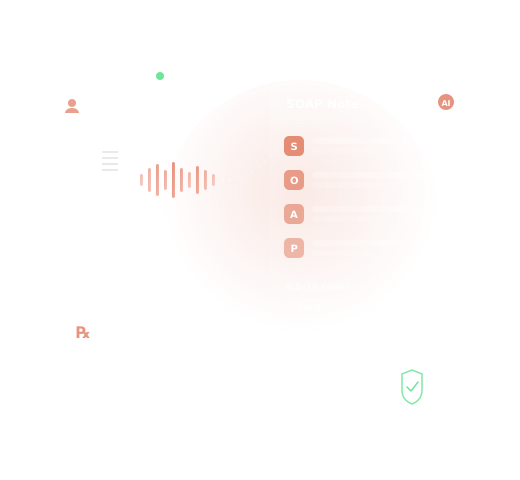
- Draft a SOAP note automatically: Based on the structured transcript, the system generates a draft SOAP note. In palliative medicine, this can help summarise symptom burden, medication changes, psychosocial observations, and next-step planning in a consistent format.
- Add coding support: The platform can surface ICD-10 and CPT suggestions linked to the documented encounter. These are presented as support for administrative and billing workflows and should be reviewed by the clinician or authorised team member.
- Clinician review, edits, and final sign-off: The doctor reviews the draft note, corrects wording, adds missing context, and confirms the final version before it becomes part of the record. Human review is a required operational checkpoint, especially for sensitive palliative discussions.
- Choose the deployment posture that fits your organisation: Hospitals and clinics can evaluate on-premise or private deployment approaches based on internal IT, governance, and workflow needs. This supports implementation choices aligned with local operating models rather than one fixed setup.
This practical flow is what many teams look for when assessing an AI medical scribe in India: capture, structure, draft, review, and finalise with clinician oversight.
Local context
In India, palliative medicine teams often work across mixed care settings, from tertiary hospitals to smaller clinics and outreach-linked programs. Documentation needs can vary by organisation, but common challenges include limited time, multilingual consultations, and the need to coordinate across clinicians, nurses, and caregivers. An AI medical scribe in India should therefore support flexible workflows rather than assume a single consultation style.
Another practical consideration is infrastructure. Some organisations may prefer cloud-based workflows, while others may evaluate private or on-premise deployment based on internal governance preferences. MedScribe is designed to support workflows aligned with these operational choices. For Indian healthcare teams, the goal is not novelty for its own sake, but a documentation process that is easier to adopt in real clinical environments.
Use cases
Outpatient palliative consultations: Draft notes from detailed symptom and medication reviews without relying on manual typing throughout the visit.
Inpatient reviews: Summarise bedside discussions, family updates, and care plan changes into a structured note for the treating team.
Follow-up visits: Maintain consistency in documentation across repeated encounters where symptom trends and response to treatment matter.
Caregiver-inclusive consultations: Use speaker diarization to better organise multi-person conversations common in palliative care.
Multilingual encounters: Support note creation when the discussion moves between English and local languages during the same consultation.
Administrative support: Use coding suggestions as a starting point for downstream review in hospital workflows.
These scenarios reflect why many providers exploring AI medical scribe India healthcare solutions focus on usability, review controls, and fit with existing documentation habits.
FAQ
Can this be used for long and sensitive palliative consultations?
Yes. The workflow is suited to detailed conversations and is designed to help organise complex discussions into a draft note for clinician review.
Does the system replace clinician documentation judgement?
No. MedScribe creates draft notes and coding suggestions, but the clinician reviews, edits, and signs off before finalisation.
Is multilingual use relevant for Indian palliative care settings?
Yes. Many consultations in India involve more than one language, and multilingual support can help teams document these encounters more efficiently.
Can hospitals choose different deployment models?
Yes. Organisations can evaluate on-premise or private deployment approaches based on workflow, IT, and governance preferences.
CTA
If your team is looking for an AI medical scribe in India that fits palliative medicine workflows, MedScribe offers a practical path from conversation capture to reviewed clinical documentation. Explore the product overview, features, integrations, and pricing to assess fit for your clinic or hospital. The focus is simple: reduce repetitive documentation work, support structured notes, and keep clinicians in control of the final record.