Introduction
Pediatric endocrinology consultations often involve detailed history taking, growth review, medication checks, lab interpretation, and family counselling. That makes documentation important but time consuming in busy OPD settings. An AI medical scribe in India can support clinicians by turning consultation conversations into structured draft notes that are easier to review, edit, and finalize. For pediatric endocrinology teams, this is especially useful when visits include longitudinal follow-up for diabetes, thyroid disorders, growth concerns, puberty-related evaluation, obesity management, or adrenal and pituitary conditions.
MedScribe is designed as an AI documentation copilot for doctors, clinics, and hospitals. It helps convert spoken clinical interactions into usable documentation, including SOAP-style drafts and coding suggestions, while keeping the clinician in control of final sign-off. Instead of replacing clinical judgment, it supports the daily work of documenting encounters more consistently. For organizations evaluating an AI medical scribe in India, the practical question is not just transcription accuracy, but whether the workflow fits real outpatient care, multilingual conversations, and review requirements before records are finalized.
Department workflow
In pediatric endocrinology, the consultation flow is often more layered than a short general OPD visit. A clinician may begin with the child and caregiver history, review prior growth charts, discuss symptoms such as polyuria, weight changes, delayed puberty, or short stature, and then move into medication adherence, insulin technique, dietary patterns, and lab trends. Follow-up visits may also require comparison with previous HbA1c values, thyroid function tests, bone age reports, or growth velocity observations.
Documentation during these visits can become fragmented when the doctor is switching between listening, counselling, and typing. A practical AI medical scribe in India should therefore support the natural consultation flow: capture the conversation, separate speakers, organize the content into clinically meaningful sections, and present a draft that the clinician can quickly verify. In pediatric settings, it is also helpful when the system can handle caregiver input, mixed-language conversations, and repeated follow-up structures that are common in chronic endocrine care.
Typical workflow needs in this department include documenting presenting complaints, duration and progression, relevant birth and developmental history where applicable, family history, examination findings, growth parameters, assessment, treatment plan, investigations advised, and follow-up instructions. Coding support can also help administrative teams prepare cleaner downstream documentation, while the clinician remains responsible for confirming what is appropriate for the encounter.
Features mapped to workflow
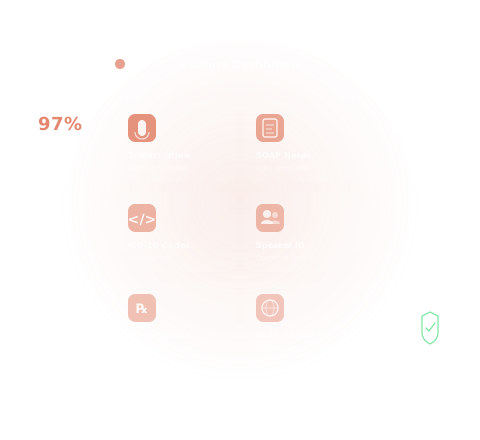
MedScribe aligns its core capabilities to these day-to-day documentation needs. Automatic SOAP note generation helps convert a consultation into a familiar structure that clinicians can review quickly. Speaker diarization helps distinguish doctor, patient, and caregiver voices, which is useful in pediatric visits where multiple people contribute to the conversation. Multilingual support is relevant for Indian healthcare settings where consultations may move between English and regional languages. ICD-10 and CPT suggestions can support coding workflows, especially after the assessment and plan are drafted, though these suggestions still require clinician or authorized staff review.
For hospitals and larger groups, deployment posture matters as much as note quality. Some organizations may prefer private or on-premise deployment options based on internal governance, IT architecture, or data handling preferences. MedScribe is designed to support these operational choices without presenting them as blanket guarantees. The result is a workflow-oriented tool that can fit clinics looking for faster note preparation as well as hospitals seeking more controlled implementation pathways for an AI medical scribe in India.
How It Works
The product workflow is built around real consultation documentation rather than generic dictation. In pediatric endocrinology, the process can work as follows:
- Capture the consultation conversation: During the OPD visit, the clinician uses the scribe workflow to capture the interaction between doctor, child, and caregiver. The system is built to support multilingual conversations and speaker diarization so the draft can reflect who said what more clearly.
- Transcribe and structure the encounter: The captured audio is converted into text and organized into clinically relevant segments. Instead of leaving the output as a raw transcript, the system prepares structured content that can feed note creation for endocrine follow-ups, new evaluations, and counselling-heavy visits.
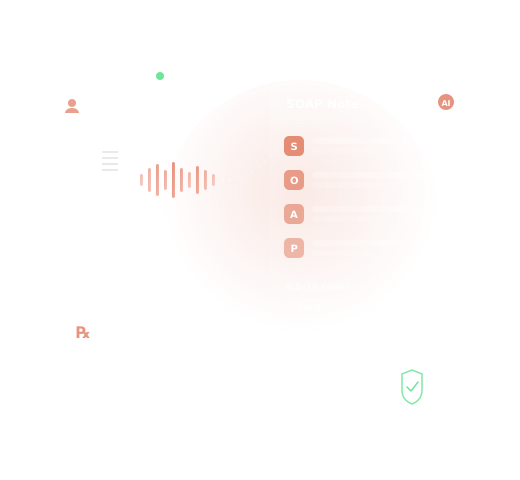
- Draft a SOAP note automatically: Based on the conversation, MedScribe generates a draft SOAP note with subjective history, objective details discussed or entered, assessment framing, and plan-oriented content. This helps reduce manual typing while keeping the note in a familiar format for review.
- Add coding support: After the draft note is prepared, the system can surface ICD-10 and CPT suggestions to support documentation and billing workflows. These are assistance features, not final coding decisions, and should be checked by the clinician or authorized team member.
- Review, edit, and sign off: The clinician reviews the draft, corrects any missing or unclear details, confirms the assessment and plan, and then finalizes the record. Human review is the operational checkpoint before documentation is completed, which is especially important in specialty care and pediatric follow-up visits.
- Choose deployment posture for governance needs: Depending on the clinic or hospital setup, teams may evaluate private or on-premise deployment options. This is best treated as a workflow and governance decision that supports internal processes and infrastructure preferences.
Local context
In India, pediatric endocrinology practices may operate across standalone clinics, multispecialty hospitals, and tertiary centers. Workflows can vary, but common realities include high follow-up volumes, mixed digital maturity, multilingual patient interactions, and pressure to keep consultations patient-focused despite documentation load. That is why an AI medical scribe in India should be evaluated on practical fit: how easily it supports OPD throughput, whether it can adapt to specialty note patterns, and how smoothly it fits existing documentation habits.
For many teams, the value is not only faster note preparation but also more consistent draft structure across repeat visits. In chronic pediatric endocrine care, where trends over time matter, a cleaner documentation process can make follow-up review easier. An AI medical scribe in India may also be relevant for organizations that want deployment flexibility, especially when internal IT teams are considering private infrastructure choices for clinical software.
Use cases
Common use cases in pediatric endocrinology include diabetes follow-up visits with insulin adjustment discussions, thyroid disorder reviews, short stature and growth evaluation, obesity and metabolic counselling, delayed or precocious puberty assessment, and post-investigation follow-up appointments. In each of these scenarios, the clinician often needs to capture nuanced history, counselling points, and next-step planning without losing eye contact with the family.
MedScribe can support these encounters by preparing structured drafts after the conversation, helping the doctor focus more on explanation and less on live typing. It can also be useful in clinics where junior doctors or support staff assist with documentation review, because the output is already organized into a more usable format. For hospitals comparing options for AI medical scribe India healthcare workflows, the key advantage is that the product is oriented to end-to-end clinical documentation support rather than simple voice-to-text alone.
FAQ
Can this be used for pediatric follow-up visits with caregivers speaking alongside the child?
Yes. Speaker diarization is designed to help separate voices in multi-speaker consultations, which can be useful when both caregiver and patient contribute to the history.
Does the product create final notes automatically?
It creates draft documentation such as SOAP notes, but clinician review, edits, and final sign-off remain essential before the record is finalized.
Is multilingual consultation support available?
The product is designed with multilingual support for real-world clinical conversations, which is relevant for many Indian outpatient settings.
Can it help with coding?
Yes. It can provide ICD-10 and CPT suggestions to support workflows, but these suggestions should be reviewed and confirmed by the appropriate clinician or staff member.
CTA
If your clinic or hospital is assessing an AI medical scribe in India for pediatric endocrinology, focus on workflow fit, review controls, and deployment needs. MedScribe is built to support consultation capture, structured note drafting, coding assistance, and clinician-led finalization in everyday OPD practice. Explore whether it fits your documentation process, specialty needs, and operational preferences.