Introduction
Pediatric gastroenterology clinics manage detailed conversations that often move between symptoms, feeding history, growth concerns, bowel habits, medication use, prior investigations, and parent questions. That makes documentation important but time-consuming. An AI medical scribe in India can help pediatric GI specialists convert consultation conversations into structured draft notes that are easier to review, edit, and finalize during busy OPD schedules. Instead of treating documentation as a separate task after clinic hours, teams can support note creation closer to the point of care.
For hospitals and clinics, the value is practical: clearer draft documentation, more consistent SOAP formatting, support for coding suggestions, and a workflow that still keeps the clinician in control of final sign-off. In pediatric gastroenterology, where history-taking often involves both child and caregiver, speaker separation and multilingual support can be especially useful. This page explains how an AI medical scribe in India fits into daily pediatric GI workflows, what features matter most, and how teams can evaluate deployment choices for their setting.
Department workflow
Pediatric gastroenterology visits often begin with a parent-led history and then shift into clinician-led clarification. Common encounters may include abdominal pain, constipation, diarrhea, reflux, feeding intolerance, poor weight gain, celiac disease follow-up, liver-related concerns, or inflammatory bowel disease monitoring. Documentation usually needs to capture symptom duration, stool patterns, dietary triggers, hydration, growth history, medication adherence, red flags, examination findings, and next-step plans.
In a typical OPD workflow, the clinician or assistant gathers the consultation conversation, reviews the draft note, confirms the assessment, and finalizes the plan. The challenge is not only speed but consistency. Pediatric GI notes often require structured details that can be missed when clinicians are moving quickly between patients. An AI medical scribe in India supports this workflow by turning the conversation into a usable draft rather than a raw transcript alone.
For follow-up visits, the same workflow can help summarize interval changes such as appetite, stool frequency, pain episodes, response to elimination diets, lab trends, and treatment tolerance. For procedure-related counseling or chronic disease management, the tool can support more complete note capture while preserving clinician review before the record is finalized.
Features mapped to workflow
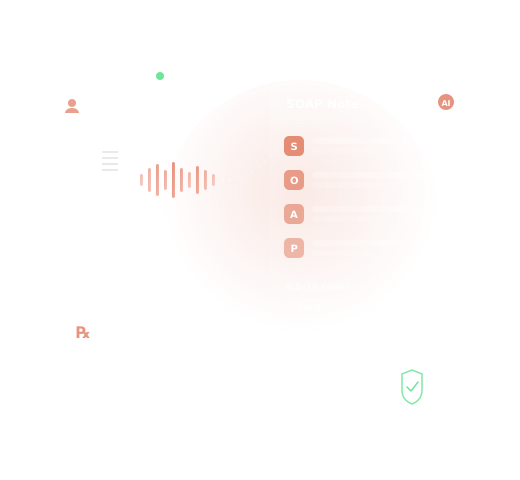
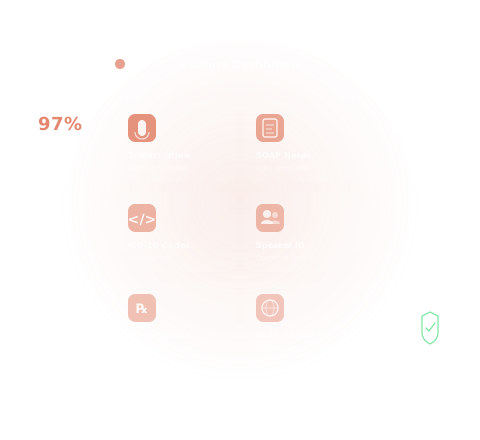
Automatic SOAP note drafting: Pediatric GI clinicians often think in a structured format even when the conversation is non-linear. Automatic SOAP generation helps organize subjective history, objective findings, assessment, and plan into a draft that is easier to verify.
Speaker diarization: In pediatric consultations, the parent, child, and clinician may all contribute different pieces of information. Speaker diarization helps separate who said what, which can improve clarity before the note is reviewed.
Multilingual support: Many clinics in India work across English and regional languages within the same consultation. Multilingual support can help capture mixed-language encounters more effectively for downstream note drafting.
ICD-10 and CPT suggestions: Coding support can help teams prepare draft coding suggestions linked to the documented encounter. These suggestions should still be reviewed by the clinician or billing team before use.
Human review and edits: The product value is not in replacing clinical judgment. It is in reducing manual typing while keeping the doctor responsible for edits, approval, and final sign-off.
On-premise or private deployment options: For organizations with stricter governance preferences, deployment posture can be chosen as an operational decision. This supports workflows aligned with internal IT and data handling requirements.
How It Works
The workflow below reflects how the product is designed to support real consultation documentation from start to finish.
- Capture the consultation conversation: During the pediatric gastroenterology visit, the system records or ingests the consultation audio from the approved workflow. This may include parent history, child responses, and clinician questions. Speaker diarization helps distinguish participants so the draft is easier to interpret.
- Transcribe and structure the encounter: The conversation is converted into text and organized into clinically relevant segments such as presenting complaints, symptom timeline, diet history, bowel pattern, prior treatment, and follow-up context. Multilingual support helps when the encounter shifts between English and local language usage.
- Generate a draft SOAP note: The system creates a structured draft note with subjective details, objective findings entered or inferred from the documented conversation, a draft assessment, and a plan section. This gives the clinician a usable starting point rather than a blank screen.
- Add coding suggestions: Based on the documented encounter, the tool can surface ICD-10 and CPT suggestions for review. These are intended as support for documentation and billing workflows, not as automatic final coding.
- Clinician review, edit, and sign-off: The doctor reviews the draft, corrects any missing or inaccurate details, confirms the assessment and plan, and approves the final note. Human review is the operational checkpoint before the record is finalized.
- Choose deployment posture for governance needs: Clinics and hospitals can evaluate on-premise or private deployment options based on workflow, IT preferences, and internal governance expectations. This is a practical implementation choice rather than a guarantee claim.
Local context
In India, pediatric specialty clinics often balance high patient volumes with detailed caregiver counseling. That makes documentation support especially relevant in OPD settings where clinicians need to move quickly without losing important context. An AI medical scribe in India can be useful when teams want more consistent note structure across new visits, follow-ups, and chronic disease reviews.
Many organizations also need flexibility in how technology is deployed and integrated into existing systems. For that reason, an AI medical scribe India healthcare solution should be evaluated not only for transcription quality but also for workflow fit, review controls, multilingual handling, and deployment posture. The goal is to support clinicians in daily practice, not to force a rigid documentation process.
For pediatric gastroenterology specifically, local context also includes mixed-language consultations, parent-led narratives, and variable documentation styles across solo clinics, multispecialty centers, and hospitals. A practical AI medical scribe in India should adapt to these realities while keeping the final note under clinician control.
Use cases
New patient evaluation: Draft notes for abdominal pain, constipation, reflux, diarrhea, poor growth, or feeding issues where history is long and detailed.
Follow-up visits: Capture interval changes in symptoms, stool patterns, appetite, medication response, and diet adherence.
Chronic condition management: Support documentation for celiac disease, inflammatory bowel disease, liver follow-up, or recurrent GI complaints that require longitudinal notes.
Caregiver counseling: Summarize dietary advice, hydration guidance, medication instructions, and red-flag education discussed during the visit.
Coding-ready review workflows: Provide draft ICD-10 and CPT suggestions linked to the documented encounter for clinician or billing review.
Across these scenarios, an AI medical scribe in India helps reduce repetitive manual note creation while preserving the review and approval step that clinicians need.
FAQ
Can this work for pediatric consultations where parents do most of the talking?
Yes. Speaker diarization is useful in visits where the caregiver, child, and clinician all contribute. It helps organize the conversation before the draft note is reviewed.
Does it only create transcripts?
No. The workflow is designed to go beyond transcription by generating structured SOAP drafts and coding suggestions that clinicians can edit and approve.
Is it suitable for multilingual OPD settings?
It is designed to support multilingual consultations, which is helpful for clinics in India where encounters may shift between English and regional languages.
Can hospitals choose different deployment models?
Yes. Teams can evaluate on-premise or private deployment options based on operational and governance preferences.
CTA
If your pediatric gastroenterology team wants faster, more consistent documentation without removing clinician oversight, explore how an AI medical scribe in India can fit your OPD workflow. Review the core product at /medscribe, compare capabilities at /medscribe/features, and assess how conversation capture, SOAP drafting, coding support, and final sign-off can work in your clinic or hospital. For organizations evaluating workflow fit across specialties, an AI medical scribe India healthcare approach is most effective when it is practical, review-driven, and aligned with day-to-day documentation needs.