Introduction
Pediatric neurology consultations often involve long histories, developmental timelines, seizure descriptions, medication reviews, caregiver questions, and careful follow-up planning. That makes documentation important but time-consuming. An AI medical scribe in India can support clinicians by turning consultation conversations into structured draft notes that are easier to review, edit, and finalize during busy OPD and hospital workflows. For pediatric neurologists, the value is practical: less time spent typing from memory, more consistent note structure, and better support for capturing complex encounters involving children, parents, and repeat visits.
This page focuses on how an AI medical documentation copilot can fit into pediatric neurology settings across clinics and hospitals in India. The goal is not to replace clinical judgment. Instead, it is designed to support workflows aligned with routine documentation needs such as SOAP note drafting, coding suggestions, multilingual conversations, and clinician sign-off. For teams evaluating an AI medical scribe in India, the key question is whether the tool fits real consultation patterns, supports review before finalization, and adapts to local operational preferences such as private or on-premise deployment.
Department workflow
Pediatric neurology visits are rarely simple one-topic encounters. A typical appointment may include caregiver-reported history, birth and developmental milestones, prior imaging or EEG references, medication adherence, school performance, sleep issues, and examination findings. Follow-up visits may also require comparison with prior episodes, seizure frequency logs, or response to therapy. In many Indian care settings, doctors move quickly between new consultations, follow-ups, inpatient reviews, and coordination with therapists or pediatricians.
Because of this, documentation burden can build up in three places: capturing the conversation accurately, converting it into a clinically usable format, and preparing coding-ready summaries for billing or records teams. An AI medical scribe in India is most useful when it supports these exact steps without disrupting the doctor-patient interaction. In pediatric neurology, that means handling multiple speakers, preserving chronology, and helping organize details into a format that clinicians can verify quickly.
Features mapped to workflow
For pediatric neurology teams, product value comes from how features map to daily work rather than from generic automation claims. Automatic SOAP note generation helps convert a long conversation into a familiar structure with subjective history, objective findings, assessment, and plan. Speaker diarization is useful when both caregiver and clinician are speaking, and when the child contributes selectively during the visit. Multilingual support matters in India because consultations may shift between English, Hindi, and regional languages or include mixed-language explanations.
ICD-10 and CPT suggestion support can help staff move from narrative documentation toward coding review, while still keeping the clinician in control of final selections. On-premise or private deployment options may be relevant for hospitals or larger groups that want governance choices based on internal IT and data handling preferences. Together, these capabilities make AI medical scribe India healthcare adoption more practical for departments that need documentation support without adding another manual step.
In reusable product terms, the strongest fit is where the system captures conversation, structures it into draft documentation, and leaves a clear review checkpoint before the record is finalized. That is especially relevant in pediatric neurology, where subtle wording around symptoms, developmental concerns, and treatment response can matter.
How It Works
The workflow below reflects how an AI medical documentation copilot can be used in pediatric neurology from consultation to final note completion.
- Capture the consultation conversation: During the visit, the system records or ingests the doctor-patient-caregiver conversation. It is designed to handle multi-speaker interactions, which is useful when parents describe symptoms and the clinician asks follow-up questions. Multilingual speech can be processed to support mixed-language OPD conversations common in India.
- Transcribe and structure the encounter: The audio is converted into text and organized using speaker diarization so the draft reflects who said what. This helps separate caregiver history, clinician prompts, and relevant patient responses before the note is structured further.
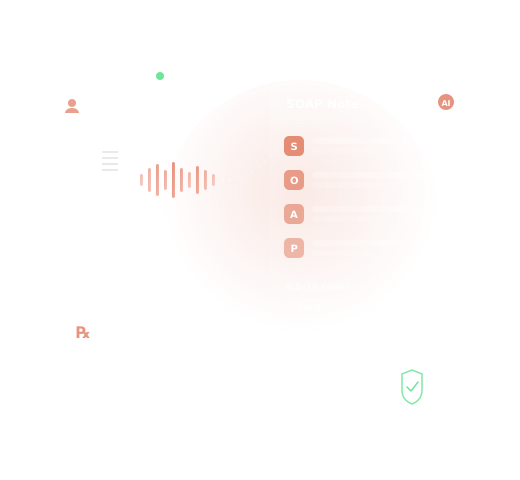
- Generate a draft SOAP note: The system converts the transcript into a draft SOAP note with sections such as presenting concerns, history, examination summary, assessment, and plan. In pediatric neurology, this can help organize seizure history, developmental details, medication review, and follow-up instructions into a more usable format.
- Suggest coding support: Based on the documented encounter, the tool can surface ICD-10 and CPT suggestions for clinician or billing-team review. These are suggestions, not final coding decisions, and should be checked against the actual clinical encounter and local workflow requirements.
- Review, edit, and sign off: The clinician reviews the draft note, corrects wording, adds missing findings, and confirms the final assessment and plan. Human review is the operational checkpoint that matters most. Only after edits and sign-off should the note be finalized in the record workflow.
- Choose deployment posture for operations: Depending on the clinic or hospital setup, teams may evaluate private or on-premise deployment options. This is best treated as a workflow and governance decision based on IT preferences, integration needs, and internal data handling practices rather than as a blanket compliance claim.
Local context
In India, pediatric neurology practices may operate across standalone clinics, multispecialty hospitals, and academic or referral centers. Documentation needs can vary by OPD volume, staffing patterns, and whether the team manages more epilepsy, developmental neurology, neuromuscular, or follow-up care. An AI medical scribe in India should therefore be evaluated for practical fit: can it support long consultations, mixed-language conversations, and review-heavy note finalization without slowing the doctor down?
Local relevance also includes deployment flexibility and workflow alignment. Some organizations may prefer a private environment or on-premise setup based on internal governance choices. Others may prioritize ease of rollout across departments. For pediatric neurology teams, the best implementation usually starts with a narrow workflow such as OPD documentation, then expands once clinicians are comfortable with review and editing patterns. This is where an AI medical scribe in India becomes useful as an operational tool rather than a generic AI feature.
Use cases
Pediatric neurology departments can use this type of documentation copilot in several practical scenarios. New patient consultations often involve long caregiver narratives that need to be converted into structured notes. Follow-up epilepsy visits may require quick comparison of interval history, medication changes, and seizure frequency. Developmental assessments can benefit from better organization of milestones, school concerns, and therapy recommendations. In inpatient or cross-referral settings, draft summaries can help clinicians prepare cleaner notes before final review.
Another common use case is reducing after-hours documentation. Instead of reconstructing the visit later, the clinician starts with a draft generated from the actual conversation. Coding support can also help administrative workflows by surfacing likely ICD-10 or CPT options for review. Across these scenarios, the value of AI medical scribe India healthcare is not in removing the doctor from documentation, but in reducing repetitive formatting work while preserving clinician oversight.
FAQ
Can this work for long pediatric neurology consultations?
Yes. It is designed for conversation-based documentation and can help structure longer visits into draft clinical notes that the doctor reviews before finalization.
Does it support multilingual consultations?
Yes. Multilingual support is useful for Indian care settings where conversations may move between English and regional languages during the same visit.
Are coding suggestions automatic billing decisions?
No. ICD-10 and CPT outputs should be treated as suggestions for clinician or staff review, not as final coding decisions.
Can hospitals consider private or on-premise deployment?
Yes. Deployment posture can be evaluated based on internal IT, workflow, and governance preferences. It should be considered an operational choice rather than a legal guarantee.
CTA
If your pediatric neurology team wants to reduce documentation friction without changing how clinicians make decisions, an AI medical scribe in India may be worth evaluating. Start with a practical workflow such as OPD consultations, assess note quality after clinician review, and compare how much time is saved in drafting, editing, and coding preparation. Explore the product journey through the core MedScribe overview, review deeper capabilities on features, and assess fit for your clinic or hospital workflow.