Introduction
Pediatric oncology teams manage complex, emotionally sensitive consultations that often involve long histories, treatment planning, symptom review, caregiver questions, and careful follow-up documentation. An AI medical scribe in India can support this work by turning consultation conversations into structured draft notes that clinicians can review, edit, and sign off. For hospitals and specialty clinics, the goal is practical: reduce manual typing, improve note consistency, and help doctors stay focused on the child and family during OPD and follow-up visits.
MedScribe is designed as an AI medical documentation copilot for daily clinical workflows. It supports automatic SOAP note drafting, speaker diarization, multilingual conversations, and coding suggestions such as ICD-10 and CPT support. In pediatric oncology settings, this can be useful when consultations include mixed speakers, treatment milestones, adverse event discussions, and repeated follow-up documentation. Rather than replacing clinical judgment, an AI medical scribe in India supports the documentation process so clinicians retain control over review and final record completion.
This page focuses on reusable product value for hospitals and clinics while adapting the workflow to pediatric oncology practice in India. The emphasis is on practical documentation support, not broad claims. Teams evaluating an AI medical scribe India healthcare solution usually want to know how it fits into OPD routines, how review checkpoints work, and how deployment choices can align with internal governance preferences.
Department workflow
Pediatric oncology documentation often spans first consultations, chemotherapy follow-ups, symptom management visits, inpatient reviews, survivorship discussions, and caregiver counseling. A typical workflow may include registration, clinician consultation, review of prior treatment history, examination findings, medication updates, supportive care planning, and scheduling of investigations or next visits. Documentation can become time-consuming because each encounter may require detailed history, assessment of response or toxicity, and clear communication of the plan.
In this setting, an AI medical scribe in India is most useful when it fits around existing habits rather than forcing a new process. During the consultation, the system can capture the conversation, distinguish speakers, and structure the transcript into clinically relevant sections. After the interaction, the clinician reviews the draft SOAP note, adjusts terminology, confirms treatment details, and finalizes the record. Coding suggestions can support downstream administrative work, while multilingual support can help when doctors, children, and caregivers switch between English and Indian languages during the same encounter.
For pediatric oncology departments, the documentation burden is not only about volume. It is also about clarity, continuity, and preserving the context of prior treatment cycles. That is why many teams look for an AI medical scribe India healthcare workflow that supports repeatable note quality without removing clinician oversight.
Features mapped to workflow
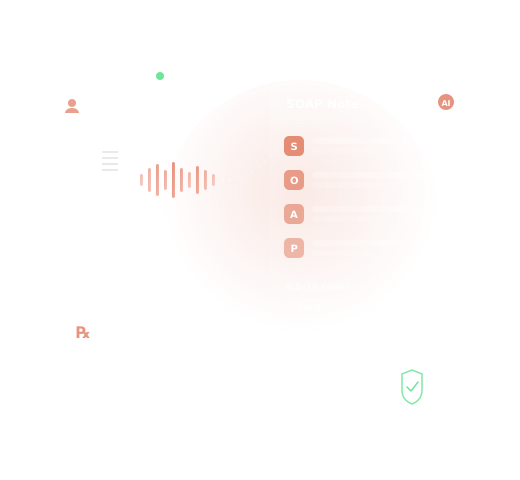
Automatic SOAP note generation: Consultation audio can be converted into a draft subjective, objective, assessment, and plan format. This helps clinicians start from a structured draft instead of a blank screen.
Speaker diarization: In pediatric oncology, multiple voices may be present, including the doctor, parent, and sometimes the child. Speaker separation helps organize the conversation more clearly for review.
Multilingual support: Many Indian consultations move between English and regional languages. This is useful for capturing caregiver concerns and clinician explanations more naturally.
ICD-10 and CPT suggestions: Coding support can assist administrative and billing workflows by surfacing likely code suggestions for clinician review. These suggestions should always be checked before final use.
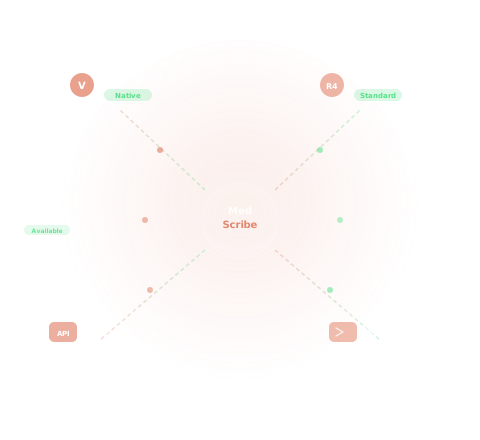
On-premise or private deployment options: Some hospitals prefer deployment choices based on internal IT, data handling, and governance needs. These options are workflow and infrastructure decisions that can support workflows aligned with institutional preferences.
Review-first documentation: Draft notes are intended for clinician verification, edits, and sign-off before the record is finalized. This is especially important in specialty care where treatment details must be precise.
How It Works
The workflow below reflects how an AI medical scribe in India can be used in a pediatric oncology consultation from conversation capture to final note completion.
- Capture the consultation conversation: During the visit, the system records the interaction between clinician and caregiver or patient, with support for multilingual speech and speaker diarization. This helps separate who said what in longer specialty consultations.
- Transcribe and structure the discussion: The captured audio is converted into text and organized into clinically relevant segments such as presenting concerns, treatment history, symptoms, examination references, and follow-up instructions. This creates a usable base for documentation rather than a raw transcript.
- Draft a SOAP note automatically: The platform generates a structured SOAP draft from the consultation content. In pediatric oncology, this can help summarize interval history, treatment tolerance, symptom review, and the next-step plan in a consistent format.
- Surface coding suggestions: Based on the documented encounter, the system can provide ICD-10 and CPT suggestions for clinician or administrative review. These are support tools, not final coding decisions.
- Clinician review, edit, and sign-off: The doctor reviews the draft note, corrects terminology, adds missing clinical nuance, confirms medications or treatment details, and approves the final version before it becomes part of the record.
- Choose deployment posture for operations: Hospitals can evaluate on-premise or private deployment approaches based on internal workflow, IT architecture, and governance preferences. This supports operational alignment without changing the core documentation flow.
Teams that want more product detail can usually explore broader platform information through related product and feature pages, while this page stays focused on the day-to-day specialty workflow.
Local context
In India, pediatric oncology services often operate across busy tertiary hospitals, specialty centers, and growing multi-specialty networks. Documentation needs can vary by OPD load, language mix, and whether the team is balancing outpatient reviews with inpatient coordination. An AI medical scribe in India can be relevant where clinicians want to reduce after-hours note completion and standardize documentation across repeat visits.
Local practicality matters more than generic automation language. Hospitals may prefer phased adoption, starting with selected consultants or OPD sessions, then expanding based on usability and review comfort. For some organizations, deployment posture is an important consideration, especially when internal teams want infrastructure choices that align with their own governance and IT models. In this context, an AI medical scribe India healthcare platform should be evaluated on workflow fit, editability, multilingual performance, and ease of clinician review.
Use cases
New pediatric oncology consultations: Capture detailed history, prior reports discussed during the visit, caregiver concerns, and the initial assessment and plan.
Chemotherapy follow-up visits: Draft notes for interval symptoms, tolerance, adverse effects discussed, examination points, and next-cycle planning.
Supportive care and symptom management: Document pain, nutrition, fever, mucositis, fatigue, and caregiver instructions in a structured way.
Multilingual caregiver counseling: Support consultations where explanations and questions move between English and local languages.
High-volume OPD sessions: Help clinicians start from a structured draft note instead of documenting every detail manually after each visit.
Administrative coding support: Provide coding suggestions for review to support downstream documentation and billing workflows.
FAQ
Can this replace clinician documentation review?
No. Draft notes and coding suggestions should be reviewed, edited where needed, and approved by the clinician before finalization.
Is it useful for multilingual consultations?
Yes. Multilingual support can help in consultations where doctors and caregivers use a mix of English and Indian languages.
How does it help pediatric oncology specifically?
It supports longer, detail-heavy consultations by creating structured draft notes that clinicians can refine for treatment history, symptom review, and follow-up planning.
Does it support coding workflows?
It can surface ICD-10 and CPT suggestions to support review, but final coding decisions should remain with the appropriate clinical or administrative team.
CTA
If your hospital or clinic is evaluating an AI medical scribe in India for pediatric oncology workflows, focus on practical fit: consultation capture, structured SOAP drafting, multilingual support, coding assistance, and a clear clinician review step. Explore how the workflow can support your OPD documentation process, reduce repetitive note-writing effort, and keep final control with the care team. For organizations comparing options, an AI medical scribe in India is most effective when it complements existing documentation habits and supports consistent, review-ready records.