Introduction
AI medical scribe in India is becoming a practical option for pediatric clinics and hospitals that want to reduce documentation load without disrupting the consultation. In pediatrics, doctors often balance parent concerns, child symptoms, growth history, immunization details, medication checks, and follow-up planning within a short OPD slot. That creates a heavy note-taking burden. An AI medical documentation copilot can support this workflow by turning consultation conversations into structured drafts that clinicians review and finalize.
This page explains how an AI medical scribe can fit pediatric practice in India, with a focus on day-to-day usability rather than broad claims. The product is designed to capture consultation dialogue, organize it into usable clinical notes, suggest coding support, and keep the doctor in control of edits and sign-off. For teams evaluating an AI medical scribe in India, the key question is not just transcription accuracy, but whether the tool supports pediatric workflows such as developmental history, fever visits, respiratory complaints, nutrition counseling, vaccination discussions, and repeat follow-ups.
Department workflow
Pediatric documentation is different from many adult specialties because the conversation often includes both the caregiver and the child. A typical visit may involve symptom history from a parent, direct observation of the child, prior treatment details, feeding or sleep patterns, growth concerns, and advice that must be clearly documented for home care. In busy OPD settings, clinicians may need to move quickly from one case to the next while still maintaining complete notes.
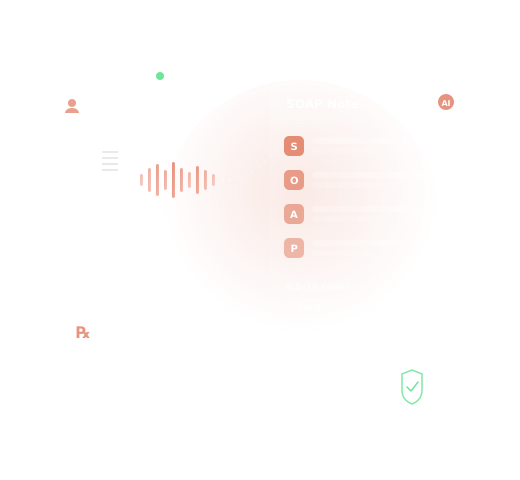
An AI medical scribe in India can support this environment by helping structure the consultation into familiar clinical formats such as SOAP notes. During a pediatric encounter, the workflow usually includes complaint capture, history taking, examination findings, assessment, treatment planning, and follow-up instructions. Documentation support is most useful when it reduces repetitive typing while preserving the doctor's ability to verify details. For pediatricians, that can mean faster draft creation for common visits like upper respiratory infections, gastroenteritis, allergy review, growth monitoring, asthma follow-up, and vaccination counseling.
In hospitals and larger clinics, pediatric workflows may also involve handoffs, shared records, and coding review. That makes consistency important. A documentation copilot can help standardize note structure across clinicians while still allowing specialty-specific edits.
Features mapped to workflow
For pediatric practice, the value of an AI scribe comes from how well features map to real consultation steps. Automatic SOAP note generation helps convert a live or recorded conversation into a draft that follows a familiar clinical structure. Speaker diarization is useful when both caregiver and clinician are speaking, because it helps separate who said what in the encounter. Multilingual support matters in India, where consultations may shift between English, Hindi, and regional languages during the same visit.
ICD-10 and CPT suggestion support can help after the note is drafted, giving the clinician a starting point for coding review. These suggestions should be treated as assistive, with final selection remaining with the care team. On-premise deployment or private deployment options can also be relevant for organizations that want tighter control over where documentation workflows run.
For teams comparing options, AI medical scribe India healthcare decisions often come down to practical fit: can the tool capture pediatric conversations clearly, produce editable drafts quickly, and support review before the record is finalized? That is where workflow alignment matters more than generic automation language.
How It Works
The product follows a clinician-in-the-loop documentation flow designed for daily OPD use in pediatrics.
- Conversation capture during the visit: The consultation audio is captured from the pediatric encounter, including caregiver history and clinician questions. Speaker diarization helps distinguish participants so the draft reflects the flow of the visit more clearly.
- Transcription and structuring: The system converts the conversation into text and organizes key details such as symptoms, duration, relevant history, examination points, and care advice. Multilingual support helps when the visit includes mixed-language communication common in Indian practice.
- SOAP draft generation: The transcript is transformed into a structured SOAP note draft. This can help pediatricians quickly review subjective history, objective findings, assessment, and plan without starting from a blank screen.
- Coding support layer: Based on the drafted note, the system provides ICD-10 and CPT suggestions as an assistive step. These are intended to support review workflows, not replace clinician judgment or billing oversight.
- Clinician review and edits: The doctor reviews the draft, corrects details, adds missing findings, and confirms the final wording. Human review is an operational checkpoint before any record is finalized.
- Final sign-off and deployment choice: After edits, the clinician signs off on the note for the medical record. Organizations can evaluate on-premise or private deployment posture as a workflow and governance decision based on internal IT preferences.
Local context
In India, pediatric care settings range from solo clinics and neighborhood child health centers to multispecialty hospitals with high OPD volumes. Documentation needs vary, but common pressures include limited consultation time, mixed-language communication, repeat visits for common childhood illnesses, and the need to explain care plans clearly to families. An AI medical scribe in India is most useful when it supports these realities without adding operational friction.
For example, a pediatrician may need to document a fever case with prior medication use, hydration advice, red-flag counseling, and follow-up instructions in a concise format. In another visit, the focus may be developmental concerns or nutrition counseling, where the note needs more narrative detail. A flexible documentation copilot can support both short and detailed encounters. For larger organizations, deployment choices such as private or on-premise setups may be considered to align with internal governance and infrastructure preferences.
Use cases
Pediatric clinics can use this type of tool across several common scenarios. In acute OPD visits, it can help draft notes for fever, cough, cold, vomiting, diarrhea, rash, or wheeze consultations. In preventive care, it can support documentation for immunization counseling, growth review, feeding guidance, and routine follow-up. In chronic pediatric care, it can assist with asthma reviews, allergy management, developmental follow-up, and repeat medication visits.
Hospitals may also use an AI medical scribe in India to improve consistency across clinicians who document similar pediatric presentations. Because the output is reviewed before finalization, teams can adapt the draft to their preferred note style and internal workflow. This makes the tool relevant for both independent pediatricians and larger care networks looking for documentation support that remains practical and clinician-led.
FAQ
Can this work for mixed-language pediatric consultations?
Yes. The product supports multilingual workflows, which can help when pediatric visits move between English and Indian languages during history taking and counseling.
Does it replace the pediatrician's documentation judgment?
No. It creates draft notes and coding suggestions, but the clinician reviews, edits, and signs off before the record is finalized.
Is it useful for short OPD visits?
Yes. It is designed to support practical daily workflows, including high-volume outpatient consultations where faster draft creation can reduce manual typing.
Can hospitals consider private deployment options?
Yes. On-premise or private deployment can be evaluated as workflow and governance choices depending on organizational needs.
CTA
If your pediatric team is evaluating an AI medical scribe in India, focus on workflow fit: conversation capture, structured SOAP drafting, coding support, multilingual usability, and clinician review before sign-off. Explore the product overview, features, integrations, and pricing to assess how it can support pediatric OPD documentation in clinics and hospitals across India.