Introduction
Pedodontic consultations often involve more than a straightforward dental exam. A clinician may need to document the child’s symptoms, parent-reported history, behaviour during the visit, oral findings, preventive advice, treatment planning, and follow-up instructions while keeping the interaction calm and child-friendly. An AI medical scribe in India can support this process by turning consultation conversations into structured draft notes that are easier to review, edit, and finalize. For pedodontics teams working across OPD, day-care procedures, and follow-up visits, the goal is not to replace clinical judgment. It is to reduce repetitive documentation effort and help clinicians stay focused on the patient and caregiver conversation.
MedScribe is designed as an AI documentation copilot for doctors, clinics, and hospitals. It captures the consultation conversation, structures the transcript, drafts SOAP notes, and provides coding suggestions for clinician review. In pedodontics, this can be useful for documenting caries assessments, pain complaints, trauma visits, preventive counseling, habit-related concerns, behaviour observations, and treatment discussions with parents. The result is a more consistent documentation workflow that supports daily practice without changing how clinicians make decisions.
For organizations evaluating an AI medical scribe in India, practical fit matters: multilingual conversations, variable OPD pace, and the need for human review before final sign-off. MedScribe is designed to align with these realities and support workflows aligned with existing record-keeping processes.
Department workflow
Pedodontics documentation has a distinct rhythm. A typical visit may begin with the parent describing pain, swelling, feeding issues, trauma, or oral habits. The clinician then examines the child, notes cooperation level, records findings, explains preventive or restorative options, and gives home-care instructions. In many cases, the note must reflect both the caregiver narrative and the clinician’s direct observations.
This creates several documentation challenges. First, the conversation can shift quickly between parent, child, and clinician. Second, the note often needs to capture behaviour management context, risk factors, and preventive guidance in addition to diagnosis and treatment planning. Third, busy clinics may need a repeatable way to document follow-ups, recall visits, fluoride applications, sealants, pulp therapy discussions, or trauma reassessments. An AI medical scribe in India can help by organizing these interactions into a structured draft that the clinician can refine instead of writing from scratch after every visit.
In hospitals and multispecialty settings, pedodontics teams may also coordinate with anesthetists, pediatricians, or front-office staff. Clear notes support continuity, especially when treatment plans span multiple visits. The value is operational: faster first drafts, more consistent structure, and easier review before the record is finalized.
Features mapped to workflow
MedScribe supports core documentation tasks that map well to pedodontic practice:
- Conversation capture and transcription: Records the consultation discussion and converts speech into text for downstream note creation.
- Speaker diarization: Helps distinguish between speakers, which is useful when both parent and clinician contribute important details during the visit.
- Automatic SOAP note generation: Drafts subjective, objective, assessment, and plan sections from the consultation flow.
- ICD-10 and CPT suggestions: Provides coding support as a review aid, helping teams prepare documentation for internal workflows and billing processes where relevant.
- Multilingual support: Useful in Indian care settings where consultations may move between English and regional languages.
- On-premise deployment options: Supports organizations that prefer private or on-premise deployment choices as part of their governance and infrastructure decisions.
These capabilities are relevant because pedodontics notes often combine symptoms, examination findings, counselling, and procedure planning in one encounter. Rather than forcing a generic template, the system helps create a usable draft that clinicians can edit according to the case.
How It Works
The workflow is designed around real consultation documentation, from conversation capture to clinician-approved final notes.
- Capture the consultation conversation: During the pedodontic visit, the system captures the interaction between clinician, caregiver, and where relevant, the child. This may include presenting complaints, history, oral hygiene discussion, dietary habits, trauma details, examination commentary, and treatment explanations.
- Transcribe and structure the encounter: The audio is converted into text, and speaker diarization helps separate who said what. This is especially useful in pediatric dental visits where caregiver history and clinician findings both matter. The transcript is then organized into clinically relevant sections.
- Draft a SOAP note automatically: Based on the structured conversation, MedScribe generates a draft SOAP note. For pedodontics, this can include parent-reported symptoms in the subjective section, examination findings in the objective section, working impressions in the assessment, and preventive, restorative, or follow-up recommendations in the plan.
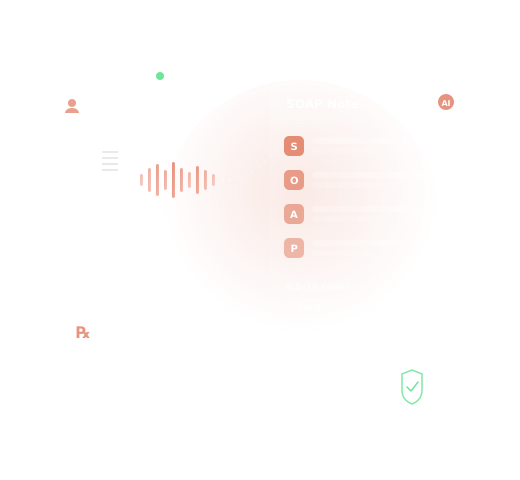
- Surface coding suggestions for review: The system can provide ICD-10 and CPT suggestions as documentation support. These suggestions are not a replacement for clinician or billing review; they are intended to help teams move from draft documentation toward a more complete record.
- Review, edit, and sign off: The clinician reviews the draft note, corrects details, adds missing findings, and confirms the final assessment and plan. Human review is an operational checkpoint before the record is finalized, ensuring the note reflects the actual clinical encounter.
- Choose deployment posture that fits operations: Clinics and hospitals can evaluate private or on-premise deployment options based on workflow, IT preferences, and governance needs. This is a practical implementation decision rather than a legal guarantee, and it helps organizations align the tool with their internal processes.
This end-to-end flow makes an AI medical scribe in India useful for teams that want documentation support without losing clinician control over the final note.
Local context
In India, pedodontic practices often manage high patient volumes, multilingual communication, and a mix of preventive, restorative, and emergency visits. Parents may explain symptoms in one language while the clinician documents in another. Follow-up instructions may also need to be communicated clearly for home care, diet modification, oral hygiene, and recall planning. An AI medical scribe in India is valuable in this setting because it supports practical documentation needs rather than adding another manual step.
For standalone dental clinics, the benefit may be smoother OPD note creation and easier recall documentation. For hospitals and larger dental chains, the benefit may be more standardized note structure across providers and locations. The product value remains reusable across settings, while the pedodontics context shapes how the workflow is applied in daily care.
Use cases
- New pediatric dental consultations: Capture parent concerns, symptom history, examination findings, and initial treatment planning.
- Caries and pain visits: Draft notes covering pain duration, triggers, examination observations, and next-step recommendations.
- Preventive care appointments: Document oral hygiene counselling, fluoride application discussions, sealant planning, and recall advice.
- Dental trauma follow-ups: Structure history, injury timeline, examination updates, and monitoring plans across repeat visits.
- Behaviour and habit-related visits: Record caregiver observations, clinical findings, counselling, and follow-up instructions.
- Procedure planning discussions: Summarize treatment options explained to parents, consent-related discussion points, and planned next steps for review.
Across these scenarios, an AI medical scribe in India helps create a consistent first draft while preserving the clinician’s role in review and finalization.
FAQ
Can this be used in pediatric dental OPD settings?
Yes. It is designed to support consultation documentation in routine OPD workflows, including parent history, examination findings, and treatment planning discussions.
Does the system replace clinician documentation review?
No. The draft note should be reviewed, edited where needed, and signed off by the clinician before the record is finalized.
Can it handle multilingual consultations common in India healthcare settings?
MedScribe includes multilingual support, which can help when consultations move between English and regional languages during the same visit.
Are coding outputs automatic and final?
No. ICD-10 and CPT suggestions are provided as support for review. Final coding decisions should follow the organization’s own documentation and billing processes.
Is deployment flexible for clinics and hospitals?
Yes. Private or on-premise deployment options can be evaluated based on workflow, infrastructure, and governance preferences.
CTA
If your pedodontics team wants more consistent documentation without adding extra typing during busy clinics, explore how MedScribe can fit your workflow. Review the core product at /medscribe, learn more about capabilities at /medscribe/features, and assess whether an AI medical scribe in India is the right operational fit for your clinic or hospital.