Introduction
An AI medical scribe in India can help periodontists reduce time spent on repetitive documentation while keeping the clinician in control of the final record. In busy OPD settings, periodontal consultations often involve detailed history taking, charting discussions, treatment planning, maintenance advice, and follow-up instructions. Capturing all of that accurately during or after the visit can slow down the day. An AI medical documentation copilot is designed to convert consultation conversations into structured draft notes that are easier to review, edit, and finalize.
For periodontics teams, the value is practical: less manual typing, more consistent note structure, and smoother handoff from consultation to treatment planning. MedScribe supports workflows aligned with real clinic operations by turning spoken interactions into usable SOAP notes, suggesting coding support, and helping clinicians review documentation before sign-off. This makes an AI medical scribe in India relevant for standalone dental clinics, multispecialty hospitals, and specialty centres that want a more efficient documentation process without changing the core clinical decision-making responsibility of the doctor.
Department workflow
Periodontics documentation has its own rhythm. A typical visit may include chief complaint capture, medical and dental history, periodontal symptoms, oral hygiene discussion, findings from examination, treatment options, and maintenance planning. In many clinics, these details are first spoken in the room and then reconstructed later into notes. That creates delays and increases the chance of missing smaller but useful details such as duration of bleeding gums, prior scaling history, smoking status, implant maintenance concerns, or patient education points.
An AI medical scribe in India fits this workflow by supporting the consultation from conversation to draft documentation. Instead of relying only on memory after the appointment, the system helps structure the interaction into a format clinicians can quickly validate. This is especially useful in periodontics where recurring visits, maintenance reviews, and procedure planning benefit from consistent note patterns across the patient journey.
In practical terms, the workflow support is useful for new patient evaluations, periodontal maintenance visits, implant-related reviews, pre-procedure counselling, and post-treatment follow-ups. The goal is not to replace charting systems or clinical judgment, but to reduce the administrative load around note creation and coding preparation.
Features mapped to workflow
MedScribe is built as an AI medical documentation copilot for doctors and clinics. For periodontics teams, its capabilities map well to daily documentation needs:
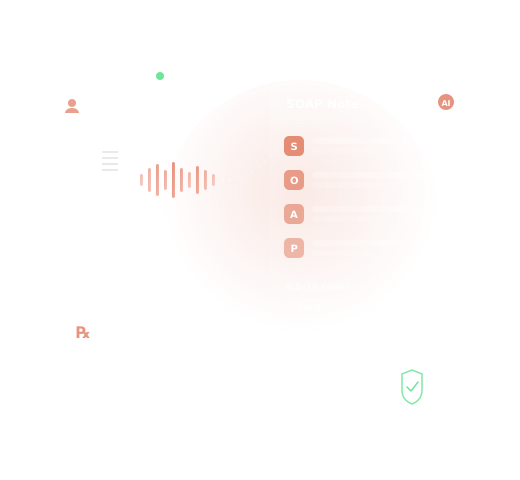
- Automatic SOAP note generation: Converts consultation conversations into structured draft notes that can be reviewed and edited by the clinician.
- Speaker diarization: Helps distinguish between clinician and patient speech, which is useful when treatment explanations, consent discussions, and symptom descriptions happen in the same interaction.
- Multilingual support: Useful in Indian healthcare settings where consultations may move between English and regional languages during the same visit.
- ICD-10 and CPT suggestions: Supports coding preparation by surfacing likely options based on the documented encounter, while keeping final selection with the care team.
- On-premise deployment options: Supports organizations that prefer private or controlled deployment postures as part of their workflow and governance decisions.
These features matter because periodontics notes often need both narrative detail and structured clarity. A clinician may discuss symptoms, oral hygiene habits, prior treatment, and next steps in one continuous conversation. The product helps organize that into a usable draft rather than leaving the doctor to rebuild the encounter from memory.
How It Works
The workflow is designed to be simple for clinicians and practical for front-desk, assistant, and documentation processes around the consultation.
- Capture the consultation conversation: During a periodontal consultation, the interaction is recorded through the configured workflow. This may include history taking, symptom discussion, examination commentary, treatment explanation, and follow-up advice. The system is designed to support multilingual conversations common in Indian clinics.
- Transcribe and structure the encounter: The audio is converted into text, and speaker diarization separates patient and clinician contributions. This helps preserve context when the patient describes symptoms and the periodontist explains findings or treatment options.
- Draft a SOAP note automatically: The transcript is organized into a draft SOAP note. For periodontics, this can help summarize subjective complaints, objective findings discussed during the visit, assessment themes, and the treatment or maintenance plan.
- Surface coding support: Based on the documented encounter, the system can suggest ICD-10 and CPT options to support downstream billing or administrative review. These are suggestions only and should be checked by the clinician or authorized staff before use.
- Review, edit, and sign off: The clinician reviews the draft note, makes corrections, adds missing clinical detail, and confirms the final version before record finalization. Human review is a core checkpoint in the workflow.
- Choose deployment posture for operations: Depending on organizational needs, teams can evaluate on-premise or private deployment approaches as part of their documentation workflow and governance planning. This is a practical operational choice rather than a blanket compliance claim.
Local context
In India, periodontics practices often manage high patient volumes, mixed-language consultations, and varying documentation expectations across clinics and hospitals. That makes a practical, review-first documentation tool more useful than a one-size-fits-all automation pitch. An AI medical scribe in India should support the realities of OPD flow: short consultation windows, recurring maintenance visits, and the need to document clearly without extending chairside time.
For hospitals and larger groups, deployment posture may also matter. Some organizations may prefer private infrastructure choices for operational reasons. Others may prioritize easier rollout across departments. The right setup depends on workflow, IT preferences, and governance needs. In either case, the product should support workflows aligned with existing documentation practices rather than forcing clinicians into a rigid template.
Use cases
- New periodontal evaluation: Capture history, symptoms, risk factors, and treatment discussion into a structured draft note.
- Maintenance follow-up: Summarize interval changes, home care adherence, symptoms, and next review plan with less manual typing.
- Implant maintenance and peri-implant review: Document patient-reported concerns, clinician observations, and care instructions in a consistent format.
- Procedure counselling: Record discussions around scaling, root planing, flap procedures, or maintenance planning and convert them into usable documentation.
- Multilingual OPD visits: Support encounters where the patient speaks in a regional language and the clinician documents in English-oriented clinical structure.
These use cases show why AI medical scribe India healthcare adoption is often driven by workflow efficiency rather than novelty. The strongest fit is where clinicians want faster first drafts, clearer structure, and a reliable review step before finalizing records.
FAQ
Below are common implementation questions from periodontics clinics and hospitals evaluating an AI medical scribe in India.
Can this replace clinician documentation entirely?
No. The system is intended to create draft documentation and coding support that the clinician reviews, edits, and approves before final sign-off.
Is it useful for multilingual consultations?
Yes. Multilingual support is relevant for Indian healthcare settings where patient conversations may shift between English and regional languages during the same visit.
Does it support coding workflows?
It can provide ICD-10 and CPT suggestions based on the documented encounter. These suggestions should be checked by the care team before use.
Can hospitals consider private deployment options?
Yes. On-premise deployment is available as an operational option for organizations that prefer more controlled infrastructure choices.
CTA
If your periodontics team wants to reduce documentation burden without losing clinical oversight, MedScribe offers a practical path from consultation conversation to structured draft notes. Explore how an AI medical scribe in India can support periodontal workflows, improve note consistency, and help clinicians spend more time on patient care and less time on after-hours documentation. Review the product overview, feature details, integrations, and pricing to assess fit for your clinic or hospital workflow.