Introduction
Perioperative teams manage a fast-moving mix of preoperative assessment, intraoperative coordination, postoperative updates, and handoffs across clinicians. Documentation has to stay clear, timely, and clinically useful without adding unnecessary burden to surgeons, anaesthesiologists, intensivists, nurses, and coordinators. An AI medical scribe in India can support this environment by turning consultation and care discussions into structured draft notes that clinicians can review, edit, and sign off. For hospitals and surgical centres looking to reduce repetitive typing, improve note consistency, and support coding workflows, this approach is practical because it fits around existing documentation habits rather than replacing clinical judgment.
MedScribe is designed as an AI documentation copilot for daily care delivery. It converts spoken clinical conversations into usable drafts such as SOAP notes, highlights relevant details, and suggests ICD-10 and CPT codes for clinician review. In perioperative medicine, that means support across pre-anaesthesia evaluation, risk discussion, consent-related counselling summaries, postoperative rounds, and discharge planning notes. The goal is not automated finalization. The goal is faster first drafts, clearer structure, and a more manageable review process for busy teams using an AI medical scribe in India.
Department workflow
Perioperative medicine involves multiple touchpoints where documentation can become fragmented. A patient may move from outpatient surgical assessment to pre-anaesthesia review, procedure-day preparation, recovery monitoring, and postoperative follow-up. Each stage generates information such as comorbidities, medication history, fasting status, airway assessment, procedure details, pain control plans, complications, and discharge instructions. Clinicians often repeat information across systems or rewrite similar summaries for different stakeholders.
An AI medical scribe in India is useful here because the workflow depends on accurate capture of conversations and rapid conversion into structured notes. During preoperative assessment, clinicians can document history, risk factors, and optimization plans. During postoperative rounds, the same system can help summarize pain scores, vitals discussion, wound review, mobility status, and next-step planning. For hospitals in India, where multilingual interactions are common and teams may work across high patient volumes, documentation support needs to be practical, flexible, and easy to review before final record completion.
Features mapped to workflow
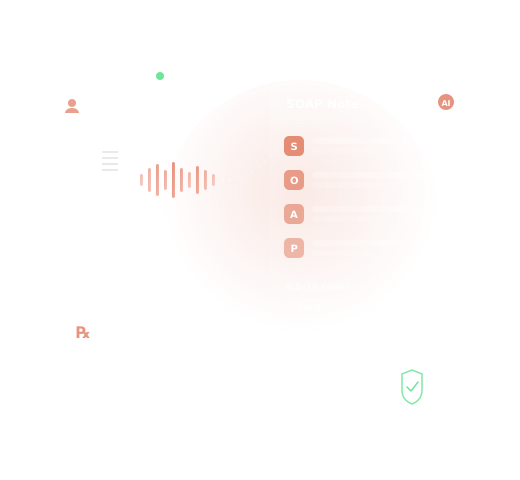
Automatic SOAP note generation: Converts consultation dialogue into structured subjective, objective, assessment, and plan sections. This is useful for pre-op evaluation, post-op review, and follow-up documentation.
Speaker diarization: Separates clinician and patient speech to improve readability of draft notes. In perioperative settings, this helps when history taking includes family members or multiple clinicians.
Multilingual support: Supports workflows where patient conversations may shift between English and Indian languages. This is especially relevant for consent discussions, symptom descriptions, and discharge counselling.
ICD-10 and CPT suggestions: Provides coding support based on the documented encounter, helping teams prepare cleaner drafts for billing and administrative review. Suggestions remain subject to clinician and coding team validation.
Human review before finalization: Drafts are meant to be checked, edited, and approved by the clinician. This checkpoint is important in perioperative medicine, where small details can affect continuity of care.
On-premise or private deployment options: Deployment posture can be chosen based on hospital IT preferences and governance needs. This supports workflows aligned with internal data handling policies without making blanket compliance claims.
How It Works
The product workflow is built around real clinical documentation steps rather than generic transcription alone.
- Capture the encounter: During a preoperative consult, anaesthesia review, or postoperative round, the conversation is captured through the configured workflow. This may include history, examination discussion, perioperative risk review, medication reconciliation, and care planning.
- Transcribe and structure the discussion: The system converts speech to text, applies speaker diarization, and organizes the content into clinically relevant sections. Instead of leaving teams with a raw transcript, it prepares a more usable draft for perioperative documentation.
- Draft SOAP notes automatically: Based on the encounter, MedScribe generates a SOAP-style note that can reflect symptoms, findings, assessment, and plan. For perioperative medicine, this may include optimization points, anaesthesia considerations, postoperative recovery observations, and discharge instructions.
- Suggest coding support: The platform surfaces ICD-10 and CPT suggestions linked to the documented encounter. These are intended to support clinician and billing review, not replace coding oversight.
- Review, edit, and sign off: The clinician checks the draft, corrects details, adds missing context, and approves the final note before it becomes part of the record. This human review checkpoint is central to safe use of an AI medical scribe in India.
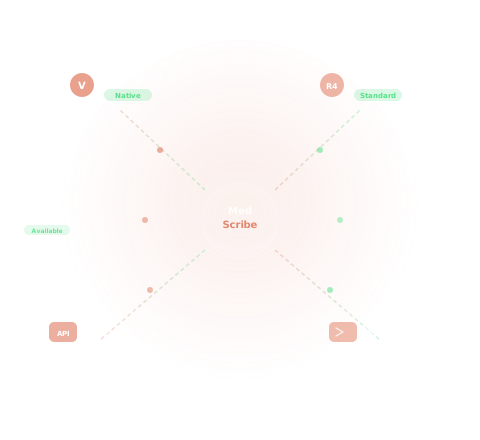
Hospitals evaluating an AI medical scribe in India often want clarity on operational control. In practice, the workflow includes configurable review steps, editing before finalization, and deployment choices such as on-premise or private environments depending on organizational needs. This makes the tool suitable for teams that want documentation support while retaining clinician oversight.
Local context
In India, perioperative documentation often spans outpatient clinics, day-care surgery units, multispecialty hospitals, and tertiary centres. Teams may manage high patient throughput, variable digital maturity, and multilingual communication in the same department. That creates a need for tools that are easy to adopt without forcing a complete workflow redesign. An AI medical scribe in India should therefore support practical realities: mixed documentation styles, multiple stakeholders, and the need for concise notes that can be reviewed quickly.
For India healthcare organizations, the value is usually operational rather than promotional. Teams want faster note preparation, more consistent structure, and support for coding review while keeping clinicians in control of the final record. This is where AI medical scribe India healthcare workflows become relevant: they help reduce repetitive documentation effort while fitting into existing OPD, pre-op, and post-op processes.
Use cases
Preoperative assessment clinics: Draft structured notes from history taking, comorbidity review, medication discussion, and perioperative risk planning.
Anaesthesia evaluation: Summarize airway discussion, prior anaesthesia history, allergies, fasting status, and optimization recommendations.
Postoperative rounds: Capture pain review, nausea or vomiting updates, mobility status, wound observations, and next-step plans.
Discharge counselling: Create clearer summaries of medication advice, warning signs, follow-up instructions, and recovery expectations.
Documentation support across multilingual encounters: Help clinicians manage mixed-language conversations common in Indian hospitals and clinics.
Coding preparation: Surface ICD-10 and CPT suggestions from the documented encounter to support downstream administrative review.
FAQ
Can this replace clinician documentation review?
No. The system is designed to create draft notes and coding suggestions, but clinicians should review, edit, and approve the final documentation.
Is it useful only for outpatient consultations?
No. In perioperative medicine, it can support pre-op assessments, anaesthesia reviews, postoperative rounds, and discharge-related documentation.
Does it support multilingual conversations?
Yes. Multilingual support is helpful for Indian care settings where patient interactions may move between English and regional languages.
How should hospitals think about deployment?
Deployment can be approached as a workflow and governance decision. Options such as on-premise or private setups can support workflows aligned with internal IT and data handling preferences.
CTA
If your surgical centre or hospital is evaluating documentation automation for perioperative teams, MedScribe offers a practical starting point. Explore how an AI medical scribe in India can support pre-op, post-op, and follow-up workflows with structured drafts, coding support, and clinician-controlled review. For broader product details, teams can also review the main MedScribe pages covering features, integrations, and pricing before planning implementation.