Introduction
An AI medical scribe in India can help pharmacovigilance teams reduce manual documentation effort around safety-related clinical conversations, follow-up notes, and structured case preparation. While pharmacovigilance work is different from a standard OPD visit, the documentation challenge is similar: important details are discussed verbally, then need to be converted into clear, reviewable records. MedScribe is designed as an AI documentation copilot that turns consultation or review conversations into structured drafts such as SOAP-style notes, with coding support and clinician review before finalization.
For hospitals, specialty clinics, and healthcare groups managing medication safety workflows, the goal is not to replace expert judgment. The goal is to support faster note creation, clearer documentation, and more consistent capture of relevant details across teams. In practical settings, an AI medical scribe in India can support workflows aligned with internal quality processes by helping clinicians and reviewers move from conversation to draft documentation with fewer repetitive steps. This is especially useful when teams need multilingual support, speaker separation, and deployment choices such as private or on-premise environments.
In pharmacovigilance settings, documentation quality matters because teams often need to review symptoms, timelines, suspected products, concomitant therapies, and follow-up actions. MedScribe is built to support these day-to-day documentation tasks in a practical way for India healthcare environments.
Department workflow
Pharmacovigilance teams often work across multiple touchpoints: clinician discussions, patient follow-up calls, internal safety reviews, and documentation handoffs between medical, quality, and operations teams. In many organisations, these steps still depend on manual note-taking, delayed transcription, and repeated data entry into downstream systems.
A typical workflow may begin with a doctor, pharmacist, or safety reviewer discussing an adverse event history or medication-related concern. The conversation may include symptom onset, chronology, dosage details, dechallenge or rechallenge context, and relevant medical history. After the interaction, someone must convert that discussion into a usable note, identify coding cues, and prepare the record for internal review. This creates friction when teams are handling high documentation volume or multilingual interactions.
An AI medical scribe in India is useful here because it supports the transition from spoken interaction to structured draft documentation. Instead of starting from a blank screen, teams can review an AI-generated draft, refine terminology, confirm coding suggestions, and complete sign-off. That workflow keeps the human reviewer in control while reducing repetitive formatting and summarisation work.
Features mapped to workflow
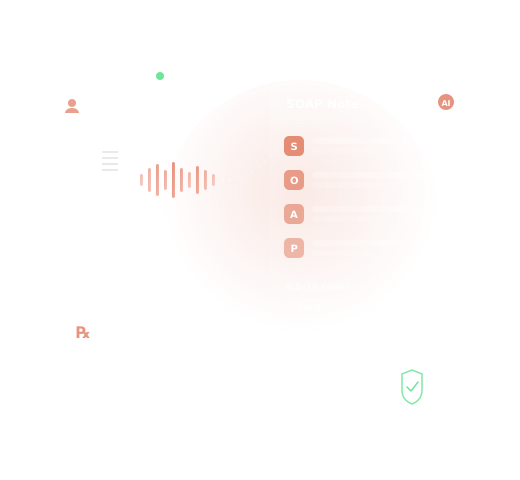
Automatic SOAP note generation: After a conversation is captured, MedScribe can draft structured notes in a familiar format. For pharmacovigilance-related reviews, this helps teams organise subjective history, observed findings, assessment context, and next-step planning in a readable way.
Speaker diarization: Safety documentation often depends on who said what. Speaker separation helps distinguish clinician comments, patient-reported history, and caregiver input, making the draft easier to validate.
ICD-10 and CPT suggestions: Coding support can help reviewers identify likely documentation cues for downstream workflows. Suggestions are intended to assist review, not replace coding judgment.
Multilingual support: India healthcare teams frequently work across English and regional language conversations. Multilingual capture can help preserve context from real-world interactions before the final note is standardised.
On-premise or private deployment options: Some hospitals and enterprise healthcare groups prefer tighter control over infrastructure. Deployment posture can be chosen as a workflow and governance decision based on internal IT and data-handling preferences.
Human review before finalization: MedScribe is designed as a copilot. Drafts can be edited, corrected, and approved by the responsible clinician or reviewer before they become part of the final record.
How It Works
The product flow is designed around real documentation steps rather than abstract AI outputs. For pharmacovigilance teams, the process can fit into existing review and sign-off routines.
- Capture the conversation: A clinician, pharmacist, or reviewer records the consultation, follow-up call, or internal case discussion through the documentation workflow. The system ingests the audio conversation for processing, including multilingual interactions where applicable.
- Transcribe and separate speakers: MedScribe converts the conversation into text and applies speaker diarization so the draft reflects who provided each part of the history. This is useful when adverse event details come from both patient and clinician input.
- Structure the transcript into a clinical draft: The transcript is organised into a SOAP-style note draft, helping teams move quickly from raw conversation to a readable summary. Relevant details such as symptom timeline, medication references, and follow-up context can be surfaced in a structured format.
- Add coding support: The workflow can present ICD-10 and CPT suggestions based on the documented interaction. These suggestions support reviewer efficiency and should be checked by the responsible team before use.
- Review, edit, and sign off: A clinician or authorised reviewer checks the draft, corrects wording, confirms coding relevance, and finalises the note. Human review is the operational checkpoint before the record is completed.
- Align deployment to governance needs: Depending on organisational preferences, teams can evaluate private or on-premise deployment options to support workflows aligned with internal governance and IT requirements.
Local context
In India, pharmacovigilance documentation often sits within broader hospital, clinic, and enterprise healthcare operations where teams manage variable patient volumes, mixed digital maturity, and multilingual communication. That is why an AI medical scribe in India needs to be practical first: easy to fit into daily workflows, supportive of clinician review, and flexible enough for different infrastructure preferences.
For India healthcare organisations, the value is usually operational rather than promotional. Teams may want faster turnaround on documentation, better consistency in note structure, and less time spent rewriting spoken interactions into formal records. An AI medical scribe in India can support these goals when implemented with clear review checkpoints and role-based ownership of final documentation.
Use cases
Adverse event follow-up documentation: Convert follow-up calls or review discussions into structured drafts for clinician validation.
Medication safety review meetings: Summarise internal discussions into usable notes that can be refined before record completion.
Specialty clinic documentation support: Help teams handling complex therapies capture medication-related concerns without relying entirely on manual note-taking.
Multilingual patient interactions: Support documentation when the conversation occurs in a mix of English and regional languages.
Enterprise workflow standardisation: Provide a more consistent starting point for documentation across sites, departments, or reviewer groups.
FAQ
Can this replace pharmacovigilance review?
No. MedScribe supports documentation and coding assistance, but clinical and safety review should remain with qualified professionals.
Does it create final records automatically?
The workflow is designed around draft generation followed by human review, edits, and final sign-off before record completion.
Is it useful only for OPD consultations?
No. The same documentation flow can support follow-up calls, internal reviews, and medication safety discussions where spoken information needs to become structured notes.
Can teams choose a private deployment model?
Yes. Deployment options such as private or on-premise setups can be evaluated based on workflow, IT, and governance preferences.
CTA
If your organisation is evaluating an AI medical scribe India healthcare solution for pharmacovigilance documentation, MedScribe offers a practical path from conversation capture to structured draft, coding support, and clinician-reviewed finalization. Explore the product overview, features, integrations, and pricing to assess fit for your hospital or clinic workflow. For teams looking for an AI medical scribe in India, the focus should be simple: reduce documentation friction, keep reviewers in control, and support clearer records in everyday healthcare operations.