Introduction
Hospitals and clinics are under constant pressure to document care clearly, quickly, and consistently. An AI medical scribe in India can help reduce the time spent turning conversations and clinical inputs into structured notes, while keeping the clinician in control of the final record. For Pharmacy IP environments, where medication-related communication, inpatient coordination, and documentation handoffs matter, the value is practical: faster note preparation, clearer summaries, and better support for downstream review.
MedScribe is designed as an AI documentation copilot that converts consultation or care-team conversations into usable clinical drafts. It supports automatic SOAP note generation, coding suggestions, speaker diarization, multilingual workflows, and deployment options such as on-premise or private setups based on operational needs. For hospitals evaluating an AI medical scribe in India, the goal is not to replace clinical judgment. It is to support documentation workflows aligned with day-to-day inpatient care, review processes, and record finalization standards.
In Pharmacy IP settings, documentation often spans medication discussions, clarification requests, inpatient progress communication, and coordination between doctors, nursing teams, and pharmacy staff. An AI-assisted workflow can help organize this information into structured drafts that are easier to review and complete.
Department workflow
Pharmacy IP workflows in Indian hospitals are closely tied to inpatient treatment cycles. Documentation may begin with the admitting doctor or treating consultant, continue through medication review, and extend into progress notes, discharge planning, and coding support. Even when the pharmacy team is not the primary author of the clinical note, medication-related details often influence what must be documented accurately and in time.
Typical workflow points include capturing the clinical conversation, identifying the relevant speakers, structuring the encounter into note-ready sections, and preparing a draft that the clinician can edit before sign-off. In inpatient settings, this can be especially useful when multiple stakeholders contribute to the care context. A practical AI medical scribe in India should therefore fit into existing hospital routines rather than force a new documentation pattern.
For Pharmacy IP teams, the documentation burden often includes medication history references, treatment changes, adverse event mentions, administration context, and discharge medication instructions. The right system should help surface these details in a structured way while preserving a clear review checkpoint for the clinician.
Features mapped to workflow
Conversation capture and transcription: The product supports capture of consultation or care discussions and converts speech into text for note preparation. This is useful when inpatient documentation starts from spoken interaction rather than manual typing.
Speaker diarization: In hospital settings, more than one person may speak during a case discussion. Speaker separation helps distinguish clinician and patient voices, or different participants in the encounter, making the draft easier to review.
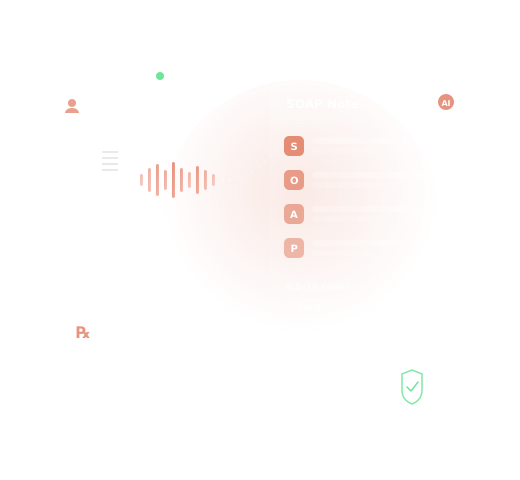
Automatic SOAP note generation: Instead of starting from a blank screen, clinicians receive a structured draft organized into familiar sections. This can support faster completion of inpatient notes and medication-related summaries.
ICD-10 and CPT suggestions: Coding support can help teams prepare documentation for downstream administrative workflows. Suggestions remain reviewable and should be validated by the clinician or authorized staff before final use.
Multilingual support: Indian care environments often involve mixed-language conversations. Multilingual capability can help when the encounter includes English plus regional language usage.
On-premise or private deployment options: Hospitals may prefer different deployment postures depending on IT governance, infrastructure, and workflow design. These options support workflows aligned with internal data handling preferences.
How It Works
The workflow for this AI medical scribe in India is designed around real documentation steps used in hospitals and clinics, with clear human review before record finalization.
- Capture the consultation or inpatient discussion: The clinician or care team starts with an in-person, teleconsult, or bedside conversation. Audio is captured through the configured workflow, with support for multilingual interactions where needed.
- Transcribe and separate speakers: The system converts speech into text and applies speaker diarization to distinguish participants. This helps organize the raw conversation into a more reviewable clinical transcript.
- Structure the transcript into clinical sections: The transcript is processed into a draft note format, including SOAP-style organization where appropriate. Medication mentions, symptoms, assessment points, and plan-related details are arranged into usable documentation sections.
- Generate coding support and note-ready outputs: Based on the draft, the system can suggest ICD-10 or CPT codes for review. These are intended as documentation support, not automatic final coding decisions.
- Clinician reviews, edits, and signs off: The doctor or authorized user checks the draft, corrects details, adds missing context, and approves the final version before it becomes part of the record. Human review is a required operational checkpoint.
- Choose deployment posture for workflow governance: Depending on hospital needs, teams can evaluate on-premise or private deployment approaches. This is a workflow and governance decision that can support internal IT preferences and documentation processes.
Local context
Healthcare teams in India often work across high patient volumes, mixed digital maturity, and multilingual communication. That makes documentation support tools most useful when they are practical, flexible, and easy to review. An AI medical scribe in India should fit OPD and inpatient workflows without assuming every facility has the same infrastructure or staffing model.
For Pharmacy IP use, local context also includes coordination across consultants, duty doctors, nursing teams, and pharmacy operations. Documentation support is valuable when it helps standardize note preparation while still allowing each hospital to define its own review and approval process. Hospitals exploring AI medical scribe India healthcare solutions may also prefer deployment choices that align with internal IT governance and operational comfort.
Use cases
Inpatient medication review documentation: Draft notes can help summarize medication changes, rationale, and follow-up instructions for clinician review.
Ward round support: During rounds, spoken updates can be converted into structured drafts that are easier to finalize later.
Discharge preparation: Teams can use AI-assisted drafts to organize treatment summaries and medication-related instructions before final approval.
Cross-team communication: When multiple stakeholders contribute to the encounter, structured note generation can reduce ambiguity in the documentation process.
Coding preparation: Suggested ICD-10 and CPT outputs can support downstream workflows, subject to human validation.
These use cases make an AI medical scribe in India relevant not only for doctors but also for hospitals seeking more consistent documentation support around inpatient medication workflows.
FAQ
Below are common implementation questions from clinics and hospitals evaluating AI-assisted documentation.
Can this be used for inpatient documentation?
Yes. The workflow is suitable for inpatient discussions, ward rounds, and medication-related documentation drafts, provided the clinician reviews and approves the final note.
Does the product create final records automatically?
No. It prepares structured drafts and coding suggestions, but human review, edits, and sign-off remain essential before record finalization.
Is multilingual use supported?
Yes. Multilingual support is useful for Indian care settings where conversations may include English and regional languages.
Can hospitals choose how the system is deployed?
Yes. On-premise or private deployment options can be evaluated based on workflow, infrastructure, and governance preferences.
CTA
If your hospital is assessing an AI medical scribe in India for Pharmacy IP or broader inpatient documentation, start with the practical questions: where conversations are captured, who reviews drafts, how coding suggestions are validated, and what deployment model fits your workflow. Explore the product overview, features, integrations, and pricing paths to evaluate fit for your documentation process. A well-planned rollout can help teams spend less time formatting notes and more time reviewing clinically relevant information before final sign-off.
Explore MedScribe | View features | See integrations | Check pricing