Introduction
Physiotherapy teams manage high patient interaction time, repeat follow-ups, exercise progression notes, pain assessments, mobility findings, and treatment plans that all need clear documentation. An AI medical scribe in India can help reduce the time spent turning conversations into structured records, while keeping the clinician in control of the final note. For physiotherapy clinics, rehab centres, and hospital departments, the goal is practical: capture the consultation, organize the information into usable documentation, and support coding and record completion without disrupting patient care.
MedScribe is designed as an AI documentation copilot for daily OPD and therapy workflows. It converts consultation conversations into draft clinical notes, supports SOAP formatting, suggests ICD-10 and CPT-aligned coding options, and helps clinicians review and finalize records faster. For Indian healthcare settings, this is especially useful where teams may work across English and regional language conversations, variable documentation styles, and mixed digital maturity across standalone clinics and larger hospitals.
Department workflow
Physiotherapy documentation often follows a repeatable but time-consuming pattern. A patient arrives for an initial assessment or follow-up session. The therapist reviews symptoms, pain score, range of motion, gait, strength, posture, functional limitations, home exercise adherence, and response to prior treatment. During or after the session, the therapist must convert these details into a structured note, update goals, record interventions, and prepare the next plan of care.
In many departments, this process creates friction. Notes may be delayed until the end of the day, details can be missed after a busy OPD block, and follow-up documentation may vary between clinicians. An AI medical scribe in India supports this workflow by helping capture the consultation narrative and turning it into a draft that reflects the familiar Subjective, Objective, Assessment, and Plan structure. Instead of replacing clinical judgment, it supports consistency and speed in routine documentation tasks.
For physiotherapy, this matters because treatment quality depends on continuity. Clear notes help track progress across sessions, communicate with referring doctors, and maintain a usable record of exercises, manual therapy, modalities, and patient response over time.
Features mapped to workflow
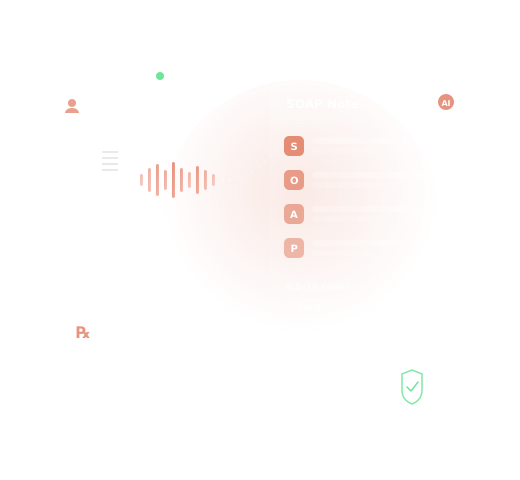
Automatic SOAP note generation: Physiotherapy teams often document in SOAP format. MedScribe can structure captured consultation content into draft SOAP notes, making it easier to review findings, interventions, and next steps in a familiar layout.
Speaker diarization: In a therapy session, both patient and clinician contribute important details. Speaker separation helps distinguish patient-reported symptoms from therapist observations and recommendations, improving note clarity during review.
Multilingual support: Many Indian clinics switch between English and local languages during consultations. This is useful for physiotherapy settings where patient comfort and comprehension are essential, but records still need to be clinically organized.
ICD-10 and CPT suggestions: Coding support can help teams prepare more complete documentation for internal workflows, billing review, or downstream administrative processes. Suggestions are intended to support clinician review, not replace it.
On-premise or private deployment options: Hospitals and larger groups may prefer deployment choices that fit internal governance, IT architecture, and data handling preferences. These options support workflows aligned with organizational requirements.
Clinician review before finalization: Draft generation is only part of the process. The therapist or authorized clinician reviews, edits, and signs off before the record is finalized, which is important for accuracy in rehabilitation documentation.
How It Works
The workflow for an AI medical scribe in India should be simple enough for busy physiotherapy teams and specific enough to fit real documentation needs. MedScribe follows an end-to-end process from conversation capture to clinician-approved final note.
- Capture the consultation conversation: During an assessment or follow-up, the interaction is captured from the live conversation or uploaded audio, depending on the clinic workflow. This may include symptom history, pain discussion, functional complaints, exercise adherence, therapist observations, and treatment instructions.
- Transcribe and separate speakers: The system converts the conversation into text and uses speaker diarization to distinguish patient statements from clinician inputs. This is helpful in physiotherapy sessions where subjective complaints and therapist findings need to remain clearly separated.
- Structure the transcript into clinical sections: The transcribed content is organized into a draft clinical structure, typically SOAP. Subjective details may include pain, stiffness, or activity limitations; Objective may include range of motion, gait, strength, or posture findings; Assessment may summarize progress or barriers; Plan may include exercises, modalities, frequency, and follow-up.
- Generate coding support suggestions: Based on the drafted note, the system can surface ICD-10 and CPT-aligned suggestions for clinician consideration. These suggestions are meant to support documentation completeness and administrative workflows, with human review required before use.
- Review, edit, and sign off: The physiotherapist or authorized clinician checks the draft, corrects terminology, adds missing findings, confirms coding relevance, and finalizes the record. Human review is the operational checkpoint that ensures the note reflects the actual encounter.
- Choose deployment posture for workflow governance: Depending on the organization, teams may use deployment options such as on-premise or private environments. This is a workflow and governance decision that can support internal IT preferences and documentation processes.
Local context
In India, physiotherapy practices range from solo clinics to multispecialty hospitals and rehabilitation centres. Documentation needs can differ widely, but common pressures remain the same: high patient volume, follow-up-heavy schedules, mixed language consultations, and the need for consistent records across clinicians. An AI medical scribe in India can fit these realities by supporting practical OPD workflows rather than forcing a rigid documentation model.
For smaller clinics, the value may be faster note completion and less after-hours paperwork. For larger hospitals, the value may include more standardized documentation across departments, support for coding review, and deployment choices that align with internal governance preferences. The product message should stay practical: help clinicians document better, review faster, and maintain control over the final record.
Use cases
Initial musculoskeletal assessment: Capture the patient history, pain pattern, aggravating factors, range of motion findings, and treatment plan into a structured draft note.
Post-operative rehabilitation follow-up: Document progress, mobility milestones, exercise tolerance, swelling, pain changes, and updated home program instructions.
Sports injury clinic: Support fast documentation for repeated visits where return-to-activity status, functional testing, and progression plans need clear tracking.
Neuro rehabilitation sessions: Organize longer, detail-rich sessions into usable notes covering functional status, therapist observations, and next-step planning.
Hospital physiotherapy OPD: Help standardize notes across multiple therapists while preserving clinician review and final sign-off.
FAQ
Can this be used for physiotherapy follow-up visits?
Yes. Follow-up sessions are a strong fit because the workflow often includes repeated progress documentation, updated findings, and plan changes that can be drafted into a structured note for review.
Does it replace the physiotherapist's judgment?
No. It is designed to support documentation by creating drafts and coding suggestions. The clinician reviews, edits, and signs off before the record is finalized.
Can it handle multilingual consultations common in India?
It is built with multilingual support to help teams working across English and regional language conversations, while still producing organized clinical documentation.
Is deployment flexible for hospitals and larger groups?
Yes. Deployment options such as on-premise or private environments can support workflows aligned with internal IT and governance preferences.
CTA
If your physiotherapy clinic or hospital team wants more consistent documentation without adding friction to patient care, MedScribe offers a practical path. Explore how an AI medical scribe in India can support consultation capture, SOAP drafting, coding support, and clinician-led finalization for everyday rehabilitation workflows. Review the broader product details at /medscribe, explore capabilities at /medscribe/features, and assess fit for your documentation process.