Introduction
Pre anesthesia clinics handle detailed conversations that must be converted into clear, structured documentation before surgery planning moves forward. An AI medical scribe in India can help clinicians reduce manual typing, organize perioperative notes, and keep attention on patient interaction during assessment. For hospitals and clinics managing high OPD volumes, the goal is not to replace clinical judgment, but to support faster note preparation, more consistent documentation, and easier review before final sign-off.
MedScribe is designed as an AI documentation copilot for consultation workflows. It converts consultation audio into structured clinical drafts, supports SOAP note creation, and suggests coding options that clinicians can review. In a pre anesthesia setting, this is useful for documenting history, comorbidities, medication use, prior anesthesia exposure, allergies, airway observations, and perioperative risk discussion in a more organized way. The result is a practical workflow for teams looking at AI medical scribe India healthcare use cases that fit daily operations rather than generic automation promises.
For organizations evaluating an AI medical scribe in India, the key question is whether the tool fits real clinic processes: consultation capture, note drafting, coding support, clinician edits, and final approval. That is where a workflow-led approach matters.
Department workflow
The pre anesthesia clinic workflow is documentation-heavy because each visit often combines history taking, focused examination, risk review, and coordination with surgical planning. Clinicians typically capture details such as previous surgeries, anesthesia complications, current medications, anticoagulant use, diabetes or hypertension status, respiratory symptoms, fasting instructions, and investigations already available. These details may be discussed in a mix of English, Hindi, or regional languages, and then manually rewritten into the hospital record.
An AI medical scribe in India is especially relevant here because the consultation is conversational but the output must be structured. Instead of relying only on handwritten notes or delayed data entry, the scribe workflow can help convert the interaction into a draft SOAP note that is easier to review. In pre anesthesia clinics, this can support more consistent capture of subjective history, objective findings, assessment points, and plan items such as optimization advice, additional tests, referral recommendations, or anesthesia fitness comments.
The workflow also involves checkpoints. Documentation may need review by the anesthesiologist, updates after lab results, and final sign-off before the record is completed. That makes human review essential. The product should support the clinician, not bypass the clinician.
Features mapped to workflow
Conversation capture and transcription: During the consultation, the system can capture the doctor-patient conversation and convert speech into text. This is useful when pre anesthesia assessments involve long histories and repeated clarifications.
Speaker diarization: The ability to distinguish speakers helps separate patient statements from clinician questions and recommendations. In a pre anesthesia note, this can improve readability and reduce confusion during review.
Automatic SOAP note generation: The transcript is structured into a draft SOAP format. Subjective sections may include prior anesthesia history, allergies, medication use, and symptoms. Objective sections can summarize examination observations and available reports. Assessment and plan can be drafted for clinician review.
ICD-10 and CPT suggestions: Coding support can help teams prepare documentation that is easier to map for billing or internal workflow needs. Suggestions remain reviewable and should be validated by the clinician or coding team.
Multilingual support: Many Indian clinics operate in multilingual environments. Support for mixed-language consultations can make the tool more practical for real OPD use.
On-premise or private deployment options: Some hospitals prefer deployment choices that support internal governance and IT preferences. These options are best evaluated as workflow and data-handling decisions, not as blanket guarantees.
How It Works
The product flow is designed around the actual documentation path followed in a pre anesthesia clinic.
- Capture the consultation conversation: The clinician starts the encounter and the system records the discussion between doctor and patient. This may include history of present illness, prior anesthesia exposure, medication review, allergies, comorbidities, and perioperative concerns.
- Transcribe and structure the interaction: The audio is converted into text with speaker diarization so the system can distinguish who said what. This helps organize patient-reported history separately from clinician prompts and recommendations.
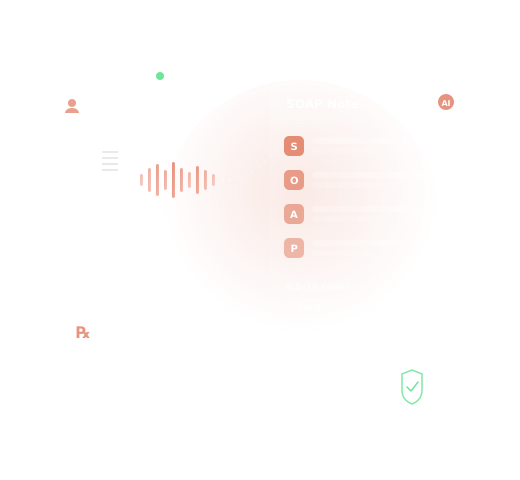
- Draft a SOAP note automatically: The transcript is transformed into a structured clinical draft. For a pre anesthesia clinic, the note can organize subjective history, objective observations, assessment points, and plan items such as further evaluation, optimization advice, or instructions before surgery.
- Suggest coding support: Based on the drafted note, the system can surface ICD-10 and CPT suggestions for review. These are intended to support documentation workflows and should be checked by the clinician or coding team before use.
- Review, edit, and sign off: The clinician reviews the draft, corrects details, adds missing findings, and confirms the final note. Human review is the operational checkpoint before the record is finalized.
- Choose deployment posture for your setting: Depending on hospital IT and governance preferences, teams can evaluate on-premise or private deployment approaches that support workflows aligned with internal data-handling requirements.
Local context
Hospitals and clinics in India often manage high patient throughput, mixed digital maturity, and multilingual consultations in the same department. That makes documentation support tools more valuable when they are practical, flexible, and easy to fit into existing routines. An AI medical scribe in India should therefore be evaluated on day-to-day usability: how well it handles OPD pace, whether it supports mixed-language conversations, how easily clinicians can edit drafts, and whether deployment choices fit the organization’s infrastructure.
For pre anesthesia clinics, the local context also includes coordination across surgery, anesthesia, nursing, and administrative teams. Clear documentation can help reduce back-and-forth when patients need optimization, additional investigations, or scheduling changes. A practical AI medical scribe in India supports this by making notes easier to prepare and review without changing the clinician’s responsibility for final decisions.
Use cases
Routine preoperative assessment: Draft notes for patients coming in for planned surgery, including history, medication review, and anesthesia-related concerns.
High-volume hospital OPD: Support faster documentation during busy clinic sessions where clinicians need to maintain patient interaction while reducing after-hours note completion.
Multilingual consultations: Help structure encounters where patients switch between English, Hindi, or regional language phrases during history taking.
Documentation standardization: Improve consistency in SOAP note formatting across clinicians while preserving individual review and edits.
Coding-ready documentation support: Surface ICD-10 and CPT suggestions to make downstream administrative workflows easier to review.
Private deployment preference: Fit organizations that want to assess on-premise or private deployment models as part of their operational setup.
FAQ
Can this replace clinician documentation completely?
No. The system is designed to create draft documentation and coding suggestions, but clinician review and final sign-off remain essential before the record is finalized.
Is it useful for pre anesthesia clinics specifically?
Yes. The workflow is well suited to consultations that involve detailed history taking, medication review, prior anesthesia discussion, and structured perioperative planning.
Does it support multilingual consultations in India?
The product is designed with multilingual support, which can help in clinics where consultations include English and Indian language usage in the same encounter.
Can hospitals evaluate private or on-premise deployment?
Yes. Deployment posture can be considered based on IT, workflow, and governance preferences. These options should be assessed according to the organization’s internal requirements.
CTA
If your team is exploring an AI medical scribe in India for pre anesthesia documentation, focus on workflow fit: consultation capture, structured SOAP drafting, coding support, clinician review, and deployment flexibility. Explore the product pathways through /medscribe, compare capabilities on /medscribe/features, and assess how the workflow can support your clinic or hospital’s daily documentation needs.