Introduction
Preventive medicine teams often manage high consultation volumes, recurring follow-ups, lifestyle counselling, screening discussions, vaccination reviews, and risk-factor documentation. In these settings, clinicians need notes that are fast to prepare, easy to review, and structured enough for continuity of care. An AI medical scribe in India can support this need by turning consultation conversations into draft clinical documentation that clinicians can review and finalize. Instead of spending large parts of the day typing summaries after each visit, doctors and care teams can focus more on patient interaction while keeping records usable for routine OPD work.
MedScribe is designed as an AI documentation copilot for clinics and hospitals that want practical support for consultation notes, structured summaries, and coding assistance. For preventive medicine, this is especially useful when visits include counselling, family history, screening recommendations, medication adherence checks, and chronic disease risk assessment. The goal is not to replace clinical judgment, but to reduce repetitive documentation effort and support workflows aligned with everyday healthcare operations in India.
Department workflow
Preventive medicine consultations are often conversation-heavy. A typical visit may include current concerns, lifestyle review, diet and exercise patterns, tobacco or alcohol history, sleep quality, family history, immunization status, screening eligibility, and follow-up planning. Documentation must capture both the medical context and the counselling delivered. In many clinics, this creates a workflow challenge: the richer the conversation, the more time is needed to document it clearly.
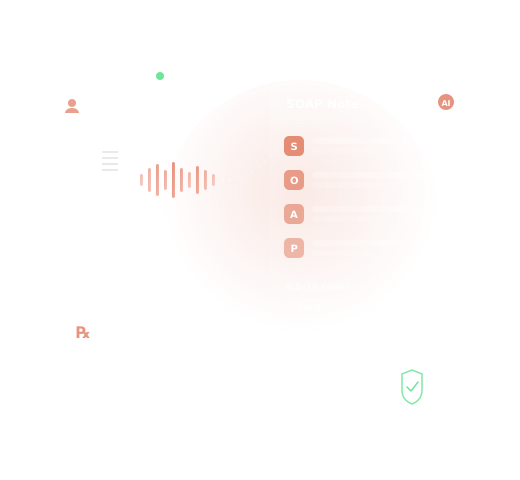
An AI medical scribe in India can fit into this workflow by helping convert spoken interactions into structured drafts. During or after the consultation, the system can organize the encounter into note sections such as subjective history, objective observations, assessment, and plan. For preventive medicine teams, this helps standardize records across annual health checks, wellness visits, risk reviews, and follow-up counselling sessions. It can also support coding suggestions where relevant, while keeping the clinician in control of edits and final sign-off.
Because preventive care often spans repeat visits, documentation quality matters for continuity. Clear notes help clinicians track changes in blood pressure trends, weight goals, screening advice, medication adherence, and patient education over time. A documentation copilot is most useful when it supports this continuity without adding friction to the consultation itself.
Features mapped to workflow
MedScribe is built around practical documentation needs rather than generic transcription alone. For preventive medicine teams, the value comes from how features map to real OPD steps:
- Automatic SOAP note drafting: Converts consultation dialogue into a structured draft note that can be reviewed quickly.
- Speaker diarization: Helps distinguish clinician and patient speech, which is useful in counselling-heavy visits and family discussions.
- Multilingual support: Useful in Indian care settings where consultations may shift between English and regional languages.
- ICD-10 and CPT suggestions: Provides coding support based on documented content, helping teams prepare more complete records for downstream workflows.
- Human review before finalization: Drafts remain editable so clinicians can refine wording, add findings, and confirm the final record.
- On-premise or private deployment options: Supports organizations that prefer tighter control over infrastructure and governance decisions.
This makes AI medical scribe India healthcare adoption more practical for preventive medicine departments that need consistency, speed, and clinician oversight rather than one-click automation without review.
How It Works
The workflow is designed to follow the natural path of a consultation, from conversation capture to clinician-approved documentation.
- Capture the consultation conversation: During an OPD visit, the clinician-patient interaction is recorded through the configured workflow. This may include preventive counselling, symptom review, family history, screening advice, and follow-up planning. The system is designed to fit routine consultation flow rather than forcing a separate dictation process.
- Transcribe and structure the encounter: MedScribe converts the conversation into text and applies speaker diarization to separate patient and clinician contributions. It then organizes the content into clinically useful sections so the encounter is easier to review than a raw transcript.
- Draft a SOAP note automatically: Based on the structured transcript, the platform generates a draft SOAP note. For preventive medicine, this can include lifestyle history, risk factors, counselling points, assessment themes, and next-step recommendations. The draft is meant to save time, not bypass clinical review.
- Suggest coding support: The system can surface ICD-10 and CPT suggestions linked to the documented encounter. These suggestions help the clinician or operations team review coding options alongside the note, especially when visits involve screening, counselling, or chronic risk management.
- Review, edit, and sign off: The clinician checks the draft note, corrects any wording, adds missing findings, and confirms that the assessment and plan reflect the actual visit. Human review is the operational checkpoint before the record is finalized.
- Choose the right deployment posture: Clinics and hospitals can evaluate on-premise or private deployment options based on internal workflow, IT preferences, and governance needs. This is a practical implementation choice that can support workflows aligned with organizational data handling requirements.
Local context
In India, preventive medicine workflows can vary widely across standalone clinics, multispecialty hospitals, corporate health programs, and community-focused care models. Some settings prioritize fast OPD throughput, while others focus on longitudinal wellness and chronic risk reduction. An AI medical scribe in India should therefore be practical across different consultation styles, language preferences, and infrastructure choices.
Multilingual interactions are common, and preventive visits often include a mix of medical explanation and lifestyle counselling. This makes structured documentation more challenging than simple symptom capture. A tool that supports multilingual conversations, speaker separation, and editable note drafting can be more useful than basic voice-to-text alone. For organizations with specific IT preferences, deployment choices such as on-premise or private environments may also be part of the evaluation process.
For many teams, the main question is not whether documentation can be automated in theory, but whether it can reduce after-hours note completion and improve consistency in daily practice. That is where an AI medical scribe in India becomes relevant: it supports routine documentation work while keeping clinicians responsible for the final record.
Use cases
- Annual preventive health checks: Draft notes for history review, risk factors, screening recommendations, and follow-up plans.
- Lifestyle counselling visits: Capture diet, exercise, sleep, stress, and habit discussions in a structured format.
- Chronic disease risk review: Support documentation for hypertension, diabetes risk, obesity management, and family history discussions.
- Vaccination and screening counselling: Summarize eligibility discussions, patient questions, and next steps.
- Follow-up preventive consultations: Track progress over time with more consistent note structure across repeat visits.
These are the kinds of scenarios where AI medical scribe India healthcare tools can add value without changing the clinician’s core decision-making process.
FAQ
Can this replace clinician documentation entirely?
No. The system prepares draft notes and coding suggestions, but the clinician should review, edit, and approve the final record.
Is it useful for counselling-heavy preventive visits?
Yes. Preventive medicine often involves long discussions on lifestyle, screening, and risk reduction, which makes structured draft documentation especially helpful.
Does it support multilingual consultations?
MedScribe includes multilingual support, which can help in Indian clinical settings where consultations may move across languages.
Can hospitals consider private or on-premise deployment?
Yes. Deployment posture can be evaluated based on workflow, IT environment, and governance preferences.
CTA
If your preventive medicine team wants to reduce documentation burden while keeping clinicians in control, MedScribe offers a practical path to structured note drafting, coding support, and review-first workflows. Explore how an AI medical scribe in India can fit your OPD process, compare workflow needs with your current setup, and assess whether a private or on-premise approach makes sense for your organization.
For teams evaluating documentation improvement in preventive care, this is a practical starting point: capture the conversation, generate a structured draft, review it carefully, and finalize records with confidence. An AI medical scribe in India works best when it supports the way clinicians already practice—efficiently, consistently, and with human oversight at every final step.