Introduction
An AI medical scribe in India can help prosthetics and orthotics teams reduce time spent on repetitive documentation while keeping the clinician in control of the final record. In P&O settings, consultations often include functional history, gait or mobility observations, device measurements, fitting notes, follow-up plans, and patient education. Capturing all of this consistently during a busy OPD can be difficult when the practitioner is also focused on assessment, counselling, and coordination with rehabilitation teams.
MedScribe is designed as an AI documentation copilot for clinics and hospitals that want faster note creation from consultation conversations. It converts spoken interactions into structured drafts, supports SOAP-style documentation, and provides coding suggestions that clinicians can review before sign-off. For prosthetics and orthotics departments, this means a more practical way to document evaluation visits, fitting sessions, adjustment reviews, and longitudinal follow-ups without turning the encounter into a typing exercise.
The goal is not to replace clinical judgment. Instead, an AI medical scribe in India supports workflows aligned with day-to-day documentation needs, helping teams move from conversation to usable notes with a clear review step before records are finalized.
Department workflow
Prosthetics and orthotics documentation is often more detailed than a standard outpatient note because it combines medical, functional, and device-related information. A typical workflow may begin with referral review and patient history, followed by assessment of limb condition, pain points, gait pattern, range of motion, skin integrity, balance, mobility goals, and prior device use. The clinician may then discuss measurements, casting or scanning considerations, component choices, fitting observations, and training instructions.
In many Indian clinics and hospitals, these steps happen across high-volume OPD schedules, multidisciplinary rehabilitation pathways, and mixed-language consultations. Notes may need to capture both the patient narrative and the technical rationale behind a prosthetic or orthotic recommendation. Follow-up visits add another layer: tolerance, alignment changes, pressure areas, wear schedule, maintenance advice, and progression goals all need to be documented clearly.
This is where an AI medical scribe in India becomes useful for P&O teams. Instead of relying only on manual typing after the visit, clinicians can use conversation capture and structured drafting to create a more complete first version of the note, then edit and approve it based on the actual encounter.
Features mapped to workflow
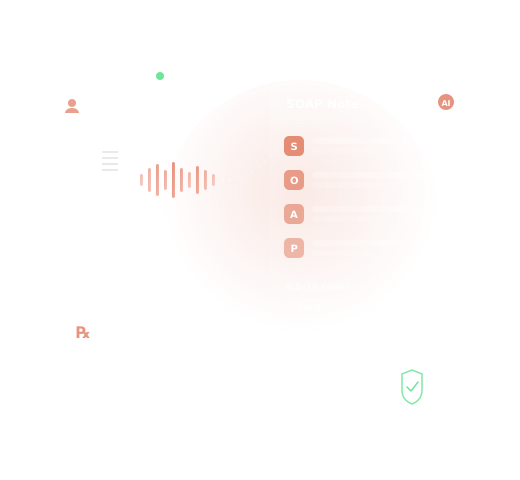
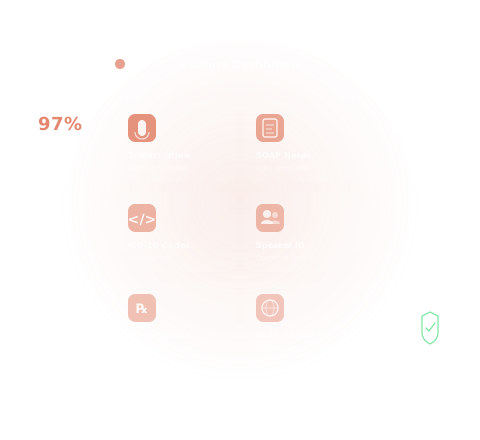
Automatic SOAP note generation: Useful for turning consultation dialogue into a structured draft with subjective history, objective observations, assessment points, and plan items. For prosthetics and orthotics, this can help organize functional complaints, fitting observations, and next-step recommendations into a familiar format.
Speaker diarization: Distinguishes between clinician and patient speech, which is helpful when documenting symptom history, mobility goals, and education provided during fitting or review visits.
Multilingual support: Many P&O consultations in India involve a mix of English and regional language usage. Multilingual support can help teams capture the encounter more naturally without forcing a single-language interaction.
ICD-10 and CPT suggestions: Coding support can assist with downstream documentation workflows by surfacing relevant suggestions for clinician review. These are suggestions only and should be checked against the actual encounter and internal billing processes.
On-premise deployment options: Some hospitals and larger provider groups prefer private or on-premise deployment postures as part of their governance approach. MedScribe is designed to support workflow choices aligned with institutional data handling preferences.
Practical fit for OPD use: The product narrative is centered on daily consultation documentation rather than abstract AI features. That makes it relevant for evaluation visits, fitting sessions, adjustment appointments, and rehabilitation follow-ups.
How It Works
For prosthetics and orthotics teams, the workflow is designed to move from live consultation to clinician-approved documentation in a clear sequence:
- Capture the consultation conversation: During the visit, the interaction between clinician and patient is captured for transcription. This may include history, functional limitations, prior device experience, gait concerns, fitting feedback, and care instructions.
- Transcribe and structure the encounter: The system converts speech into text and uses speaker diarization to separate patient and clinician contributions. It then organizes the content into clinically useful sections so the note is easier to review.
- Draft a SOAP note automatically: Based on the consultation, MedScribe creates a SOAP-style draft that can include subjective complaints, objective findings, assessment context, and plan details such as fitting changes, wear schedule, review timing, or rehabilitation advice.
- Add coding suggestions for review: The workflow can surface ICD-10 and CPT suggestions related to the documented encounter. These are intended to support the clinician or admin workflow, not replace professional review.
- Clinician edits and signs off: Before anything becomes part of the final record, the clinician reviews the draft, corrects details, adds missing findings such as measurements or device specifics, and approves the final version. Human review is the operational checkpoint that keeps documentation accurate and usable.
- Choose a deployment posture that fits governance needs: Clinics and hospitals can evaluate whether a standard private setup or on-premise approach better supports their internal workflow and data governance preferences.
Local context
In India, prosthetics and orthotics services may operate within rehabilitation centres, multispecialty hospitals, orthopaedic departments, and independent mobility clinics. Documentation needs can vary by setup, but common pressures remain the same: busy OPD schedules, mixed digital maturity, multilingual patient communication, and the need for clear records that support continuity of care.
An AI medical scribe in India is most valuable when it fits these realities. Teams often need a tool that helps with practical note creation rather than adding another complex system to manage. For hospitals evaluating technology choices, deployment flexibility and workflow alignment matter as much as note quality. For smaller clinics, the priority may be reducing after-hours documentation and improving consistency across follow-up visits.
This is also why the page focus stays practical. Rather than making broad claims, the value of an AI medical scribe in India comes from helping clinicians document faster, review carefully, and maintain a clearer record of patient assessment, device planning, and follow-up actions.
Use cases
Initial prosthetic evaluation: Capture history, amputation level context, skin concerns, mobility goals, prior device use, and rehabilitation status into a structured draft.
Orthotic assessment visits: Document pain patterns, posture or gait observations, range of motion, support needs, and recommended orthotic plan.
Fitting and alignment sessions: Record patient feedback, tolerance, pressure points, alignment observations, and immediate modifications discussed during the visit.
Follow-up reviews: Summarize wear compliance, comfort issues, skin checks, functional progress, and next review plans without rebuilding the note from scratch.
Multidisciplinary rehabilitation coordination: Create clearer documentation that can support communication across orthopaedics, physiotherapy, rehabilitation medicine, and prosthetics orthotics teams.
High-volume OPD documentation: Use an AI medical scribe in India to reduce repetitive note-writing load while preserving clinician review and final sign-off.
FAQ
Can this work for mixed-language consultations?
Yes. Multilingual support is designed to help with consultations where English and regional language usage may be mixed during history taking or counselling.
Does the tool finalize records automatically?
No. The workflow is designed around clinician review, edits, and final approval before the note is treated as complete.
Is it relevant for prosthetics and orthotics, not just general OPD?
Yes. The documentation flow can support evaluation notes, fitting visits, adjustment reviews, and follow-up encounters common in P&O practice.
How are coding suggestions used?
ICD-10 and CPT suggestions are provided as support for review. They should be checked by the clinician or authorized team member against the actual encounter and internal processes.
CTA
If your prosthetics and orthotics department wants a more efficient way to move from consultation to structured documentation, MedScribe offers a practical starting point. Explore how an AI medical scribe in India can support SOAP drafting, coding review, multilingual encounters, and clinician-controlled sign-off for everyday P&O workflows. Review the product pathways for MedScribe, learn more about core capabilities on features, and evaluate fit based on your clinic or hospital workflow.