Introduction
Prosthodontic consultations often involve detailed case histories, treatment planning discussions, shade selection notes, prosthesis design considerations, follow-up instructions, and coordination across clinical and lab teams. That makes documentation important, but also time-consuming. An AI medical scribe in India can help prosthodontists and dental specialty teams convert consultation conversations into structured draft notes that are easier to review, edit, and finalize. Instead of relying only on manual typing after every appointment, clinics can support faster documentation workflows while keeping the clinician in control of the final record.
MedScribe is designed as an AI documentation copilot for day-to-day OPD and specialty workflows. For prosthodontics, it supports conversation capture, structured transcription, SOAP note drafting, coding suggestions, and multilingual interactions where needed. The goal is practical: reduce repetitive documentation effort, improve note consistency, and help teams move from chairside discussion to usable records with less friction. For organizations evaluating an AI medical scribe in India, the value is not just speed, but a more reliable documentation process that still depends on clinician review and sign-off.
Department workflow
Prosthodontics documentation is rarely limited to a short chief complaint. A typical visit may include prior dental history, edentulous status, implant considerations, occlusal observations, esthetic expectations, material preferences, medical history relevance, and staged treatment planning. Follow-up visits may add trial outcomes, fit adjustments, patient feedback, and maintenance advice. In busy clinics and hospitals, these details are often captured across multiple touchpoints, which can create variation in note quality.
An AI medical scribe in India is useful in this setting because it fits around the natural consultation flow. During the encounter, the clinician can focus on patient communication while the system captures and structures the conversation. After the visit, the draft can be reviewed for accuracy, refined to match departmental preferences, and finalized before entering the record. This is especially relevant for prosthodontic practices that manage high-detail treatment plans, recurring review visits, and coordination with front office, assistants, or lab-facing workflows.
Features mapped to workflow
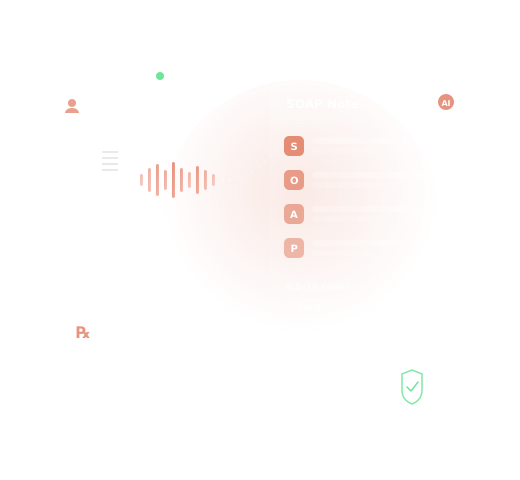
Automatic SOAP note generation: Converts consultation dialogue into a structured draft with subjective history, objective findings, assessment, and plan. For prosthodontics, this helps organize complex treatment discussions into a format clinicians can quickly review.
Speaker diarization: Distinguishes between clinician and patient speech, which is useful when treatment expectations, symptom descriptions, and procedural explanations need to be separated clearly in the draft note.
ICD-10 and CPT suggestions: Provides coding support based on the documented encounter. These suggestions are intended to assist review workflows, not replace clinician judgment or billing validation.
Multilingual support: Helpful in Indian healthcare settings where consultations may shift between English and regional languages. This can support more natural patient interactions while still producing usable documentation drafts.
On-premise or private deployment options: Organizations with specific governance preferences can evaluate deployment choices that support workflows aligned with internal IT and documentation policies.
Review-first workflow: Drafts are not the final record by default. The clinician reviews, edits, and signs off before documentation is completed, which is important for specialty care quality and consistency.
How It Works
For prosthodontic teams, the product workflow is designed to follow the real sequence of a consultation rather than forcing extra administrative steps.
- Capture the consultation conversation: During the appointment, the clinician-patient interaction is recorded through the configured workflow. This may include history taking, examination discussion, treatment options, prosthesis planning, and follow-up instructions. The system is built to support multilingual conversations and speaker separation where needed.
- Transcribe and structure the encounter: The audio is converted into a structured transcript with speaker diarization. This helps separate patient-reported concerns from clinician observations and recommendations, creating a cleaner base for documentation.
- Generate a SOAP draft: The system converts the structured conversation into a draft SOAP note. In prosthodontics, this can help organize findings such as fit concerns, esthetic expectations, functional complaints, treatment stage, and next-step planning into a consistent format.
- Add coding support: Based on the draft note, the platform surfaces ICD-10 and CPT suggestions to support downstream documentation and billing review. These are workflow aids and should be checked by the clinician or authorized team member before use.
- Review, edit, and sign off: The clinician reviews the draft, corrects specialty-specific details, adds missing findings if needed, and approves the final note. Human review is the operational checkpoint before the record is finalized.
- Choose deployment posture for operations: Clinics and hospitals can evaluate on-premise or private deployment options based on internal governance, infrastructure, and workflow preferences. This is a practical implementation decision rather than a compliance claim.
Local context
In India, prosthodontic practices range from single-specialty clinics to multispecialty dental centers and hospital-based departments. Documentation needs can vary by setup, but common pressures remain the same: limited consultation time, detailed treatment planning, repeat visits, and the need for clear records that support continuity of care. An AI medical scribe in India can be relevant in both independent and institutional settings because it supports practical documentation workflows without changing the core clinical interaction.
For teams comparing tools in the AI medical scribe India healthcare category, it is useful to look beyond generic transcription. Prosthodontic workflows benefit more from structured note drafting, coding support, multilingual capability, and deployment flexibility. These features can help clinics adapt the tool to local patient communication patterns and internal documentation processes.
Use cases
New patient prosthodontic evaluation: Capture history, prior dental work, esthetic concerns, functional complaints, and treatment expectations, then convert them into a structured draft note.
Denture and implant prosthesis follow-up: Document fit issues, comfort feedback, occlusal adjustments, and next-step recommendations without rebuilding the note manually from memory.
Complex treatment planning visits: Summarize multi-step discussions involving restorative options, timelines, maintenance instructions, and patient consent conversations for easier review.
Multilingual consultations: Support encounters where patients explain symptoms or expectations in a regional language while the clinician prefers standardized English documentation output.
Hospital or group practice workflows: Standardize note structure across providers while preserving clinician review and final sign-off.
FAQ
Can this replace clinician documentation entirely?
No. The platform is designed to create draft documentation and coding suggestions, but the clinician should review, edit, and approve the final note.
Is it useful for prosthodontics specifically?
Yes. Prosthodontic visits often include detailed planning and follow-up discussions, which makes structured draft notes especially useful for reducing repetitive documentation effort.
Does it support multilingual consultations in India?
Yes. Multilingual support can help clinics document encounters more naturally when patient conversations move between English and regional languages.
Can hospitals choose different deployment models?
Yes. On-premise or private deployment options can be evaluated based on internal workflow, IT, and governance preferences.
CTA
If your prosthodontics team wants a more efficient way to turn consultations into structured records, explore how an AI medical scribe in India can fit your daily workflow. Review the core product at /medscribe, compare capabilities at /medscribe/features, and assess how documentation support can work for your clinic or hospital with clinician review at every step.