Introduction
Psycho oncology consultations often involve nuanced conversations, emotional context, symptom tracking, treatment history, and coordination with oncology teams. An AI medical scribe in India can help reduce documentation burden by turning consultation conversations into structured clinical drafts that clinicians can review, edit, and finalize. For psycho oncology departments in hospitals, cancer centres, and specialty clinics, the goal is not to replace clinical judgment. It is to support better note completion, clearer records, and more consistent documentation during busy OPD and follow-up workflows.
MedScribe is designed as an AI documentation copilot for real-world care settings. It converts clinician-patient conversations into usable note drafts, supports SOAP formatting, and provides coding suggestions that can be checked by the care team. In psycho oncology, where visits may include distress screening, medication review, counselling themes, sleep concerns, family dynamics, and coordination with oncology treatment plans, structured documentation can save time while preserving clinical oversight. This makes an AI medical scribe in India especially relevant for teams balancing empathy, continuity, and operational efficiency.
The product is designed to align with practical healthcare documentation workflows in India, including multilingual consultations and deployment choices such as private or on-premise setups where organizations prefer tighter governance over data handling. Rather than making broad promises, the focus is simple: help clinicians document faster, review carefully, and sign off with confidence.
Department workflow
In psycho oncology, documentation usually spans more than a single symptom note. A typical visit may include referral context from medical or radiation oncology, presenting concerns such as anxiety, depression, adjustment issues, fear of recurrence, insomnia, pain-related distress, or caregiver stress, followed by mental status observations, risk assessment, treatment planning, and follow-up instructions. Clinicians may also need to capture medication changes, counselling interventions, and coordination points for the broader cancer care team.
These visits are often conversation-heavy and time-sensitive. Doctors and psychologists may move between new evaluations, follow-ups, inpatient reviews, and multidisciplinary discussions. Manual note-taking during the encounter can interrupt rapport, while delayed documentation after clinic hours can increase fatigue and reduce consistency. An AI medical scribe in India fits this workflow by helping convert spoken interactions into structured drafts that reflect the consultation flow without removing the clinician from the center of decision-making.
For Indian healthcare settings, another practical factor is language. Psycho oncology consultations may shift between English, Hindi, and regional languages, sometimes within the same visit. Documentation tools that support multilingual capture and speaker separation can be useful when a patient, caregiver, and clinician all contribute to the conversation. This is where AI medical scribe India healthcare workflows become more practical: the system supports the documentation process, while the clinician remains responsible for review and finalization.
Features mapped to workflow
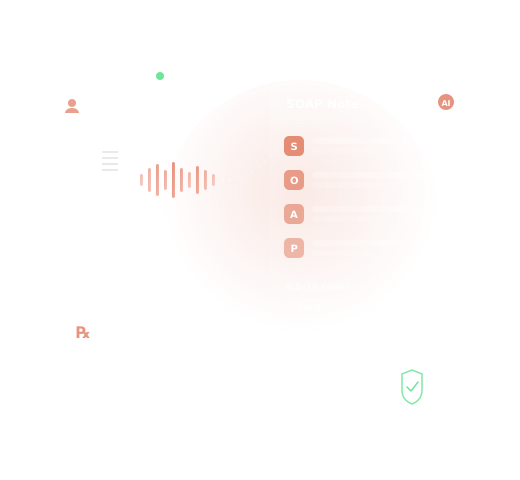
Automatic SOAP note generation: After a consultation, the system can draft Subjective, Objective, Assessment, and Plan sections based on the captured conversation. In psycho oncology, this helps organize emotional symptoms, psychosocial stressors, observed affect, assessment impressions, and next-step plans in a familiar format.
Speaker diarization: When patients and caregivers speak together, speaker diarization helps separate voices in the transcript. This can support clearer attribution of concerns, especially in family-centred oncology care discussions.
Multilingual support: Many Indian clinics need flexibility across English and local languages. Multilingual support helps teams document consultations more naturally without forcing a single-language interaction style.
ICD-10 and CPT suggestions: Coding support can assist teams by surfacing likely coding options from the documented encounter. These are suggestions for clinician or billing review, not automatic coding decisions.
Human review before final sign-off: Drafts are meant to be checked, edited, and approved by the clinician. This is especially important in psycho oncology, where subtle wording can affect continuity of care and communication with oncology colleagues.
On-premise or private deployment options: Some hospitals prefer deployment choices that support workflows aligned with internal governance and IT preferences. This can be considered as part of operational planning rather than as a blanket compliance claim.
How It Works
The workflow for an AI medical scribe in India should be practical, review-driven, and easy to fit into OPD routines. MedScribe follows a clear documentation path from conversation capture to clinician-approved record finalization.
- Capture the consultation conversation: During the psycho oncology visit, the clinician records the interaction through the configured workflow. The conversation may include the patient, caregiver, and clinician, and the system prepares the audio for structured processing.
- Transcribe and separate speakers: The platform converts speech into text and uses speaker diarization to distinguish who said what. This is useful when documenting patient-reported distress, caregiver observations, and clinician counselling points in the same encounter.
- Structure the transcript into a clinical draft: The transcribed conversation is organized into a usable note format, including SOAP-style sections where appropriate. For psycho oncology, this can help surface presenting concerns, psychosocial context, mental status observations, assessment themes, and follow-up plans.
- Generate coding support: Based on the drafted note, the system can suggest ICD-10 and CPT options for review. These suggestions are intended to support documentation and billing workflows, with the final decision remaining with the clinician or authorized team member.
- Review, edit, and sign off: The clinician checks the draft, corrects wording, adds missing context, and confirms the final note before it becomes part of the record. This human review checkpoint is essential for accuracy, nuance, and clinical accountability.
- Choose deployment posture for operations: Organizations can evaluate private or on-premise deployment options based on workflow, IT architecture, and governance preferences. This supports implementation choices aligned with institutional needs.
Local context
In India, psycho oncology services are delivered across tertiary hospitals, cancer centres, private clinics, and multidisciplinary departments where documentation demands can vary widely. Some teams need support for high-volume OPD sessions, while others focus on detailed follow-up notes for complex emotional and behavioural concerns during cancer treatment. An AI medical scribe in India is most useful when it adapts to these day-to-day realities rather than forcing a rigid workflow.
Local relevance also means supporting mixed-language consultations, variable staffing patterns, and coordination across departments. Psycho oncology clinicians may need to share concise, readable notes with oncologists, palliative care teams, nursing staff, or counsellors. A documentation copilot can help standardize note structure while still allowing the clinician to preserve nuance. For organizations evaluating AI medical scribe India healthcare solutions, practical questions usually matter most: how quickly notes can be reviewed, how well the system handles multilingual speech, and whether deployment can fit internal IT preferences.
Use cases
New psycho oncology assessment: Capture a detailed first consultation covering diagnosis-related distress, psychiatric history, coping patterns, family concerns, and treatment goals, then convert it into a structured draft for clinician review.
Follow-up counselling visits: Document symptom progression, sleep changes, medication adherence, coping strategies, and response to prior interventions without relying entirely on manual note entry.
Caregiver-inclusive consultations: Separate patient and caregiver inputs during emotionally complex discussions and organize them into a clearer note draft.
Multidisciplinary coordination: Create more consistent records that can be reviewed and shared internally with oncology or supportive care teams as part of ongoing treatment planning.
Busy OPD documentation support: Reduce after-hours note completion by preparing drafts during or soon after the encounter, while keeping final approval with the clinician.
FAQ
Can this be used for sensitive psycho oncology consultations?
Yes, it is intended to support documentation for conversation-heavy visits, but the clinician should always review and edit the draft before final sign-off, especially where emotional nuance and risk-related details matter.
Does the system replace clinical judgment?
No. It assists with transcription, note drafting, and coding suggestions. Diagnosis, interpretation, edits, and final approval remain with the clinician.
Can it support multilingual consultations common in India?
The product is built with multilingual support in mind, which can help in clinics where English, Hindi, or regional languages are used within the same workflow.
Are coding suggestions automatic billing decisions?
No. ICD-10 and CPT outputs are suggestions to support review. The care team should verify appropriateness before use in documentation or billing workflows.
Is deployment flexible for hospitals with internal IT requirements?
Yes, organizations can evaluate private or on-premise deployment options based on operational and governance needs. These choices support workflows aligned with internal preferences rather than guaranteeing any specific compliance outcome.
CTA
If your psycho oncology team wants to reduce documentation load while keeping clinicians in control, MedScribe offers a practical path. Explore how an AI medical scribe in India can support consultation capture, SOAP drafting, coding review, and final sign-off workflows for hospitals and clinics. For implementation details, teams can also review the broader product, features, integrations, and pricing pathways as part of their evaluation.