Introduction
Radiation oncology teams manage detailed consultations, treatment planning discussions, follow-up reviews, toxicity assessments, and coordination across multidisciplinary care. An AI medical scribe in India can help reduce the documentation burden by turning clinician-patient conversations into structured clinical notes that are easier to review, edit, and finalize. For hospitals, cancer centres, and specialty clinics, the goal is practical: spend less time typing, maintain clearer records, and support smoother handoffs between doctors, nurses, and administrative teams.
MedScribe is designed as an AI documentation copilot for daily OPD and specialty workflows. It converts consultation audio into draft notes, supports SOAP formatting, suggests ICD-10 and CPT codes, and separates speakers through diarization so the record is easier to interpret. In radiation oncology, where documentation often includes diagnosis context, treatment intent, prior therapy, side effects, and follow-up planning, this kind of workflow support can be useful for both new consultations and review visits. The product is designed to align with operational governance choices such as private or on-premise deployment where needed.
Department workflow
Radiation oncology documentation is rarely limited to a single note type. A department may need to capture first consults, simulation-related discussions, treatment planning reviews, on-treatment visits, symptom checks, and post-treatment follow-ups. Clinicians often document history, staging context, prior surgery or systemic therapy, current complaints, examination findings, treatment recommendations, expected adverse effects, and next steps. This creates repetitive typing and after-hours charting, especially in busy centres.
An AI medical scribe in India can support this workflow by helping clinicians move from conversation to draft documentation faster. Instead of manually reconstructing the visit after the patient leaves, the doctor can review a structured draft generated from the consultation. This is especially relevant in radiation oncology because notes often need consistency across repeated visits, while still reflecting changes in symptoms, tolerance, and treatment progress. The result is not replacement of clinical judgment, but a more efficient starting point for documentation.
Features mapped to workflow
For radiation oncology teams, useful product value comes from how features map to real tasks:
- Automatic SOAP note generation: Helps convert consultation content into a familiar structure for assessment and plan documentation.
- Speaker diarization: Distinguishes clinician and patient speech, which can improve clarity during review.
- Multilingual support: Useful in Indian care settings where consultations may shift between English and regional languages.
- ICD-10 and CPT suggestions: Supports coding workflows by surfacing likely options for clinician review rather than forcing manual lookup every time.
- Human review before finalization: Keeps the clinician in control of edits, additions, and sign-off.
- On-premise or private deployment options: Supports organizations that prefer tighter governance over where documentation workflows run.
These capabilities are relevant across consult rooms, day-care linked reviews, and follow-up clinics. They are also useful when departments want more standardized note quality without adding more manual work for doctors.
How It Works
The workflow is designed to be practical for specialty care and to keep the clinician as the final decision-maker.
- Capture the consultation conversation: During a radiation oncology visit, the consultation audio is captured through the configured workflow. This may include history, diagnosis discussion, treatment intent, side-effect review, and next-step planning. The system is built to support multilingual conversations common in Indian clinical settings.
- Transcribe and structure the interaction: The audio is converted into text, and speaker diarization separates the clinician from the patient or caregiver. This helps organize the conversation into a usable draft rather than a raw transcript.
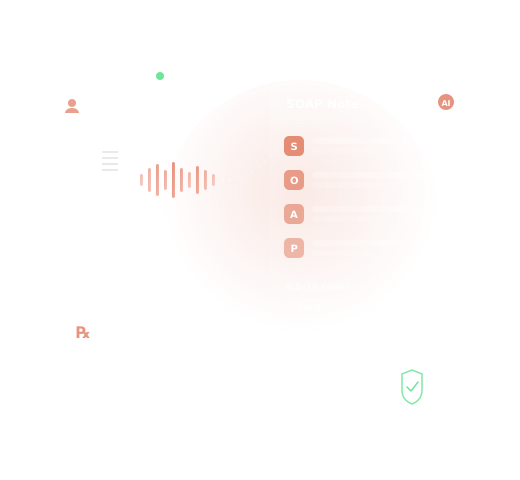
- Generate a draft SOAP note: The platform creates a structured clinical note based on the consultation. In radiation oncology, this can help summarize symptoms, treatment context, assessment points, and follow-up plans in a format that is easier to review.
- Surface coding support: The system can suggest ICD-10 and CPT options based on the documented encounter. These are suggestions for clinician validation, not automatic final coding decisions.
- Review, edit, and sign off: The clinician checks the draft, corrects details, adds specialty-specific findings, and approves the final note before it becomes part of the record. Human review is an operational checkpoint, especially for complex oncology cases.
- Choose the deployment posture that fits governance needs: Hospitals and clinics can evaluate private or on-premise deployment options as workflow and governance decisions. This supports organizations that want tighter control over documentation operations without making blanket compliance claims.
Local context
In India, radiation oncology departments often balance high documentation needs with variable staffing patterns, multilingual patient interactions, and pressure to keep clinics moving on time. An AI medical scribe in India should therefore be useful in everyday practice, not just in ideal conditions. That means supporting practical OPD workflows, helping clinicians review drafts quickly, and fitting into existing documentation habits rather than forcing a complete process change.
For many organizations, the question is not whether AI can generate text, but whether it can support consistent clinical documentation while preserving clinician oversight. This is where an AI medical scribe India healthcare workflow matters: it should help doctors document faster, support coding review, and remain flexible enough for specialty-specific edits. In radiation oncology, where treatment journeys span multiple visits, continuity and note quality are especially important.
Use cases
- New patient consultations: Draft notes for diagnosis discussion, prior treatment history, symptom review, and treatment recommendations.
- On-treatment visits: Capture toxicity updates, symptom progression, supportive care advice, and plan adjustments.
- Follow-up appointments: Summarize interval history, response review, persistent side effects, and surveillance planning.
- Multidisciplinary coordination: Create clearer documentation that can be reviewed by referring teams and internal stakeholders.
- Coding support workflows: Surface likely ICD-10 and CPT suggestions for clinician validation during documentation review.
These use cases make an AI medical scribe in India relevant not only for large hospitals but also for specialty clinics that want to reduce after-hours charting and improve note consistency.
FAQ
Below are common implementation questions from radiation oncology teams evaluating documentation support tools.
Can this be used for radiation oncology follow-up visits?
Yes. Follow-up visits often involve symptom review, treatment tolerance, and next-step planning, which are well suited to structured draft note generation with clinician review.
Does the product replace clinician documentation judgment?
No. The system creates drafts and coding suggestions, but the clinician reviews, edits, and signs off before finalization.
Can it support multilingual consultations in India?
The product includes multilingual support, which can be useful where consultations move between English and regional languages.
Is deployment limited to one model?
No. Organizations can evaluate private or on-premise deployment options based on workflow and governance preferences.
CTA
If your radiation oncology department is looking for a more practical way to document consultations, an AI medical scribe in India can help streamline note creation while keeping clinicians in control. Explore the core product at /medscribe, review capabilities at /medscribe/features, and assess how the workflow fits your OPD, follow-up, and specialty documentation needs.