Introduction
Radiation physics teams work in a documentation-heavy environment where precision, review, and coordination matter every day. An AI medical scribe in India can help reduce manual note-taking during consultations, planning discussions, follow-up reviews, and multidisciplinary coordination. For hospitals and clinics that support radiation oncology services, the goal is not to replace clinical judgment. The goal is to make documentation faster to prepare, easier to review, and more consistent across routine workflows.
MedScribe is designed as an AI documentation copilot that converts consultation conversations into structured clinical notes and coding suggestions. In practical terms, it supports conversation capture, transcription, SOAP note drafting, speaker separation, multilingual interactions, and clinician review before final sign-off. For radiation physics settings, this can be useful when teams need cleaner records around treatment planning discussions, patient education, simulation-related conversations, and follow-up documentation. An AI medical scribe in India is especially relevant for organizations balancing high OPD volumes, mixed language interactions, and the need to keep records usable for downstream workflows.
Rather than adding another standalone admin task, the product is designed to fit into daily documentation habits. It supports workflows aligned with hospital governance choices, including private or on-premise deployment approaches where needed. For providers evaluating an AI medical scribe India healthcare solution, the practical question is simple: can the tool help clinicians document faster while keeping human review at the center? That is the workflow this page focuses on.
Department workflow
Radiation physics documentation often sits alongside broader radiation oncology operations. While the physicist's role differs from the physician's, the department still depends on accurate records from consultations, planning meetings, treatment discussions, and follow-up interactions. Typical workflow points include patient history review, treatment intent discussion, simulation planning coordination, dose-related communication, side-effect counseling, and periodic review notes.
In many Indian hospitals, these interactions happen across busy schedules and may involve English plus regional language usage. Notes may be entered after the encounter, which can create delays or variation in detail. An AI medical scribe in India can support this environment by turning spoken interactions into structured drafts that clinicians can edit and approve. This helps reduce repetitive typing while preserving the need for expert oversight.
For radiation physics teams, the value is often operational. Better draft notes can support smoother handoffs between clinicians, physicists, and administrative staff. Structured summaries can also make it easier to track what was discussed during planning-related encounters, what follow-up was advised, and what coding suggestions may be relevant for review. The result is a more usable documentation process for routine departmental work.
Features mapped to workflow
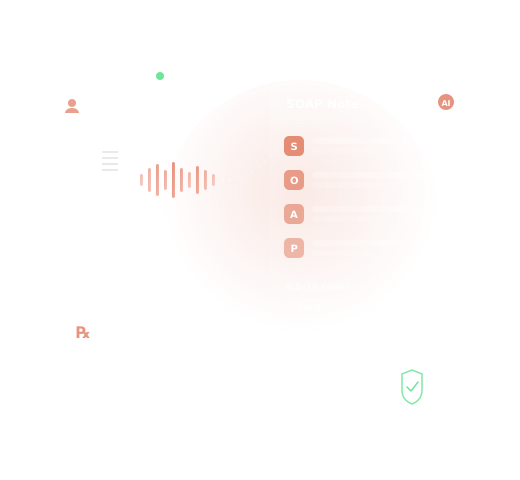
Automatic SOAP note generation: After a consultation or planning discussion, the system drafts a structured SOAP note so clinicians do not have to start from a blank screen. This is useful for follow-up visits, treatment review conversations, and patient counseling documentation.
Speaker diarization: In encounters where more than one person speaks, speaker separation helps distinguish clinician and patient contributions. This can improve readability during review and reduce confusion in multi-speaker conversations.
Multilingual support: Many care settings in India involve mixed-language conversations. Multilingual support helps teams capture clinically relevant content more naturally without forcing a single-language interaction style.
ICD-10 and CPT suggestions: The product can surface coding suggestions based on the documented encounter. These are intended to support staff review, not replace coding judgment. For departments that want cleaner downstream billing preparation, this can save time.
Human review and edits: Drafts are meant to be reviewed, corrected, and approved by the clinician before record finalization. This checkpoint is essential in radiation physics-adjacent workflows where accuracy and context matter.
On-premise or private deployment options: Some hospitals prefer tighter control over infrastructure decisions. Deployment posture can be treated as a workflow and governance choice, helping organizations align the tool with internal IT preferences.
How It Works
The workflow is designed to move from conversation capture to clinician-approved documentation in a clear sequence.
- Capture the encounter: During a consultation, review, or planning-related discussion, the conversation is recorded through the configured workflow. This may include OPD interactions, counseling sessions, or follow-up reviews relevant to radiation physics coordination.
- Transcribe and structure the conversation: The system converts speech into text, applies speaker diarization, and organizes the content into a clinically usable structure. Multilingual conversations can be processed to support real-world communication patterns in Indian care settings.
- Draft the SOAP note automatically: Based on the transcript, the product generates a draft SOAP note. This gives clinicians a working document that captures subjective discussion, objective details, assessment context, and plan-oriented next steps.
- Add coding support: The system surfaces ICD-10 and CPT suggestions linked to the documented encounter. These suggestions are intended to support administrative and clinical review, not to automate final coding decisions.
- Review, edit, and sign off: The clinician checks the draft, corrects wording, adds missing context, and approves the final version before it becomes part of the record. This human review step is a core operational checkpoint.
- Choose the deployment posture that fits governance needs: Hospitals can evaluate private or on-premise deployment approaches as part of implementation planning. This supports workflows aligned with internal data handling preferences and IT operations.
Local context
Healthcare teams in India often manage high patient throughput, variable documentation habits, and mixed digital maturity across departments. In this environment, an AI medical scribe in India should be practical first. It should help clinicians save time on repetitive note creation, support multilingual communication, and fit into existing OPD and hospital workflows without forcing a major process reset.
For radiation physics and related oncology settings, local relevance also means supporting coordination across specialists. Documentation may need to be understandable to clinicians, administrators, and support staff who rely on clear summaries. An AI medical scribe India healthcare workflow is most useful when it improves day-to-day usability: faster drafts, easier review, and more consistent records across encounters.
Use cases
Follow-up review documentation: Draft notes for patient follow-ups where treatment progress, symptoms, and next steps need to be recorded quickly.
Patient counseling summaries: Capture discussions on treatment expectations, side effects, and care plans in a structured format that is easier to review later.
Multidisciplinary coordination: Support cleaner summaries from discussions that involve clinicians, technical staff, and patients.
Coding preparation support: Provide ICD-10 and CPT suggestions for staff to review as part of documentation and billing workflows.
High-volume OPD workflows: Reduce the burden of typing full notes after each encounter by generating drafts during or immediately after the conversation.
FAQ
Can this be used only by doctors?
It is primarily designed for clinical documentation workflows, but departments can evaluate how it supports broader care team documentation processes where clinician review remains the final checkpoint.
Does it replace manual review?
No. Drafts and coding suggestions should be reviewed and edited by the clinician or authorized staff before final sign-off.
Is it suitable for multilingual consultations in India?
Yes, multilingual support is part of the workflow design, which is useful for mixed-language consultations common in Indian healthcare settings.
Can hospitals choose a private deployment model?
Yes, deployment can be planned with private or on-premise options depending on workflow, IT, and governance preferences.
CTA
If your hospital or clinic is evaluating an AI medical scribe in India for radiation physics or related oncology workflows, focus on the basics: faster documentation, structured SOAP drafts, coding support, multilingual capture, and reliable clinician review before finalization. Explore how MedScribe can fit into your daily OPD and departmental processes, and review the related product pages for features, integrations, and implementation options.