Introduction
Respiratory therapy teams work in fast-moving clinical environments where accurate documentation matters for continuity of care, handoffs, and billing readiness. An AI medical scribe in India can help reduce the time clinicians spend turning conversations into structured notes, especially in OPD, inpatient review, pulmonary follow-up, and procedure-related documentation. For hospitals and clinics, the goal is not to replace clinical judgment. It is to support better note preparation, clearer records, and more consistent workflows around review and sign-off.
MedScribe is designed as an AI documentation copilot that converts consultation conversations into usable drafts such as SOAP notes, along with coding suggestions that clinicians can verify. For respiratory therapy and pulmonary care settings, this can support documentation of symptoms, history, therapy response, device use, education provided, and follow-up plans. The product is built for practical daily use, with multilingual support, speaker diarization, and deployment options such as private or on-premise setups depending on operational needs.
Teams evaluating an AI medical scribe in India often want a solution that fits existing documentation habits rather than forcing a new process. That is why the workflow centers on conversation capture, structured transcription, draft generation, coding support, clinician edits, and final approval.
Department workflow
Respiratory therapy documentation often spans multiple touchpoints. A patient may arrive with breathlessness, chronic cough, wheeze, sleep-related breathing concerns, post-ICU respiratory needs, or follow-up after pulmonary infection. During the encounter, clinicians and therapists gather symptom history, smoking exposure, medication adherence, inhaler technique, oxygen use, nebulization details, spirometry context, and response to prior treatment. These details are clinically important but time-consuming to document consistently.
In many Indian hospitals and clinics, respiratory workflows also involve mixed-language conversations, variable documentation formats, and pressure to complete notes quickly between appointments. A practical AI medical scribe in India should therefore support real-world OPD and hospital routines: capturing the conversation, separating speakers, organizing findings into a familiar structure, and preparing a draft that can be reviewed before it enters the record.
For respiratory teams, useful documentation support includes symptom chronology, relevant history, examination highlights, therapy or device instructions, assessment summaries, and follow-up recommendations. It should also help clinicians maintain note quality across routine reviews, chronic disease management visits, and higher-volume clinic sessions.
Features mapped to workflow
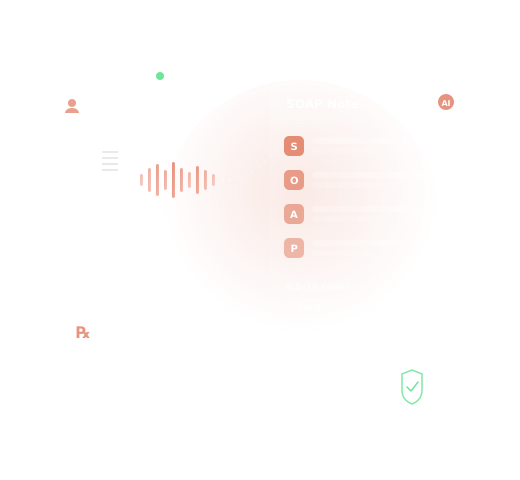
Automatic SOAP note generation: Consultation audio can be converted into draft subjective, objective, assessment, and plan sections. This is useful for pulmonary follow-ups, asthma reviews, COPD management, sleep-related consultations, and respiratory rehabilitation discussions.
Speaker diarization: The system distinguishes between clinician and patient speech, helping create cleaner transcripts and more usable note drafts. In respiratory care, where symptom descriptions and counseling are both important, speaker separation improves readability during review.
Multilingual support: Many consultations in India move between English and regional languages. Multilingual support helps teams document more naturally without forcing a single-language interaction style.
ICD-10 and CPT suggestions: The platform can surface coding suggestions based on the documented encounter. These are intended as support for clinician or billing review, not as automatic final coding.
On-premise or private deployment options: Some organizations prefer deployment choices aligned with internal governance, IT architecture, and data-handling preferences. This can be important for larger hospital groups or specialty centers with defined infrastructure policies.
Human review before finalization: Drafts are meant to be checked, edited, and approved by the clinician. This checkpoint is essential for respiratory documentation where interpretation of symptoms, severity, and treatment response requires professional judgment.
How It Works
The workflow for an AI medical scribe in India should be concrete, reviewable, and easy to fit into daily practice. MedScribe follows a practical sequence from encounter capture to final sign-off.
- Capture the consultation conversation: During a respiratory therapy or pulmonary consultation, the encounter audio is captured through the configured workflow. This may include symptom discussion, prior history, medication review, inhaler or oxygen use, and clinician counseling.
- Transcribe and structure the interaction: The system converts speech into text and uses speaker diarization to separate patient and clinician dialogue. This helps organize the encounter into a clearer transcript, especially when the consultation includes questions, clarifications, and education.
- Draft a SOAP note automatically: Based on the structured transcript, MedScribe prepares a draft SOAP note. For respiratory workflows, this can include presenting complaints, relevant history, observed findings discussed in the encounter, assessment themes, and a plan for therapy, medication, tests, or follow-up.
- Surface coding suggestions: The platform can provide ICD-10 and CPT suggestions linked to the documented encounter. These suggestions support downstream review by the clinician or billing team and are not a substitute for professional validation.
- Review, edit, and approve: The clinician checks the draft, corrects details, adds missing context, and confirms that the note reflects the actual encounter. This human review step is the operational checkpoint before the record is finalized.
- Finalize according to deployment and governance preferences: Organizations can choose workflow and infrastructure approaches such as private or on-premise deployment based on internal governance decisions. The final note is then handled within the organization’s documentation process.
Local context
Healthcare teams in India often manage high patient volumes, mixed digital maturity, and multilingual communication across OPD and hospital settings. In respiratory care, this can make documentation especially demanding because symptom narratives are nuanced and follow-up instructions need to be clear. An AI medical scribe in India is most useful when it supports these realities without adding operational friction.
For clinics, the value may be faster draft preparation between appointments and more consistent note structure. For hospitals, the value may include support for standardized documentation across departments, clinicians, and shifts. Because infrastructure preferences vary, deployment posture should be treated as a workflow and governance decision. Teams looking at AI medical scribe India healthcare solutions often prioritize practical fit: multilingual use, review checkpoints, and compatibility with existing documentation habits.
Use cases
Asthma follow-up visits: Capture symptom frequency, trigger discussion, inhaler adherence, technique counseling, and plan updates in a structured note draft.
COPD management: Support documentation of exacerbation history, smoking exposure, medication review, oxygen use, and follow-up recommendations.
Post-discharge respiratory review: Prepare notes for patients returning after hospitalization, including symptom progression, therapy response, and next steps.
Sleep and breathing consultations: Organize history, symptom descriptions, prior testing context, and clinician recommendations into a usable draft.
High-volume OPD sessions: Help clinicians maintain note consistency when moving quickly between consultations while preserving a review-and-approve workflow.
FAQ
Can this be used for multilingual consultations?
Yes. MedScribe includes multilingual support, which is useful for Indian clinical settings where consultations may shift between English and regional languages.
Does the system finalize notes automatically?
No. The workflow is designed around draft generation followed by clinician review, edits, and final sign-off before record finalization.
Are coding outputs automatic billing decisions?
No. ICD-10 and CPT outputs are suggestions intended to support clinician or billing review, not replace professional validation.
Is this relevant only for large hospitals?
No. It can be useful for specialty clinics, OPD practices, and hospital departments that want more consistent documentation workflows.
CTA
If your team is evaluating an AI medical scribe in India for respiratory therapy or pulmonary workflows, focus on practical fit: conversation capture, structured drafts, coding support, multilingual use, and clinician-controlled review. Explore the product pathways for MedScribe, compare capabilities on the features page, and assess how the workflow can support your clinic or hospital documentation process.