Introduction
Retina consultations often involve dense clinical detail, repeat follow-ups, imaging discussions, injection planning, and careful documentation of symptoms, findings, and treatment decisions. An AI medical scribe in India can help retina specialists and eye hospitals reduce manual note-taking by turning consultation conversations into structured clinical drafts that are ready for review. Instead of relying only on memory after a busy OPD session, clinicians can work from a draft that captures the encounter in a more usable format.
MedScribe is designed as an AI documentation copilot for doctors, clinics, and hospitals. It converts consultation audio into structured notes, supports SOAP-style drafting, and provides coding suggestions that clinicians can verify before finalizing the record. For retina services, this is useful in high-volume outpatient settings where documentation needs to stay clear, consistent, and practical across new visits, procedure counseling, and follow-up reviews.
This page focuses on how an AI medical scribe fits retina workflows in India, with emphasis on daily usability, clinician review, and operational flexibility for hospitals and specialty eye centres.
Department workflow
Retina services usually combine history taking, visual symptom review, prior treatment context, imaging interpretation, and treatment planning in a short consultation window. A typical workflow may include patient intake, discussion of complaints such as floaters or blurred vision, review of prior injections or laser sessions, examination findings, imaging references, and a plan for observation, procedure, referral, or follow-up.
Documentation can become time-consuming because the clinician must capture both the medical narrative and the decision trail. In retina practice, notes may need to reflect onset and progression of symptoms, systemic risk factors, prior interventions, laterality, examination findings, and next-step instructions. When this is done manually across a busy OPD, the burden can affect turnaround time and consistency.
An AI medical scribe in India supports this workflow by helping convert the live consultation into a structured draft. The goal is not to replace clinical judgment, but to reduce repetitive typing and make it easier to review, edit, and sign off on notes before they are added to the patient record.
Features mapped to workflow
For retina departments, the value of an AI scribe is strongest when features map directly to real consultation steps:
- Conversation capture and transcription: Supports documentation from the spoken interaction so the clinician can stay focused on the patient.
- Speaker diarization: Helps distinguish doctor and patient speech, which is useful when history, counseling, and treatment planning happen quickly.
- Automatic SOAP note generation: Converts the encounter into a structured draft that can be reviewed and refined.
- ICD-10 and CPT suggestions: Provides coding support based on the documented encounter, with clinician verification before use.
- Multilingual support: Useful in Indian care settings where consultations may shift between English and regional languages.
- On-premise or private deployment options: Supports organizations that prefer tighter control over workflow and data handling decisions.
These capabilities make AI medical scribe India healthcare adoption more practical for retina clinics that want better documentation support without adding friction to OPD operations.
How It Works
The workflow below reflects how the product is designed to support end-to-end clinical documentation for retina services:
- Capture the consultation conversation: During the retina visit, the consultation audio is captured through the configured workflow. This may include symptom discussion, prior treatment history, examination commentary, and plan explanation. The system is designed to support multilingual conversations common in Indian clinics.
- Transcribe and structure the encounter: The audio is converted into text, and speaker diarization separates clinician and patient contributions. This helps organize the encounter into a more usable clinical sequence rather than a raw transcript alone.
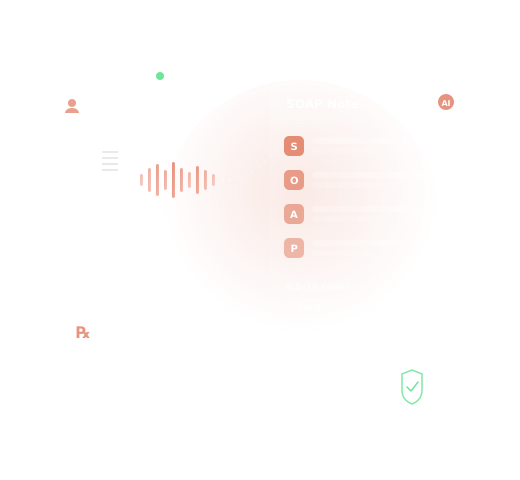
- Draft a SOAP-style note: Based on the structured conversation, the system generates a draft note in SOAP format. For retina services, this can help organize subjective complaints, objective findings discussed during the visit, assessment context, and the treatment or follow-up plan.
- Suggest coding for review: The platform can surface ICD-10 and CPT suggestions linked to the documented encounter. These are support tools for the clinician or billing team to review, not final codes applied automatically without oversight.
- Clinician review, edits, and sign-off: The doctor reviews the draft, corrects details, adds missing findings if needed, and confirms the final note before record finalization. Human review is the operational checkpoint that keeps the documentation clinically usable.
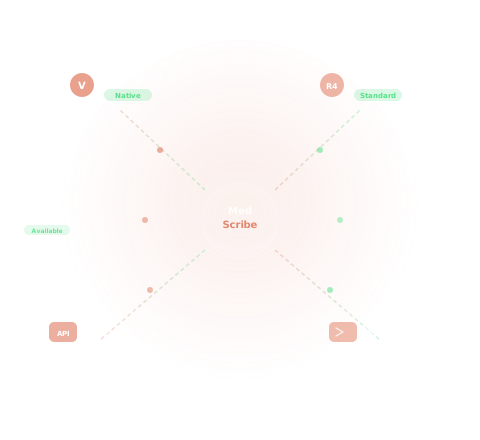
- Choose deployment posture for governance needs: Hospitals and specialty centres can evaluate on-premise or private deployment options based on internal IT, workflow, and governance preferences. This supports workflows aligned with organizational requirements rather than a one-size-fits-all setup.
This practical sequence is why many teams evaluating an AI medical scribe in India look beyond transcription alone and focus on structured drafting, review checkpoints, and deployment flexibility.
Local context
In India, retina services often operate in high-throughput outpatient environments where clinicians balance patient volume with detailed documentation needs. Follow-up visits for diabetic retinopathy, retinal vein occlusion, macular conditions, post-procedure reviews, and injection counseling can create repetitive note patterns that still require careful clinical nuance. An AI documentation copilot can help standardize the first draft while leaving the final decision and wording with the treating doctor.
For multi-location eye hospitals and independent retina practices, multilingual support can be especially relevant. Consultations may move between English and local languages, and documentation teams may need a workflow that adapts to this reality. An AI medical scribe in India is most useful when it fits these day-to-day conditions rather than forcing a rigid process.
Operationally, some organizations may also prefer private or on-premise deployment choices based on internal governance and IT planning. That decision is best treated as a workflow and infrastructure choice tied to the organization’s operating model.
Use cases
- Busy retina OPD: Create faster first-draft notes for new and follow-up consultations.
- Injection counseling visits: Capture discussion around treatment options, intervals, and follow-up plans.
- Imaging review appointments: Support structured documentation when findings and plan are discussed verbally during the visit.
- Multi-doctor eye hospitals: Improve note consistency across consultants while preserving individual review and sign-off.
- Clinics serving multilingual populations: Support more natural consultation flow without depending entirely on manual typing.
These scenarios show how an AI medical scribe in India can support retina teams that want practical documentation assistance without disrupting clinical care.
FAQ
Common questions from retina clinics and hospitals evaluating AI documentation tools are answered below.
CTA
If your retina department is exploring ways to reduce documentation burden, improve note consistency, and keep clinicians focused on patient interaction, MedScribe offers a practical starting point. Explore the product overview, features, integrations, and pricing to assess fit for your OPD workflow. For hospitals and clinics comparing options for an AI medical scribe in India, the key is to evaluate real consultation flow, review controls, multilingual needs, and deployment preferences before rollout.
Explore MedScribe | View features | See integrations | Check pricing