Introduction
Rheumatology consultations often involve long histories, symptom timelines, medication reviews, joint assessments, lab follow-up, and treatment planning. That makes documentation important but time-consuming in busy OPD settings. An AI medical scribe in India can help rheumatologists and care teams convert consultation conversations into structured draft notes that are easier to review, edit, and finalize. Instead of replacing clinical judgment, the tool supports the doctor by reducing repetitive typing and helping organize information into a usable format.
For clinics and hospitals, the value is practical: clearer note preparation, more consistent documentation structure, and support for coding suggestions after the encounter. In rheumatology, where follow-up visits may include disease activity review, medication tolerance, flare patterns, and comorbidity discussion, a documentation copilot can help keep records complete without disrupting the patient interaction. This page explains how an AI medical scribe in India fits into rheumatology workflows, what features matter most, and how teams can adopt it in a way that supports daily operations.
Department workflow
Rheumatology workflows usually begin with a detailed patient history and prior record review. During the consultation, the clinician may discuss pain patterns, morning stiffness, swelling, fatigue, functional limitations, prior imaging, laboratory markers, biologic or DMARD use, and response to treatment. Follow-up visits may also include medication adherence, adverse effects, and changes in disease activity over time.
After the conversation, the documentation burden continues. Teams need to prepare SOAP notes, summarize findings, capture assessment and plan, and often review coding-related details. In many Indian healthcare settings, this work happens alongside high patient volumes, multilingual interactions, and mixed digital maturity across clinics and hospitals. A practical AI medical scribe India healthcare workflow should therefore support real consultation patterns rather than force a rigid template.
For rheumatology, useful documentation support includes capturing longitudinal history, separating patient and clinician speech, organizing findings into subjective and objective sections, and helping the doctor review a draft before sign-off. The goal is not automation without oversight. The goal is faster preparation of clinically useful notes that still remain under clinician control.
Features mapped to workflow
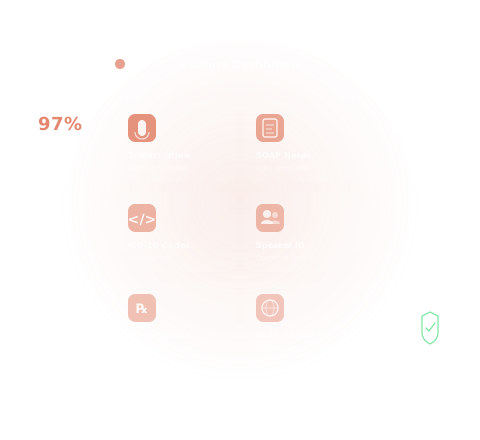
Conversation capture and transcription: The system listens to the consultation audio and converts it into text for downstream note creation. This is useful in rheumatology visits where symptom descriptions can be detailed and nuanced.
Speaker diarization: By distinguishing between clinician and patient speech, the draft note can better separate history, questions, and recommendations. This is especially helpful when family members also participate in the discussion.
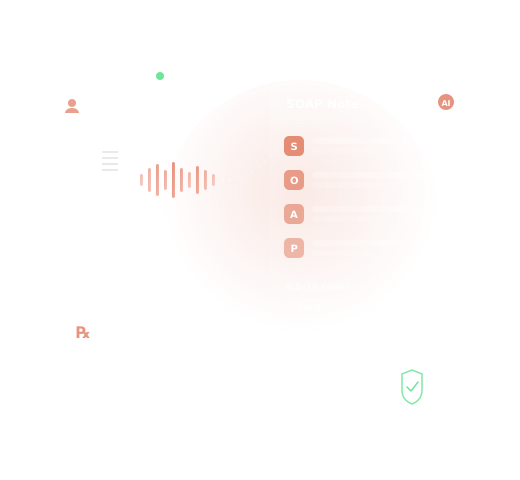
Automatic SOAP note generation: The product is designed to turn the conversation into a structured SOAP draft. For rheumatology, this can help organize symptom history, examination discussion, assessment, and treatment plan into a familiar format.
ICD-10 and CPT suggestions: Coding support can help teams review likely coding options based on the documented encounter. These are suggestions for clinician or billing review, not automatic final coding decisions.
Multilingual support: Many consultations in India move between English and regional languages. Multilingual support can help teams document more naturally without requiring the entire encounter to happen in one language.
On-premise deployment options: Some hospitals and larger groups prefer private or on-premise deployment postures as part of their internal governance and IT planning. This supports workflows aligned with organizational data handling preferences.
How It Works
The workflow for this product is designed around the real sequence of a consultation, from conversation capture to clinician-approved final documentation.
- Capture the consultation conversation: During the rheumatology visit, the system records or receives the consultation audio. This may include history taking, symptom review, medication discussion, and treatment planning. Multilingual conversations can be processed so the encounter remains natural for doctor and patient.
- Transcribe and structure the encounter: The audio is converted into text, and speaker diarization separates patient and clinician speech. This helps the system identify history details, reported symptoms, and clinician recommendations more clearly before drafting the note.
- Generate a SOAP draft: Based on the structured transcript, the product prepares a draft SOAP note. In rheumatology, this can include subjective symptom history, objective findings discussed in the encounter, assessment themes, and a plan section for medication, investigations, follow-up, or referral.
- Suggest coding for review: The system can surface ICD-10 and CPT suggestions linked to the documented encounter. These suggestions are intended to support administrative review and clinician validation rather than replace coding judgment.
- Clinician review, edit, and sign-off: The doctor reviews the draft note, makes edits, confirms accuracy, and finalizes the record. Human review is the operational checkpoint that ensures the final documentation reflects the actual clinical encounter.
- Choose the right deployment posture: Depending on the clinic or hospital setup, teams can evaluate deployment approaches such as private or on-premise environments. This is a workflow and governance decision that can support internal IT requirements and documentation processes.
Local context
In India, rheumatology practices may operate across standalone clinics, multispecialty hospitals, and academic centers. Documentation needs can vary, but common pressures include busy OPD schedules, follow-up-heavy case mixes, and the need to maintain clear records across repeated visits. An AI medical scribe in India should therefore be practical, adaptable, and easy to fit into existing consultation habits.
Language flexibility matters because patient conversations may shift between English, Hindi, and other regional languages. Review control also matters because clinicians need confidence that the final note reflects the encounter accurately. For larger institutions, deployment choices may be evaluated alongside internal IT and governance preferences. In this setting, an AI medical scribe in India is most useful when it supports the doctor's workflow rather than adding another layer of admin work.
Use cases
New patient evaluations: Capture long symptom histories, prior treatment journeys, and differential considerations in a structured draft note.
Follow-up disease monitoring: Document flare frequency, stiffness duration, pain changes, medication response, and next-step planning more consistently.
Biologic and DMARD review visits: Summarize tolerance, adherence, side effects, and monitoring discussions for easier chart completion.
Hospital outpatient departments: Support clinicians managing high consultation volumes by reducing repetitive note-writing tasks after each visit.
Multilingual consultations: Help teams document encounters where patient communication happens across more than one language.
Coding support workflows: Provide ICD-10 and CPT suggestions that administrative or clinical teams can review before final submission.
These scenarios show why an AI medical scribe in India can be relevant for rheumatology departments that want more efficient documentation without losing clinician oversight.
FAQ
Can this be used for both new and follow-up rheumatology visits?
Yes. It can support long initial consultations as well as repeat visits where symptom progression, medication response, and follow-up plans need to be documented clearly.
Does the system finalize notes automatically?
No. The workflow is designed around draft generation followed by clinician review, edits, and final sign-off before the record is completed.
How does coding support work?
The product can suggest ICD-10 and CPT options based on the documented encounter. These suggestions are meant to support review and should be validated by the appropriate team.
Is it suitable for multilingual consultations in India?
Yes. Multilingual support is useful for clinics and hospitals where consultations may move between English and regional languages during the same visit.
CTA
If your rheumatology team wants to reduce documentation effort while keeping clinicians in control of the final note, explore an AI medical scribe in India built for practical OPD workflows. Review how conversation capture, SOAP drafting, coding suggestions, and deployment options can fit your clinic or hospital setup, then assess the workflow against your current documentation process.