Introduction
School health teams manage a unique mix of routine check-ups, minor illness visits, injury assessments, parent communication, follow-up advice, and referral documentation. An AI medical scribe in India can help doctors, nurses, and school health coordinators reduce time spent typing notes after each interaction while keeping the clinician in control of the final record. For institutions that run infirmaries, school clinics, or partner-led health programs, the goal is not to replace clinical judgment. It is to support faster documentation, clearer summaries, and more consistent records across busy school days.
MedScribe is designed as an AI documentation copilot that converts consultation conversations into structured clinical notes and coding suggestions. In school health settings, this can be useful for documenting common complaints such as fever, cough, headache, abdominal pain, sports injuries, skin issues, and follow-up observations after a prior visit. The product is built for practical OPD-style workflows and can support multilingual conversations, speaker diarization, and clinician review before sign-off. For providers evaluating an AI medical scribe in India, the value is straightforward: less manual note creation, more usable summaries, and a workflow that fits real consultation patterns.
Department workflow
School Health Services often operate with short consultation windows and variable case complexity. A student may arrive with a minor complaint, a teacher may report symptoms observed in class, or a parent may share history over phone or in person. Documentation must capture the presenting issue, relevant history, observations, assessment, advice given, and whether referral or escalation is needed. In many schools, these notes are still entered manually into local systems, spreadsheets, or hospital information systems after the interaction ends.
An AI medical scribe in India is especially relevant here because school health workflows depend on speed and clarity. During peak periods such as seasonal illness clusters, sports events, or annual health camps, clinicians need a reliable way to document encounters without creating a backlog. The workflow usually includes intake, conversation capture, note drafting, clinician edits, and final record completion. Where coding is used for downstream reporting or integration with broader healthcare systems, coding suggestions can also reduce repetitive administrative effort.
Features mapped to workflow
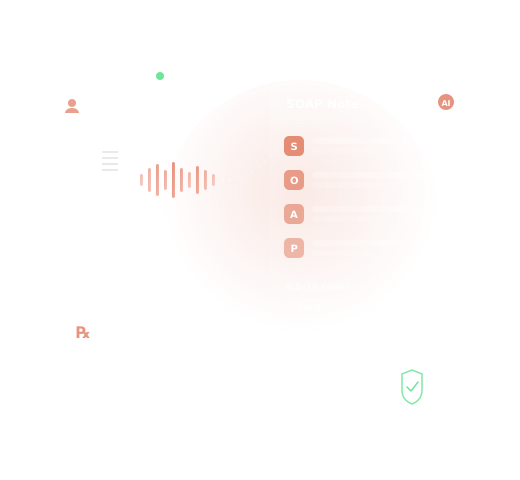
Automatic SOAP note generation: After a consultation, the system drafts structured notes in SOAP format so clinicians can review rather than write from scratch. This is useful for common school clinic encounters where consistency matters.
Speaker diarization: In school settings, more than one person may speak during an encounter, such as the student, clinician, nurse, or parent. Speaker separation helps organize the transcript into a more usable draft.
Multilingual support: Many school consultations in India involve a mix of English, Hindi, and regional languages. Multilingual support helps teams document conversations more naturally.
ICD-10 and CPT suggestions: Where coding is part of the workflow, the product can suggest likely codes based on the documented interaction. These suggestions support administrative workflows but still require clinician review.
On-premise or private deployment options: Some institutions prefer tighter control over infrastructure and data handling. Deployment posture can be chosen as an operational and governance decision based on internal requirements.
Human review before finalization: Drafts are not the final record by default. The clinician reviews, edits, and signs off before the note is completed, which is important for school health documentation quality.
How It Works
The workflow for this product is designed around real consultation documentation, from conversation capture to final sign-off.
- Capture the consultation conversation: During or immediately after the student encounter, the clinician records the interaction through the configured workflow. This may include the student history, symptoms, observations, and advice discussed. The system is built to support multilingual speech and distinguish speakers where multiple participants are involved.
- Convert speech into structured transcript: The audio is transcribed and organized into a readable conversation record. Speaker diarization helps separate the clinician from the student, parent, or nurse, making the draft easier to review and reducing confusion in multi-speaker interactions.
- Draft a SOAP note automatically: Based on the transcript, MedScribe generates a structured SOAP note draft. This can include subjective history, objective observations, assessment cues, and plan-oriented content relevant to the consultation. For school clinics, this helps standardize notes across routine visits and follow-ups.
- Suggest coding support for review: The system can surface ICD-10 and CPT suggestions linked to the documented encounter. These are intended as support for administrative and reporting workflows, not as automatic final coding. The clinician or authorized team member reviews the suggestions before use.
- Review, edit, and sign off: The clinician checks the draft note, corrects wording, adds missing findings, and confirms the final assessment and plan. This human review checkpoint is essential before the record is finalized in the clinic workflow or shared with connected systems.
- Finalize based on deployment choice: Depending on the organization setup, the workflow can operate in an on-premise or private deployment model designed to align with internal governance preferences. This supports institutions that want documentation tools to fit existing operational controls.
Local context
In India, school health programs may be run directly by institutions, healthcare partners, or multi-site provider networks. Documentation needs can vary from basic infirmary notes to more structured records that feed into larger care systems. An AI medical scribe in India should therefore be practical, flexible, and easy to fit into daily operations rather than built only for one specialty environment. For school health teams, the main requirement is often simple: document faster, keep records readable, and support continuity when students return for follow-up.
This is where AI medical scribe India healthcare workflows matter. Teams may need multilingual support, clear note structure, and deployment options that align with institutional preferences. In urban and semi-urban settings alike, clinicians often move between preventive screenings, acute complaints, and referral decisions in the same day. A documentation copilot helps reduce repetitive typing while preserving clinician oversight.
Use cases
Routine infirmary visits: Draft notes for common complaints such as fever, sore throat, headache, nausea, or fatigue.
Sports and playground injuries: Capture mechanism of injury, symptoms, examination findings, first aid provided, and referral advice.
Follow-up consultations: Summarize prior complaints, response to treatment, and next steps for monitoring or escalation.
Parent-involved consultations: Organize multi-speaker conversations where history is provided by both student and parent.
School health camps: Support faster documentation during high-volume screening or review sessions.
Referral documentation: Create clearer summaries for onward referral to pediatricians, general physicians, or emergency care when needed.
FAQ
Can this be used only by doctors?
It is designed for clinician-led documentation workflows, but operational use can also involve nurses or authorized staff depending on how the organization structures review and sign-off.
Does it replace clinical judgment?
No. The product drafts notes and suggests coding support, but the clinician reviews, edits, and approves the final record.
Is multilingual use supported?
Yes. The product is built to support multilingual conversations, which is useful in school health settings across India.
Can it fit private or controlled deployment needs?
Yes. On-premise or private deployment options can support workflows aligned with internal governance and infrastructure preferences.
CTA
If your institution is evaluating an AI medical scribe in India for school clinics, infirmaries, or student health programs, MedScribe offers a practical documentation workflow built around conversation capture, SOAP drafting, coding support, and clinician sign-off. Explore the product pathways for MedScribe, review core capabilities on features, and assess how an AI medical scribe in India can support faster, more consistent school health documentation without changing the clinician's role as the final decision-maker.