Introduction
Speech and swallow therapy documentation often requires careful listening, structured note creation, and consistent follow-up records across evaluations, therapy sessions, caregiver discussions, and progress reviews. An AI medical scribe in India can help clinics and hospitals reduce manual typing during or after consultations by turning spoken interactions into draft clinical documentation that clinicians can review and finalize. For speech-language pathologists, rehabilitation teams, and multidisciplinary departments, the goal is not to replace clinical judgment but to support faster, clearer, and more usable records.
MedScribe is designed as an AI documentation copilot for day-to-day OPD and therapy workflows. It converts consultation conversations into structured drafts such as SOAP notes, supports speaker diarization to separate clinician and patient voices, and can suggest ICD-10 or CPT-aligned coding options for review. In speech and swallow therapy settings, this is useful when sessions involve detailed symptom history, oral motor observations, swallowing concerns, therapy plans, home exercise instructions, and caregiver education. The result is a more streamlined documentation process that supports workflows aligned with practical record-keeping needs in India healthcare settings.
Department workflow
Speech and swallow therapy departments usually manage a mix of first assessments, repeat therapy sessions, bedside swallowing reviews, post-stroke rehabilitation follow-ups, pediatric communication therapy, and interdisciplinary referrals. Documentation can become time-consuming because each encounter may include subjective complaints, therapist observations, functional findings, treatment activities, response to cues, diet or swallowing recommendations, and next-step planning.
A typical workflow starts with registration and case context review, followed by a consultation or therapy session where the clinician gathers history and observes communication, voice, fluency, cognition, or swallowing function. After the interaction, the therapist or doctor usually prepares notes, updates the care plan, and may add diagnosis coding support for billing or internal reporting. In busy hospitals, this process is repeated across multiple patients in a day, making consistency and turnaround important. An AI medical scribe in India fits into this workflow by helping capture the conversation, structure the content, and prepare a draft note for clinician review before final sign-off.
Features mapped to workflow
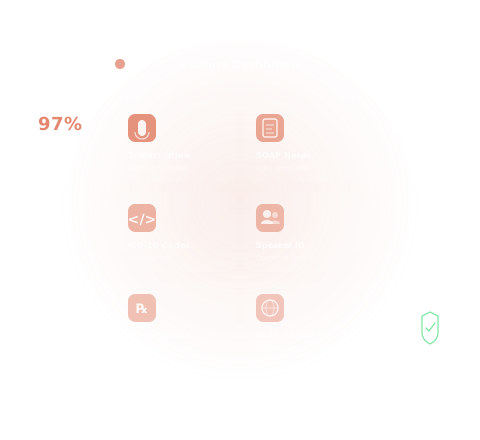
Conversation capture and transcription: During therapy or assessment sessions, the platform captures the spoken interaction and converts it into text. This is useful when clinicians want to focus on patient engagement rather than extensive note-taking.
Speaker diarization: In sessions involving the therapist, patient, and caregiver, speaker separation helps organize who said what. This is especially relevant in pediatric therapy, neuro-rehabilitation, and dysphagia counseling where multiple participants contribute important details.
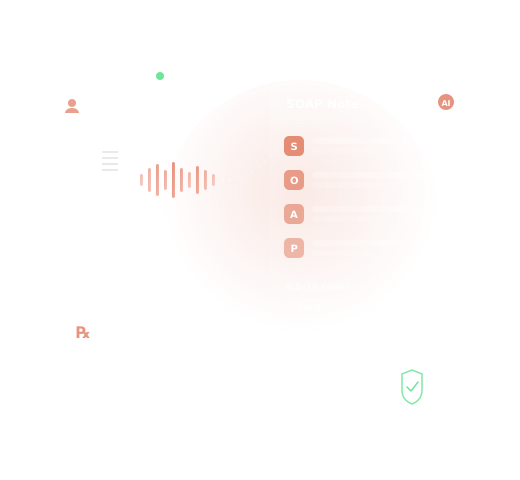
Automatic SOAP note generation: The system structures the transcript into a draft SOAP format, helping teams document subjective concerns, objective observations, assessment impressions, and plan items in a more consistent way.
ICD-10 and CPT suggestions: Coding suggestions can support downstream documentation and billing workflows, while still requiring clinician or authorized staff review before use.
Multilingual support: In India, therapy sessions may shift between English and regional languages. Multilingual support can help departments document more naturally across varied patient populations.
On-premise or private deployment options: For organizations that prefer tighter control over data handling, deployment posture can be chosen as a workflow and governance decision. This supports teams that want infrastructure choices aligned with internal IT practices.
Review-first workflow: Drafts are not the final record by default. Clinicians review, edit, and approve the note before it becomes part of the patient chart, which is important for therapy documentation quality.
How It Works
The workflow for an AI medical scribe in India should be practical, reviewable, and easy to fit into existing OPD or rehabilitation routines. MedScribe follows an end-to-end documentation flow built around conversation capture, note drafting, coding support, and clinician approval.
- Capture the consultation or therapy conversation: The clinician starts the session as usual while the system records the interaction from a supported device or setup. In speech and swallow therapy, this may include symptom discussion, caregiver input, therapy tasks, swallowing concerns, and treatment instructions.
- Transcribe and structure the interaction: The audio is converted into text with speaker diarization to distinguish clinician, patient, and caregiver contributions where applicable. The transcript is then organized into clinically useful sections rather than remaining as raw text.
- Generate a draft SOAP note: Based on the structured transcript, the platform prepares a draft note with subjective history, objective observations, assessment summary, and plan items. This helps reduce after-hours documentation and supports more consistent note formatting across the department.
- Add coding support for review: The system can surface ICD-10 and CPT suggestions based on the documented encounter. These are intended as review aids, not automatic final coding decisions, so the clinician or authorized team member can confirm relevance.
- Clinician edits and signs off: Before the record is finalized, the therapist or doctor reviews the draft, corrects terminology, adds missing clinical nuance, and approves the final version. Human review remains the operational checkpoint before chart completion.
- Choose deployment posture for workflow needs: Depending on the organization, teams may use a private or on-premise deployment approach to support internal governance preferences and integration planning. This is a practical infrastructure choice rather than a compliance claim.
Local context
In India, speech and swallow therapy services are delivered across standalone clinics, multispecialty hospitals, rehabilitation centers, and academic institutions. Documentation needs can vary by setup, but common challenges include high patient volumes, mixed-language consultations, and the need to coordinate with ENT, neurology, pediatrics, oncology, critical care, or rehabilitation medicine teams. An AI medical scribe in India is most useful when it adapts to these practical realities rather than forcing a rigid workflow.
For many organizations, the value lies in reducing repetitive documentation effort while keeping clinicians in control of the final record. Multilingual support can help when patients and caregivers switch between English, Hindi, or regional languages during sessions. Private or on-premise deployment options may also be relevant for institutions that prefer specific hosting or governance models. In this context, AI medical scribe India healthcare adoption is less about novelty and more about making documentation more manageable for real clinical teams.
Use cases
Initial speech-language assessment: Capture case history, presenting complaints, developmental or neurological background, and baseline observations into a structured draft note.
Swallow evaluation follow-up: Document swallowing symptoms, diet tolerance, aspiration concerns discussed during review, and plan updates for monitoring or referral.
Pediatric therapy sessions: Separate caregiver input from therapist observations using speaker diarization and prepare a consistent session summary.
Neuro-rehabilitation visits: Record communication, cognition, voice, or dysphagia progress over repeated sessions with less manual note burden.
Multidisciplinary coordination: Create clearer draft documentation that can be reviewed and shared within broader care workflows involving physicians and rehabilitation teams.
Busy OPD documentation support: Use an AI medical scribe in India to reduce time spent typing after consultations while maintaining clinician review before finalization.
FAQ
Can this be used in speech and swallow therapy sessions?
Yes. It is suited for assessment and follow-up conversations where clinicians need structured documentation from spoken interactions, including caregiver discussions and therapy planning.
Does the system create final notes automatically?
No. It creates draft documentation that clinicians review, edit, and approve before the record is finalized.
Can it support multilingual consultations in India?
Yes. Multilingual support is useful for clinics and hospitals where sessions may include English and regional language conversations.
Does it help with coding?
It can provide ICD-10 and CPT suggestions for review, which may support documentation and billing workflows, but final coding decisions should be confirmed by the appropriate clinician or staff member.
What deployment options are available?
Organizations may consider private or on-premise deployment approaches based on workflow, IT, and governance preferences.
CTA
If your team wants a more practical way to document therapy consultations, MedScribe offers a workflow-focused approach to conversation capture, SOAP drafting, coding support, and clinician review. Explore how an AI medical scribe in India can fit speech and swallow therapy operations, then continue to the product overview, review detailed features, check integrations, or evaluate pricing for your clinic or hospital.