Introduction
Telemedicine teams need documentation that keeps pace with virtual consultations without adding more after-hours admin for clinicians. An AI medical scribe in India can help convert doctor-patient conversations into structured clinical notes that are easier to review, edit, and finalize inside everyday workflows. For hospitals, clinics, and digital care providers, the goal is practical: reduce manual note-taking during video or audio consultations, improve consistency in records, and support coding preparation without disrupting care delivery.
MedScribe is designed as an AI documentation copilot for telemedicine settings. It listens to the consultation workflow, structures the conversation, drafts SOAP notes, and surfaces coding suggestions for clinician review. Rather than replacing clinical judgment, it supports the doctor with a first draft that can be checked, corrected, and signed off before the record is finalized. This makes an AI medical scribe in India especially relevant for OPD-style virtual care, follow-ups, chronic disease reviews, and specialist teleconsults where speed and clarity matter.
Department workflow
In telemedicine, documentation often starts before the consultation and continues after the call ends. A typical workflow includes appointment intake, patient history review, live consultation, note creation, coding support, and final record completion. When this process is handled manually, clinicians may switch between the video platform, case sheet, and billing or EHR tools. That context switching can slow down the session and create uneven note quality.
An AI medical scribe in India fits into this workflow by supporting the consultation from conversation capture through structured documentation. During the visit, the system can identify speakers, transcribe the interaction, and organize relevant details into clinical sections. After the visit, the draft note can be reviewed by the clinician, adjusted for accuracy, and then used for downstream tasks such as coding review, internal documentation, or integration into existing systems. For telemedicine teams serving multilingual populations, support for multiple languages can also help capture more natural patient conversations.
Features mapped to workflow
Conversation capture and speaker diarization: Teleconsultations involve at least two speakers and sometimes a caregiver. Speaker diarization helps separate clinician and patient dialogue so the draft note is easier to interpret and review.
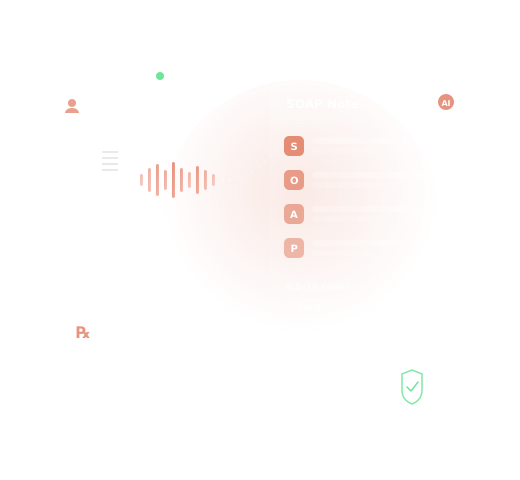
Automatic SOAP note generation: Instead of starting from a blank screen, clinicians receive a structured draft organized into subjective, objective, assessment, and plan sections. This is useful for routine telemedicine follow-ups and specialist reviews where note consistency matters.
ICD-10 and CPT suggestions: Coding support can help teams prepare documentation for internal workflows, billing review, or claims-related processes. Suggestions should still be checked by the clinician or authorized staff before use.
Multilingual support: Telemedicine in India often involves mixed-language conversations. Multilingual capabilities can support more natural consultations and reduce the need to force every interaction into one language pattern.
On-premise or private deployment options: Some organizations prefer deployment choices that align with internal governance, IT architecture, or data handling preferences. These options are workflow and infrastructure decisions, not guarantees, but they can support teams that need tighter operational control.
Review-first documentation: The product is built around clinician review, edits, and final sign-off. That keeps the doctor in control of the final medical record.
How It Works
The telemedicine documentation flow is designed to be straightforward and review-driven:
- Capture the consultation conversation: During a virtual appointment, the system captures the audio stream from the consultation workflow and prepares it for transcription. Speaker diarization helps distinguish clinician and patient speech so the record is easier to structure.
- Transcribe and structure the interaction: The conversation is converted into text and organized into clinically relevant segments such as symptoms, history, observations, and care plan details. This reduces the need to reconstruct the visit from memory after the call.
- Draft a SOAP note automatically: Based on the structured transcript, the platform generates a SOAP-style draft note. This gives the clinician a usable first version instead of a blank template and supports more consistent telemedicine documentation.
- Surface coding suggestions: The system can present ICD-10 and CPT suggestions linked to the documented encounter. These are intended as support for review, not as final coding decisions.
- Clinician review, edit, and sign-off: The doctor reviews the draft, makes corrections, adds missing context, and approves the final note before it becomes part of the patient record. Human review is the operational checkpoint that keeps documentation clinically accountable.
- Choose deployment posture for operations: Depending on organizational needs, teams may evaluate on-premise or private deployment approaches to support workflows aligned with internal governance and integration preferences.
Local context
Telemedicine providers in India often manage high consultation volumes, mixed digital maturity across facilities, and patients who may switch between regional languages and English during the same visit. That makes documentation support especially valuable in day-to-day operations. An AI medical scribe in India should therefore be practical for real OPD and virtual care conditions: short follow-ups, repeat consultations, specialist opinions, and distributed care teams.
For many organizations, the priority is not just faster note creation but better workflow continuity. A practical AI medical scribe in India should help clinicians stay focused on the patient interaction while still producing records that are easier to review and use later. Deployment flexibility may also matter for enterprise hospitals, telehealth platforms, and multi-location groups that want infrastructure choices aligned with internal IT planning.
Use cases
General teleconsultations: Draft notes for common virtual OPD visits where clinicians need quick documentation turnaround.
Follow-up care: Support repeat visits for medication review, symptom tracking, and care plan updates.
Specialist telemedicine: Help structure longer or more detailed consultations in specialties that require clear assessment and plan documentation.
Chronic care management: Improve consistency across recurring virtual visits by generating structured notes from each interaction.
Clinic and hospital networks: Standardize documentation support across multiple doctors and locations while preserving clinician review before finalization.
These scenarios show why an AI medical scribe in India is increasingly relevant for healthcare teams that want to reduce manual documentation effort without removing the clinician from the approval process.
FAQ
Can this be used during live telemedicine consultations?
Yes. It is designed to support the workflow from live conversation capture through draft note creation, followed by clinician review and sign-off.
Does it replace the doctor’s documentation responsibility?
No. The system prepares a draft and coding suggestions, but the clinician remains responsible for reviewing, editing, and approving the final record.
Can it support multilingual consultations?
Yes. Multilingual support is useful for telemedicine settings where patients and clinicians may speak in more than one language during the visit.
What kind of deployment options are available?
Organizations may evaluate on-premise or private deployment approaches based on workflow, infrastructure, and governance preferences.
CTA
If your telemedicine team wants more consistent notes, less manual typing, and a clearer review workflow, MedScribe can help. Explore how an AI medical scribe in India supports conversation capture, SOAP drafting, coding assistance, and clinician-controlled finalization for virtual care. Review the product pathways at /medscribe, feature details at /medscribe/features, and integration considerations through your implementation workflow.