Introduction
Travel medicine consultations often combine preventive counselling, vaccination planning, destination-specific risk review, medication advice, and documentation that must be clear enough for follow-up visits. An AI medical scribe in India can help clinics reduce manual note-taking during these conversations by turning spoken interactions into structured draft documentation for clinician review. For travel medicine teams, this is useful when appointments cover itinerary details, prior immunisation history, comorbidities, allergies, malaria prophylaxis discussions, and post-travel symptom guidance in a single sitting.
MedScribe is designed as an AI documentation copilot for doctors and clinics. It converts consultation conversations into usable clinical notes and coding suggestions, while keeping the clinician in control of edits and final sign-off. In Indian healthcare settings, where OPD schedules can be busy and multilingual conversations are common, the product supports practical workflows rather than forcing a rigid template. The result is a more consistent path from consultation to draft note, especially for clinics that want documentation support aligned with daily operations.
This page focuses on how an AI medical scribe in India fits the needs of travel medicine clinics, with attention to consultation flow, review checkpoints, and deployment choices such as private or on-premise setups.
Department workflow
Travel medicine clinics usually work across a repeatable but detail-heavy process. A patient may arrive for pre-travel counselling before business travel, study abroad, pilgrimage, adventure tourism, or long-stay relocation. The clinician gathers destination and duration details, planned activities, accommodation type, vaccination history, chronic conditions, pregnancy status where relevant, current medicines, and prior adverse reactions. The discussion may then move to food and water precautions, vector-borne disease prevention, altitude advice, jet lag management, traveller's diarrhoea counselling, and return precautions.
From a documentation perspective, this creates several note components: subjective history, travel itinerary context, risk assessment, vaccine recommendations discussed, medicines advised, counselling points, and follow-up instructions. In many clinics, the doctor or assistant must also prepare coding-ready documentation and ensure the final record is readable for future visits. An AI medical scribe in India supports this workflow by capturing the consultation, structuring the conversation, and preparing a draft note that can be checked quickly before it becomes part of the record.
Features mapped to workflow
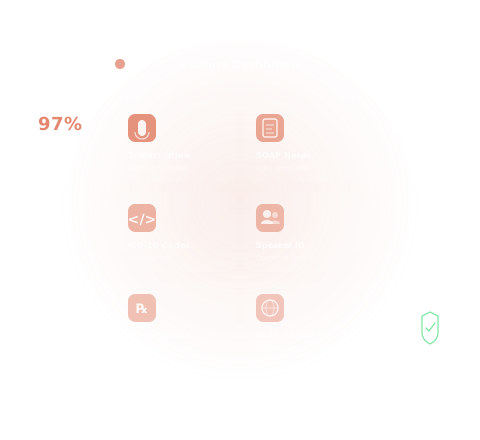
For travel medicine, documentation support is most useful when product capabilities map directly to what happens in the room. Automatic SOAP note generation helps convert a broad counselling conversation into a familiar clinical structure. Speaker diarization helps separate clinician guidance from patient responses, which is important when itinerary details and medical history are discussed rapidly. Multilingual support can assist clinics where English mixes with Hindi or other Indian languages during OPD interactions. Coding suggestions such as ICD-10 and CPT support can help teams prepare cleaner draft documentation for downstream billing or record workflows, while still requiring clinician confirmation.
Because travel medicine visits often involve counselling rather than a single acute diagnosis, draft notes need to preserve nuance. The product is therefore best used as a copilot that prepares a first version of the note, not as an autonomous final author. Clinics that prefer tighter governance can also evaluate deployment posture options, including private or on-premise approaches, as operational decisions based on infrastructure and workflow preferences.
How It Works
The workflow for this product is built around end-to-end medical documentation support for real consultations.
- Capture the consultation conversation: During a travel medicine visit, the clinician and patient discuss destination, duration, vaccine history, risk factors, and preventive advice. The system captures the conversation audio within the clinic workflow, creating the starting point for documentation.
- Transcribe and structure the interaction: The product converts speech to text and applies speaker diarization so the clinician's counselling and the patient's responses are separated. This helps organise itinerary details, symptom history, prior immunisation information, and counselling points into a usable draft structure.
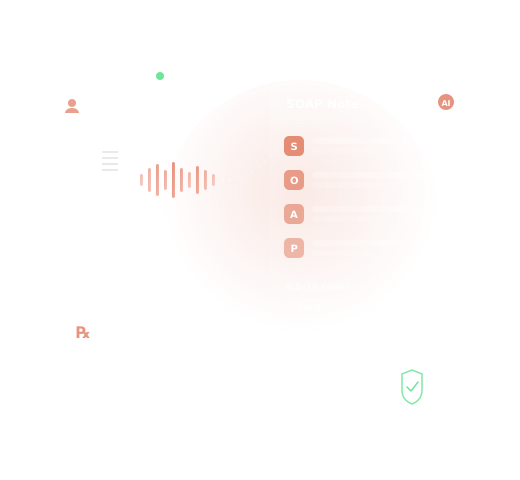
- Generate a SOAP draft note: Based on the consultation, MedScribe prepares a draft SOAP note. In a travel medicine setting, this can include subjective travel history, objective context where documented, assessment of travel-related risks discussed, and a plan covering vaccines, prophylaxis, counselling, and follow-up advice.
- Add coding support: The system can suggest ICD-10 and CPT codes based on the drafted documentation. These suggestions are intended to support clinician and administrative workflows, with human review required before use in final records or billing processes.
- Review, edit, and sign off: The clinician reviews the draft note, corrects any missing travel details, adjusts counselling language, confirms coding relevance, and approves the final version. This human checkpoint is essential before record finalisation.
- Choose deployment posture for operations: Clinics can evaluate private or on-premise deployment options where needed. This is a workflow and governance choice that may support internal data handling preferences and infrastructure planning, rather than a guarantee of compliance outcomes.
This practical sequence is what makes an AI medical scribe in India relevant for clinics that want faster documentation without removing clinician oversight.
Local context
In India, travel medicine consultations may involve domestic and international travellers with varied language preferences, uneven prior vaccine records, and time-sensitive departure schedules. Clinics may also see a mix of corporate travellers, students, families, and patients seeking post-travel advice after fever, diarrhoea, or exposure concerns. That means documentation must be flexible enough to handle counselling-heavy visits as well as symptom-led follow-ups.
An AI medical scribe in India is especially useful when doctors want to stay focused on counselling while still producing structured notes that can be reviewed quickly. For hospitals and larger clinics, deployment choices may also depend on IT architecture, integration planning, and internal governance preferences. The product is designed to support workflows aligned with these operational realities in India healthcare settings.
Use cases
Common use cases in travel medicine include pre-travel counselling visits, vaccine planning appointments, malaria prophylaxis discussions, high-risk itinerary reviews, post-travel symptom consultations, and follow-up visits for documentation updates. A clinic may use the tool to draft notes after a long counselling session, prepare coding-supported documentation for administrative teams, or standardise note quality across multiple doctors.
It can also help when consultations shift between English and local languages, or when a clinician needs a clearer summary of what was discussed about vaccines, preventive measures, medication advice, and return precautions. For organisations evaluating AI medical scribe India healthcare solutions, the practical value lies in reducing repetitive documentation effort while preserving clinician control over the final record.
FAQ
Can this work for counselling-heavy travel medicine visits?
Yes. The product is suited to consultations where much of the value lies in discussion, education, and planning. It helps convert those conversations into structured draft notes for review.
Does the system finalise notes automatically?
No. The intended workflow includes clinician review, edits, and final sign-off before the record is completed.
Can it support multilingual consultations in India?
The product includes multilingual support, which can help in clinics where consultations move between English and Indian languages.
Are coding suggestions automatic billing decisions?
No. ICD-10 and CPT suggestions are support features. They should be reviewed and confirmed by the clinician or authorised team before use.
CTA
If your clinic wants a practical documentation copilot for counselling-rich OPD visits, explore how an AI medical scribe in India can fit travel medicine workflows. Review the core product at /medscribe, compare capabilities at /medscribe/features, and assess how draft notes, coding support, multilingual workflows, and deployment options can support your team's day-to-day documentation process.