Introduction
Tropical medicine teams often manage high patient volumes, complex symptom histories, travel or exposure details, fever workups, follow-up counseling, and careful documentation across OPD and hospital settings. An AI medical scribe in India can help reduce the time clinicians spend typing routine notes while keeping the doctor in control of the final record. For hospitals, infectious disease units, and specialty clinics, the goal is practical: capture the consultation, structure the information, draft usable notes, and support coding review without disrupting the patient interaction.
This page focuses on how an AI medical documentation copilot can fit tropical medicine workflows in India. The product is designed to convert consultation conversations into structured clinical notes, with support for SOAP drafting, speaker diarization, multilingual use, and coding suggestions. Rather than replacing clinical judgment, it supports documentation workflows aligned with day-to-day OPD needs, ward reviews, and follow-up visits where history, examination, assessment, and plan must be recorded clearly.
Department workflow
In tropical medicine, documentation usually starts with a detailed history: fever pattern, duration, travel, mosquito exposure, water or food exposure, contact history, prior treatment, comorbidities, and red-flag symptoms. Clinicians may also document examination findings, differential diagnosis, test advice, treatment plans, hydration guidance, isolation precautions where relevant, and follow-up instructions. In busy settings, this can create a documentation burden, especially when doctors switch between new consultations, repeat visits, and inpatient reviews.
An AI medical scribe in India is useful here because the workflow is conversation-heavy and often repetitive in structure, even when the clinical details vary. Tropical medicine clinicians need notes that are fast to review, easy to edit, and suitable for downstream recordkeeping. The documentation process also benefits from clear speaker separation, especially when attendants contribute history or when multiple clinicians are involved in teaching hospitals.
Typical workflow points where documentation support matters include registration-linked consultation capture, symptom chronology, examination summary, test recommendations, medication counseling, discharge or follow-up instructions, and coding review for administrative completeness. The best fit is a tool that helps draft the note quickly while preserving clinician oversight before anything is finalized.
Features mapped to workflow
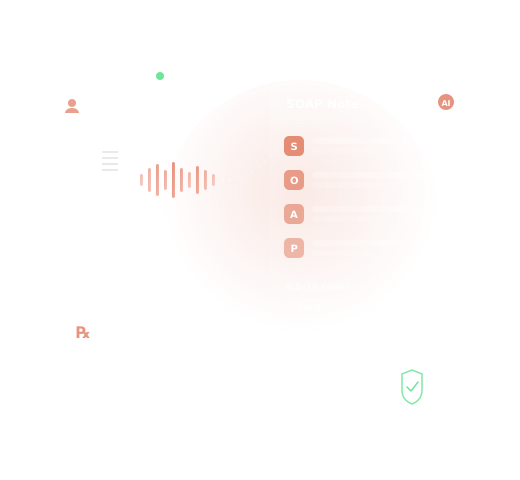
Automatic SOAP note generation: Tropical medicine consultations often follow a recognizable pattern. Automatic SOAP drafting helps convert the encounter into a structured note with subjective history, objective findings, assessment, and plan. This is useful for fever clinics, infectious disease OPD, and follow-up reviews where consistency matters.
Speaker diarization: In many Indian clinical settings, patients are accompanied by family members, and history may come from more than one speaker. Speaker diarization helps separate doctor and patient voices, making the draft easier to review and edit.
Multilingual support: Consultations may move between English, Hindi, and regional languages. Multilingual support can help teams using mixed-language conversations create more usable drafts for documentation.
ICD-10 and CPT suggestions: Coding suggestions can support administrative workflows after the clinical note is drafted. These suggestions are best used as review aids, with the clinician or authorized staff confirming relevance before final use.
On-premise or private deployment options: Some hospitals prefer deployment choices that fit internal governance, IT, and data-handling preferences. These options should be treated as operational decisions that support workflows aligned with institutional requirements.
Review-first workflow: The note is not the final record until the clinician reviews, edits, and signs off. This checkpoint is especially important in tropical medicine, where differential diagnosis and treatment plans may evolve as test results return.
How It Works
The product workflow is designed around real consultation documentation rather than generic transcription alone.
- Capture the consultation conversation: During an OPD visit, follow-up, or bedside review, the encounter audio is captured through the configured workflow. The system is designed to process doctor-patient conversations and identify speakers where possible, helping separate clinical questions, patient responses, and counseling.
- Transcribe and structure the encounter: The conversation is converted into text and organized into clinically relevant sections. Instead of leaving the team with a raw transcript, the system prepares structured content that can support history, examination, assessment, and plan review.
- Draft a SOAP note automatically: Based on the structured transcript, the copilot generates a SOAP-style draft. For tropical medicine, this may include symptom duration, exposure history, examination highlights, working assessment, investigations advised, and treatment or follow-up instructions.
- Suggest coding support for review: The workflow can surface ICD-10 and CPT suggestions linked to the documented encounter. These are support cues for staff and clinicians, not automatic final coding decisions, and should be reviewed before use.
- Clinician edits and validates the note: The doctor reviews the draft, corrects details, adds missing findings, refines the assessment, and confirms the plan. Human review is the operational checkpoint that ensures the final note reflects clinical intent.
- Finalize within the chosen deployment setup: After sign-off, the note can move into the clinic or hospital documentation workflow. Teams may choose deployment approaches such as on-premise or private environments based on workflow, IT, and governance preferences.
Local context
In India, tropical medicine services may operate across standalone specialty clinics, multispecialty hospitals, academic centers, and public-facing high-volume OPDs. Documentation needs can vary by setup, but common pressures include limited consultation time, mixed-language interactions, repeat fever cases, and the need for clear follow-up instructions. An AI medical scribe in India can support these realities by helping clinicians spend less time on repetitive note drafting and more time on patient communication and decision-making.
For India healthcare teams, practical adoption usually depends on whether the tool fits existing workflows rather than adding another layer of work. That is why reviewability, multilingual handling, and deployment flexibility matter. Tropical medicine departments may also value a system that complements broader product pages for features, integrations, and pricing while remaining useful in everyday OPD operations.
Use cases
High-volume fever OPD: Draft structured notes for patients presenting with fever, body ache, rash, gastrointestinal symptoms, or travel-related concerns, while preserving clinician review before finalization.
Follow-up visits: Capture interval history, response to treatment, pending test review, and revised plans without rebuilding the note from scratch each time.
Inpatient infectious disease reviews: Support concise daily documentation where multiple updates, examination findings, and treatment changes need to be recorded efficiently.
Mixed-language consultations: Help teams working across English and Indian languages create more usable documentation drafts for records and internal communication.
Teaching hospitals: Improve note preparation in settings where residents, consultants, and attendants may all contribute to the encounter, making speaker separation and structured drafting more useful.
For these scenarios, an AI medical scribe in India is most effective when used as a documentation copilot: capture, structure, draft, review, and finalize. That approach keeps the workflow practical and clinically grounded.
FAQ
Below are common implementation questions from clinics and hospitals evaluating an AI medical scribe India healthcare workflow for tropical medicine teams.
CTA
If your tropical medicine department wants faster documentation without losing clinician oversight, explore whether an AI medical scribe in India fits your OPD and inpatient workflow. Review the core product, compare features, and assess deployment options based on your team structure, language needs, and documentation process. The right setup should help clinicians document more efficiently while keeping review, edits, and final sign-off firmly in clinical hands.
For implementation planning, start with your most repetitive consultation types, define who reviews drafts, and decide how coding suggestions and final note approval will be handled. This makes adoption more practical for hospitals and clinics looking for an AI medical scribe India healthcare solution that supports real-world documentation work.