Introduction
Ultrasound departments manage a steady flow of referrals, patient history capture, scan observations, impression drafting, and follow-up communication. An AI medical scribe in India can help reduce the time clinicians and support teams spend turning conversations and findings into structured documentation. For ultrasound services, the value is practical: faster note preparation, more consistent records, and a smoother handoff between the consulting doctor, sonologist, front desk, and billing team.
MedScribe is designed as an AI documentation copilot for clinics and hospitals that want to support daily OPD and imaging workflows without adding more manual typing. It converts consultation conversations into structured drafts, supports SOAP note creation, and provides coding suggestions that clinicians can review before finalizing records. For ultrasound services, this means the product can support the path from patient interaction to usable documentation while keeping the clinician in control of edits and sign-off.
This page focuses on how an AI medical scribe in India fits ultrasound workflows in real settings, including multilingual conversations, repeat follow-ups, and practical deployment choices such as private or on-premise setups for organizations that prefer tighter governance over documentation systems.
Department workflow
Ultrasound services often involve short but information-dense interactions. A patient may arrive with a referral note, describe symptoms briefly, answer history questions, undergo the scan, and then receive a summary or next-step guidance. In many centres, the documentation burden is split across clinicians, technicians, and administrative staff. That can create delays, duplicate entry, and variation in how findings are recorded.
A typical workflow includes registration, referral review, history capture, scan discussion, findings documentation, impression drafting, coding support, and record storage. In busy settings, even small documentation delays can affect reporting turnaround and patient throughput. An AI medical scribe in India can support this workflow by capturing the consultation conversation, structuring the transcript, and preparing a draft note that the clinician reviews and finalizes.
For ultrasound departments, the goal is not to replace clinical judgment. It is to reduce repetitive documentation work around common cases such as abdominal ultrasound, obstetric follow-up, pelvic scans, thyroid studies, vascular assessments, and routine review visits. This is especially useful when teams need to document in a consistent format across multiple doctors or locations.
Features mapped to workflow
Conversation capture and transcription: During the patient interaction, the system captures the spoken exchange and converts it into text. This is useful when history, symptoms, prior reports, and clinician observations need to be documented quickly.
Speaker diarization: The product distinguishes between speakers so the record can better separate patient statements from clinician questions and explanations. In ultrasound settings, this helps preserve context during short but clinically relevant conversations.
Automatic SOAP drafting: Instead of starting from a blank screen, clinicians receive a structured draft note. This can support more consistent documentation for subjective history, objective observations, assessment, and plan.
ICD-10 and CPT suggestions: Coding support can help teams prepare records for downstream administrative workflows. Suggestions are meant for clinician review, not automatic finalization.
Multilingual support: Many Indian clinics and hospitals serve patients in more than one language. This can help when the patient speaks in a regional language while the final note needs a structured clinical format.
Private or on-premise deployment options: Organizations with stricter internal governance preferences may choose deployment models aligned with their workflow and infrastructure decisions.
These capabilities make AI medical scribe India healthcare adoption more practical for imaging teams that need documentation support without disrupting existing reporting habits.
How It Works
The workflow below reflects how the product is designed to support real clinical documentation from conversation capture to final sign-off.
- Capture the consultation conversation: During the ultrasound visit or related consultation, the system records the interaction between clinician and patient. This may include symptoms, referral context, prior history, and the clinician's spoken observations.
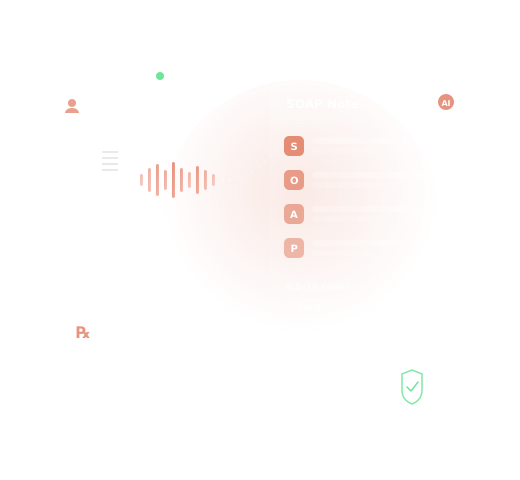
- Transcribe and structure the interaction: The audio is converted into text with speaker diarization to separate patient and clinician contributions. The transcript is then organized into clinically useful sections rather than remaining as raw text.
- Generate a SOAP draft: Based on the structured conversation, the system prepares a draft SOAP note. For ultrasound services, this can help summarize history, relevant findings discussed during the encounter, and the next-step plan in a consistent format.
- Add coding support: The platform suggests ICD-10 and CPT codes based on the documented encounter. These suggestions are intended to support workflow efficiency and should be reviewed by the clinician or authorized team member before use.
- Review, edit, and sign off: The clinician checks the draft, corrects wording, adds missing clinical nuance, and approves the final version. Human review is the operational checkpoint that ensures the record reflects the actual encounter before finalization.
- Choose the deployment posture that fits governance needs: Clinics and hospitals can evaluate private or on-premise deployment options as workflow and governance decisions. This supports organizations that want documentation systems aligned with internal IT and data-handling preferences.
Local context
In India, ultrasound services often operate in high-volume outpatient environments where clinicians balance patient communication, scan interpretation, and documentation within limited time. Teams may also work across mixed digital maturity levels, from standalone centres to multispecialty hospitals. An AI medical scribe in India is most useful when it adapts to these realities: multilingual interactions, variable staffing patterns, and the need for practical note standardization rather than complex workflow redesign.
For many organizations, the decision is less about adding another software layer and more about reducing repetitive documentation effort. That is why a consultative approach matters. The right setup should support existing reporting habits, complement broader product pages such as features and integrations, and fit the department's pace of work. For ultrasound services, this can be especially relevant in antenatal follow-ups, abdominal pain workups, thyroid reviews, and routine referral-driven scans where documentation patterns repeat but still require clinician oversight.
Use cases
Busy OPD-linked ultrasound units: Support faster draft creation when clinicians move quickly between consultations and scans.
Multilingual patient interactions: Help structure notes when the patient speaks in one language and the clinical record needs a standardized format.
Repeat follow-up imaging: Improve consistency in documenting interval history, current symptoms, and next-step recommendations.
Hospital imaging departments: Support documentation workflows that need coding suggestions and clinician review before records move downstream.
Private clinics evaluating deployment flexibility: Consider private or on-premise options where internal governance preferences shape implementation choices.
Across these scenarios, an AI medical scribe in India works best as a documentation assistant that supports clinicians, not as a substitute for clinical interpretation or final reporting responsibility.
FAQ
Common questions from ultrasound clinics and hospitals evaluating documentation automation are answered below.
Can this be used during ultrasound consultations?
Yes. It is designed to capture consultation conversations and convert them into structured drafts that clinicians can review and finalize.
Does it create final reports automatically?
No. The system prepares draft documentation and coding suggestions, but clinician review, edits, and sign-off remain essential before finalization.
Is it useful for multilingual settings in India?
Yes. Multilingual support can help in settings where patients and clinicians use different languages during the encounter.
How does it support billing or coding workflows?
It can suggest ICD-10 and CPT codes based on the documented encounter. These suggestions are intended to support workflow efficiency and should be reviewed by the appropriate team.
Can hospitals choose a private deployment approach?
Yes. Private or on-premise deployment can be evaluated as a workflow and governance decision based on organizational needs.
CTA
If your ultrasound department wants to reduce manual note-taking and improve documentation consistency, explore how an AI medical scribe in India can fit your daily workflow. Review the core product, features, integrations, and pricing paths to assess whether the setup matches your clinic or hospital operations. The best starting point is a practical evaluation focused on your consultation flow, review process, and documentation goals.