Introduction
Uro Oncology consultations often involve detailed history taking, symptom review, prior treatment context, imaging references, pathology discussion, and careful follow-up planning. An AI medical scribe in India can help clinicians reduce manual documentation load by turning consultation conversations into structured draft notes that are easier to review and finalize. For hospitals, specialty clinics, and busy OPD settings, the goal is practical support: less time spent typing, more attention on the patient, and more consistent documentation across visits.
MedScribe is designed as an AI documentation copilot for daily clinical use. It captures the consultation conversation, separates speakers, structures the transcript, drafts SOAP notes, and provides coding suggestions for clinician review. In Uro Oncology, where visits may include diagnosis explanation, treatment planning, surveillance discussions, and post-procedure follow-up, this workflow can support cleaner records without changing the clinician's decision-making role. The output remains a draft until reviewed, edited, and signed off by the treating doctor.
For organizations evaluating an AI medical scribe in India, the key question is not just transcription accuracy. It is whether the tool fits real OPD and specialty workflows, supports multilingual conversations, and aligns with existing documentation habits. That is especially relevant in India healthcare settings where clinicians may switch between English and regional languages during the same encounter.
Department workflow
Uro Oncology documentation usually spans multiple visit types. A new patient visit may include urinary symptoms, hematuria history, prior biopsy details, imaging findings, comorbidities, and treatment options. Follow-up visits may focus on response assessment, adverse effects, catheter-related concerns, post-surgical recovery, or surveillance planning. In many clinics, the doctor must listen, counsel, examine, document, and prepare coding-related details within a short consultation window.
This creates friction in three places: capturing the full conversation, converting it into a usable clinical format, and ensuring the final note reflects the clinician's judgment. An AI medical scribe in India is most useful when it supports these exact steps rather than adding another layer of admin work. For Uro Oncology teams, that means helping with structured note drafting during OPD, procedure follow-up, tumor board preparation summaries, and continuity across repeat visits.
Because these encounters can be information-dense, a documentation copilot should support speaker diarization, preserve chronology, and make it easy to edit assessment and plan sections. It should also fit different operating models, from single-specialty clinics to larger hospitals with internal IT and governance requirements.
Features mapped to workflow
Conversation capture and transcription: The platform converts doctor-patient conversations into text, helping reduce the need for manual note-taking during or after the visit.
Speaker diarization: Distinguishing clinician and patient speech is useful in Uro Oncology consultations where symptom descriptions, counseling, and treatment explanations need clear attribution.
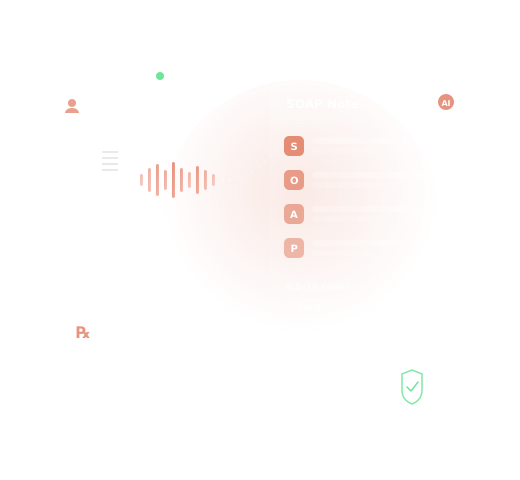
Automatic SOAP note generation: Draft SOAP notes help clinicians move from raw conversation to a structured clinical record faster, especially for repeat OPD workflows.
ICD-10 and CPT suggestions: Coding support can assist administrative and billing workflows by surfacing relevant suggestions for review, without replacing clinician oversight.
Multilingual support: In India, consultations may include English plus Hindi or regional language usage. Multilingual support helps preserve context from mixed-language encounters.
On-premise or private deployment options: Some hospitals prefer deployment choices that support workflows aligned with internal governance, IT architecture, and data handling preferences.
Review-first workflow: Drafts are meant for clinician review, edits, and final sign-off before record finalization, which is important for specialty documentation quality.
How It Works
The workflow below reflects how this product is designed to support real clinical documentation from consultation to final note.
- Capture the consultation conversation: During the Uro Oncology visit, the system records the interaction through the configured workflow. This may include history, symptom discussion, prior reports, treatment counseling, and follow-up instructions. The product is built to support multilingual conversations common in India healthcare settings.
- Transcribe and separate speakers: The audio is converted into text, and speaker diarization helps distinguish the clinician from the patient or caregiver. This creates a more usable transcript for specialty visits where nuanced symptom descriptions and counseling matter.
- Structure the encounter into a draft SOAP note: The transcript is organized into clinically useful sections such as subjective findings, objective references, assessment, and plan. For Uro Oncology, this can help summarize presenting complaints, prior interventions, test references, and next-step planning in a consistent format.
- Surface coding suggestions: Based on the drafted note, the system can provide ICD-10 and CPT suggestions for review. These suggestions are intended to support documentation and downstream workflows, not to replace clinical or administrative judgment.
- Clinician review and edits: The doctor reviews the draft, corrects details, refines the assessment and plan, and ensures the note reflects the actual encounter. Human review is an operational checkpoint before anything is finalized in the record.
- Finalize based on deployment and governance preferences: After sign-off, the note can move into the organization's documentation workflow. Teams can evaluate on-premise or private deployment choices as workflow and governance decisions based on their internal requirements.
Local context
In India, Uro Oncology practices often manage high patient volumes, mixed-language consultations, and documentation expectations across OPD, day care, and hospital-based workflows. A practical AI medical scribe in India should therefore focus on reducing repetitive documentation effort while staying flexible enough for different care settings. Some organizations may prefer private or on-premise deployment models to support workflows aligned with internal IT and governance preferences.
For specialty clinics, the value may be faster draft creation after consultations. For hospitals, the value may include more standardized note structure across consultants and easier support for coding-related review. The best fit depends on how the department currently documents visits, who reviews notes, and how records move from consultation to final storage.
Use cases
New Uro Oncology consultations: Drafting structured notes from detailed first visits involving symptoms, prior reports, and treatment discussions.
Follow-up and surveillance visits: Summarizing interval history, response to treatment, side effects, and next review plans.
Post-procedure documentation: Supporting note creation after interventions where recovery status and instructions need to be clearly documented.
Multilingual OPD encounters: Helping clinicians document visits where the conversation shifts between English and local languages.
Coding support workflows: Providing ICD-10 and CPT suggestions that staff or clinicians can review before finalization.
Hospital governance needs: Enabling teams to assess whether a private or on-premise setup is better suited to their operational model.
FAQ
Can this replace clinician documentation review?
No. The system creates draft notes and coding suggestions, but clinician review, edits, and final sign-off remain essential before record finalization.
Is it useful for mixed-language consultations?
Yes, multilingual support is relevant for India healthcare workflows where doctors and patients may switch between English and regional languages during the same visit.
Does it support specialty workflows like Uro Oncology?
It is designed to support specialty consultations by converting conversations into structured draft notes that clinicians can adapt to their documentation style.
Can hospitals choose different deployment models?
Yes. Teams can evaluate on-premise or private deployment options as workflow and governance decisions based on internal requirements.
CTA
If your department is evaluating an AI medical scribe in India, start with the practical questions: how notes are created today, where clinicians lose time, and what review checkpoints are needed before finalization. MedScribe is built to support day-to-day documentation with automatic SOAP drafting, speaker diarization, multilingual support, and coding suggestions that fit real clinical workflows. Explore the product overview, features, integrations, and pricing paths to assess whether it matches your Uro Oncology documentation needs in India healthcare settings.