Introduction
Vascular surgery teams manage high-information consultations that often include symptom history, imaging references, risk factors, medication review, procedure planning, and follow-up instructions. In busy OPD and hospital settings, documenting all of this clearly can take time away from patient interaction. An AI medical scribe in India can help by turning consultation conversations into structured draft notes that clinicians can review, edit, and sign off. For vascular surgeons, this is especially useful when encounters involve chronic limb ischemia, varicose veins, diabetic foot concerns, aneurysm follow-up, dialysis access review, or post-procedure monitoring.
MedScribe is designed as an AI documentation copilot for practical daily use. It supports conversation capture, transcription, SOAP note drafting, coding suggestions, speaker diarization, multilingual workflows, and deployment choices such as private or on-premise setups depending on operational needs. Rather than changing how clinicians practice, it supports the existing documentation process and helps teams move from spoken consultation to usable clinical records with a human review checkpoint before finalization. For hospitals and clinics evaluating an AI medical scribe in India, the value is not just speed, but more consistent note structure and easier handoff across care teams.
Department workflow
Vascular surgery documentation often spans outpatient assessment, inpatient review, procedure counseling, and longitudinal follow-up. A typical workflow starts with history taking: pain pattern, swelling, ulcer duration, claudication distance, prior interventions, diabetes status, smoking history, anticoagulant use, and imaging findings. The clinician then performs examination and discusses differential diagnosis, investigations, treatment options, and next steps. In many settings, the note must also support coding, referral communication, and continuity across surgeons, residents, nurses, and front-desk teams.
This creates a documentation burden because the encounter is clinically rich and often repetitive across similar case types, while still requiring patient-specific detail. An AI medical scribe in India fits this workflow by helping convert the live or recorded consultation into a structured draft. Instead of manually typing every detail after the visit, the surgeon or assistant can review a generated note, correct specifics such as laterality or procedure history, and finalize the record. This is useful in vascular clinics where precision matters for lesion location, symptom progression, wound status, and intervention planning.
Features mapped to workflow
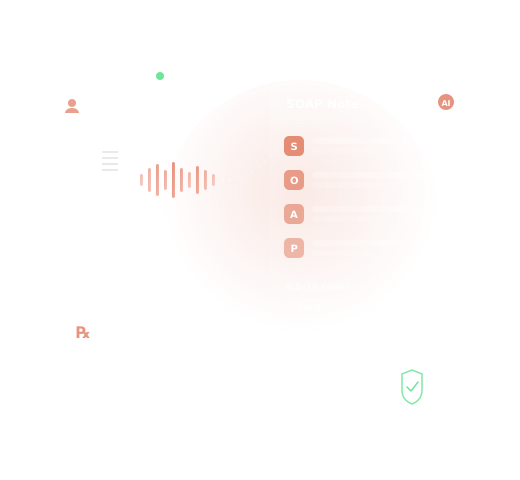
Automatic SOAP note generation: Consultation dialogue can be converted into a draft subjective, objective, assessment, and plan format. This helps standardize notes for first visits, follow-ups, and post-procedure reviews.
Speaker diarization: The system distinguishes between clinician and patient speech, which is helpful when the consultation includes family members, nursing input, or counseling discussions.
Multilingual support: In Indian care settings, consultations may shift between English and regional languages. Multilingual support helps preserve context without forcing a single-language interaction style.
ICD-10 and CPT suggestions: Coding support can assist teams in preparing documentation for downstream billing or internal workflow review. Suggestions should still be checked by the clinician or authorized staff.
On-premise or private deployment options: Some hospitals prefer infrastructure choices that align with internal governance, IT controls, and data handling preferences. Deployment posture is a workflow decision as much as a technical one.
Review before final sign-off: Draft generation is only part of the process. The clinician remains responsible for edits, confirmation, and final approval before the record is completed.
How It Works
Below is a practical view of how this product supports vascular surgery documentation from consultation to finalized note.
- Capture the consultation conversation: During OPD, ward review, or follow-up, the consultation audio is captured through the configured workflow. This may include history, examination discussion, imaging references, and treatment planning. Speaker diarization helps separate patient and clinician voices for cleaner downstream structuring.
- Transcribe and organize the encounter: The system converts speech into text and structures the conversation into clinically relevant segments. In vascular surgery, this can include symptoms, risk factors, wound details, prior procedures, medication history, and follow-up instructions. Multilingual support helps when the encounter moves between English and local language usage.
- Draft a SOAP note automatically: Based on the structured transcript, MedScribe creates a draft SOAP note. The draft is intended to reduce manual typing, not replace clinical judgment. Teams can use it as a starting point for outpatient notes, procedure counseling summaries, and post-intervention reviews.
- Suggest coding support: The workflow can surface ICD-10 and CPT suggestions based on the documented encounter. These suggestions support administrative and documentation workflows, but they should be reviewed and confirmed by the clinician or designated coding staff.
- Review, edit, and sign off: Before the note becomes part of the final record, the clinician checks details such as diagnosis wording, laterality, procedure history, medication changes, and plan. Human review is the operational checkpoint that ensures the note reflects the actual encounter.
- Finalize within the chosen deployment model: Hospitals and clinics can evaluate private or on-premise deployment approaches based on IT preferences and workflow governance. This supports teams that want documentation tools aligned with internal infrastructure decisions.
Local context
In India, vascular surgery practices often operate across mixed care environments: standalone clinics, multispecialty hospitals, teaching institutions, and high-volume urban OPDs. Documentation needs can vary by setup, but the common challenge is balancing patient throughput with complete records. An AI medical scribe in India is most useful when it adapts to real consultation patterns rather than forcing rigid templates. That includes support for multilingual conversations, practical review workflows, and deployment choices that fit the organization’s IT model.
For administrators evaluating AI medical scribe India healthcare solutions, the key question is whether the tool supports day-to-day documentation quality without adding friction. Vascular surgery teams may need concise notes for routine follow-up and more detailed records for intervention planning, wound care progression, or referral communication. A practical system should support both while keeping the clinician in control of the final record.
Use cases
Varicose vein consultations: Capture symptom duration, occupation-related standing history, duplex findings discussed during the visit, conservative management advice, and procedure counseling.
Peripheral arterial disease follow-up: Draft notes covering claudication history, walking tolerance, medication adherence, smoking status, vascular examination, and next-step imaging or intervention planning.
Diabetic foot and limb salvage clinics: Structure wound history, infection concerns, perfusion discussion, dressing advice, offloading instructions, and multidisciplinary follow-up plans.
Dialysis access review: Summarize access complaints, prior interventions, examination findings, imaging references, and procedural recommendations.
Post-procedure follow-up: Help document recovery status, symptom improvement, medication changes, wound review, and surveillance planning after vascular interventions.
FAQ
Can this be used during a live vascular surgery consultation?
Yes. The workflow is designed to support consultation capture and convert the conversation into a structured draft note for clinician review afterward.
Does it replace the surgeon’s documentation responsibility?
No. The clinician reviews, edits, and signs off before the note is finalized. The product supports documentation; it does not replace clinical judgment.
Can it handle multilingual consultations common in India?
It is designed with multilingual support so teams can work in practical real-world consultation settings where English and regional languages may both be used.
Does it support coding workflows?
Yes. It can provide ICD-10 and CPT suggestions to support downstream documentation and administrative workflows, subject to human verification.
Is deployment flexible for hospitals with internal IT preferences?
Yes. Private or on-premise deployment options can be evaluated as part of workflow and governance planning.
CTA
If your vascular surgery team wants more consistent documentation without adding extra typing after every consultation, MedScribe offers a practical path from conversation to reviewed clinical note. Explore whether an AI medical scribe in India fits your OPD, hospital, or multispecialty workflow, and review the product pages for features, integrations, and pricing details relevant to your setup.