Introduction
An AI medical scribe in India can help virtual care command centers reduce documentation load while keeping clinicians focused on patient conversations. For hospitals, clinics, and teleconsult teams managing distributed care, documentation often becomes a bottleneck: notes are delayed, coding is inconsistent, and follow-up actions may depend on manual summaries. MedScribe is designed as an AI documentation copilot that converts consultation conversations into structured clinical notes and coding suggestions that clinicians can review before finalizing the record.
In a Virtual Care Command Center, the need is practical rather than theoretical. Teams need faster SOAP drafting, clearer speaker separation, support for multilingual consultations, and workflows that fit OPD and telemedicine routines. An AI medical scribe in India is most useful when it supports real clinical operations: capturing the encounter, structuring the transcript, preparing a draft, and leaving the final decision with the clinician. That is the role this product is built to serve.
Because care delivery models vary across India healthcare settings, the platform is designed to support workflows aligned with local operational needs, including private or on-premise deployment choices where organizations want tighter control over data handling and system access.
Department workflow
Virtual Care Command Centers typically coordinate teleconsults, follow-ups, chronic care touchpoints, specialist reviews, and escalation pathways across multiple clinicians. In this environment, documentation has to move quickly from conversation to usable record. A typical workflow starts with a scheduled or on-demand consultation, followed by conversation capture, note preparation, coding support, clinician review, and record completion.
Without structured support, doctors and care coordinators may spend extra time typing summaries, re-listening to calls, or standardizing notes after the consultation. This can slow handoffs to nursing teams, billing teams, and downstream care management staff. An AI medical scribe in India helps by turning spoken interactions into organized drafts that fit common clinical documentation patterns such as SOAP. For command centers handling high consultation volumes, this can improve consistency across providers and reduce after-hours documentation effort.
The workflow value is especially relevant when consultations happen in mixed languages, across specialties, or through hybrid channels such as video, voice, and assisted telehealth desks. The goal is not to replace clinical judgment, but to make documentation easier to review, edit, and finalize.
Features mapped to workflow
Conversation capture and transcription: The product supports consultation audio capture and converts it into structured text for downstream note creation. This is useful for teleconsults and command-center-led virtual interactions where accurate recall matters.
Speaker diarization: By separating speakers, the system helps distinguish clinician and patient dialogue, which improves readability and supports cleaner note drafting.
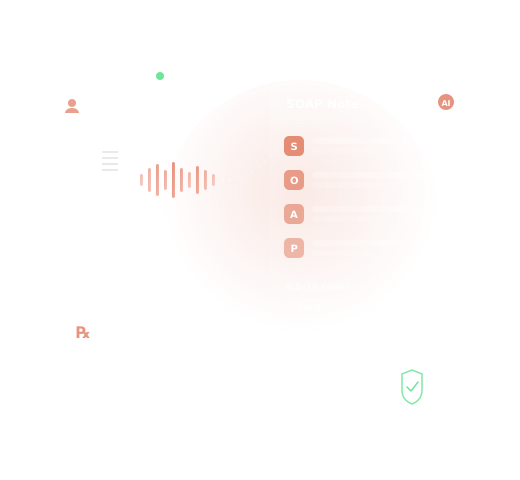
Automatic SOAP note generation: Draft SOAP notes are generated from the consultation, helping clinicians move from raw conversation to a usable clinical summary faster.
ICD-10 and CPT suggestions: Coding support is provided as suggestions to assist documentation and revenue-cycle workflows. These suggestions still require clinician or authorized staff review.
Multilingual support: In India, virtual consultations often involve English mixed with regional languages. Multilingual capability supports more natural documentation workflows in these settings.
On-premise or private deployment options: Some organizations prefer deployment models designed to align with internal governance, infrastructure, or data-handling preferences. This is a workflow and operational choice, not a compliance guarantee.
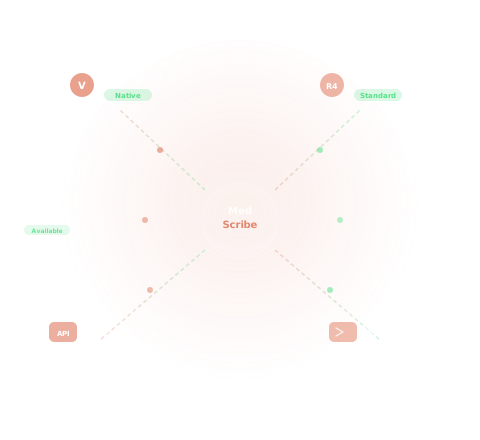
Integration-ready product structure: Related product areas for features, integrations, and pricing support implementation planning without overloading this page with generic platform detail.
How It Works
The workflow for this AI medical scribe in India is built around practical clinical documentation steps used in virtual care operations.
- Capture the consultation: During a teleconsult or command-center-managed interaction, the conversation audio is captured from the supported workflow. This may include doctor-patient dialogue in English or mixed-language conversations common in India healthcare settings.
- Transcribe and structure the encounter: The system converts speech to text and applies speaker diarization to separate participants. The transcript is then organized into clinically relevant segments so the encounter is easier to interpret than a raw transcript.
- Draft a SOAP note automatically: Using the structured conversation, the product prepares a draft SOAP note with subjective, objective, assessment, and plan sections. This gives the clinician a working note rather than a blank screen after the consultation.
- Add coding support: The platform surfaces ICD-10 and CPT suggestions based on the documented encounter. These are intended to support coding workflows and should be reviewed by the clinician or authorized team before use.
- Review, edit, and sign off: The clinician checks the draft note, makes edits, confirms accuracy, and finalizes the record. Human review is an operational checkpoint in the workflow, ensuring the final documentation reflects clinical judgment.
- Choose deployment posture for governance needs: Organizations can evaluate on-premise or private deployment approaches based on infrastructure, access control, and workflow preferences. This helps align the documentation process with internal governance decisions.
Local context
For provider organizations in India, virtual care documentation often has to support diverse patient populations, variable digital maturity, and mixed consultation formats. A practical AI medical scribe in India should therefore focus on day-to-day usability: multilingual conversations, quick note turnaround, and support for clinicians who need to review drafts efficiently between appointments.
In command-center environments, documentation quality also affects coordination. A clearer note can help with follow-up scheduling, specialist escalation, patient education, and continuity across remote and in-person care. The product is relevant for hospitals building centralized telehealth operations, specialty clinics running follow-up programs, and provider groups looking to standardize documentation across distributed teams.
The contextual need in India healthcare is not only speed, but consistency. An AI medical scribe India healthcare workflow is most effective when it supports clinicians without forcing major process changes. That is why the emphasis remains on reviewable drafts, coding assistance, and deployment flexibility.
Use cases
Tele-OPD documentation: Generate draft SOAP notes during or after virtual outpatient consultations so doctors can complete records faster.
Specialist follow-up clinics: Support repeat consultations where concise summaries and plan updates are needed across multiple touchpoints.
Chronic care management: Help command-center teams document recurring patient interactions and maintain clearer longitudinal notes.
Cross-location provider groups: Standardize note structure across clinicians working from different facilities or remote setups.
Revenue-cycle support: Provide coding suggestions that can be reviewed as part of documentation and billing preparation workflows.
Multilingual virtual consultations: Improve usability where patient conversations shift between English and regional languages.
FAQ
Can this be used only for telemedicine?
No. While it fits Virtual Care Command Center workflows well, it can also support documentation in hybrid and in-person consultation settings where conversation-based note drafting is useful.
Does the system finalize notes automatically?
No. The product prepares draft documentation and coding suggestions, but clinician review, edits, and final sign-off remain important workflow steps before the record is finalized.
Is multilingual support relevant for India healthcare teams?
Yes. Many consultations involve English mixed with regional languages. Multilingual support can make transcription and note drafting more practical in these settings.
What deployment options are available?
Organizations can evaluate deployment approaches such as on-premise or private environments based on infrastructure and governance preferences. These options are designed to align with operational needs.
CTA
If your team is evaluating an AI medical scribe in India for a Virtual Care Command Center, the next step is to assess fit against your consultation flow, review process, and deployment preferences. Explore the product, feature set, and integration pathways to see how documentation can move from conversation capture to clinician-reviewed notes with less manual effort. For hospitals and clinics seeking a practical AI medical scribe India healthcare solution, this approach supports faster documentation without removing clinician control.