Introduction
Healthcare teams need records that are easy to capture, easy to review, and practical for daily care delivery. EMR software in Agra can help clinics, nursing homes, and hospitals move from fragmented files and manual registers to structured digital workflows. For providers managing OPD visits, admissions, follow-ups, and discharge documentation, the goal is not just digitisation for its own sake. The real value comes from faster charting, clearer patient histories, better continuity of care, and more reliable operational visibility.
This EMR platform is designed for hospital and clinic workflows with structured patient records, OPD and IPD operations, implementation playbooks, and documentation practices aligned with Indian healthcare needs. It supports multilingual documentation, AI-assisted notes, and workflows designed to align with ABDM readiness where relevant. For organisations planning digital transformation in a measured way, the system supports practical adoption rather than forcing teams into a one-size-fits-all process.
Whether you run a specialty clinic, a multi-doctor practice, or a growing hospital, the focus is on making documentation usable at the point of care while supporting records governance aligned with principles referenced by ABDM and the NDHM Health Data Management Policy.
Department workflow
Although this page is not limited to one department, the workflow needs of most facilities in Agra follow a familiar pattern. A patient is registered, prior history is reviewed, the clinician documents symptoms and findings, orders or advice are recorded, and the patient is either discharged from OPD, scheduled for follow-up, or moved into IPD care. In many facilities, these steps are still split across paper files, spreadsheets, and messaging threads, which can slow down care and create avoidable gaps.
An EMR should support the full journey: front-desk registration, consultation notes, diagnosis and treatment documentation, admission records, progress notes, discharge summaries, and follow-up planning. For hospitals, this also means handling multiple users across reception, doctors, nursing teams, and administrators with role-based access. For clinics, it means reducing repeat data entry and making each visit easier to document than the last.
EMR software in Agra is especially useful where patient volumes fluctuate through the day and teams need a consistent process that works for both routine visits and more complex cases. Structured records help standardise documentation without removing clinical flexibility.
Features mapped to workflow
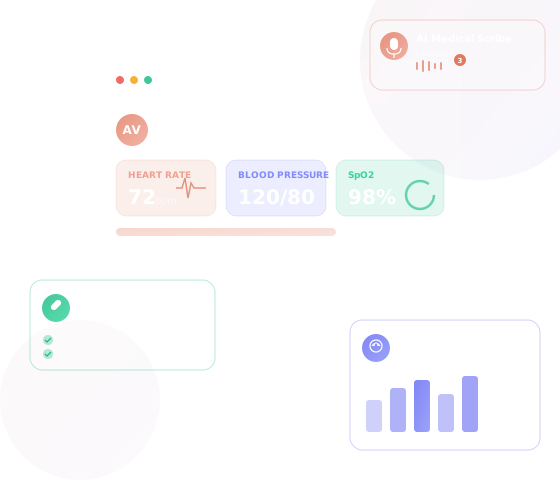
The product is built around common care delivery steps rather than isolated software modules. Structured patient records create a longitudinal chart so clinicians can review prior visits, medications, allergies, and treatment history in one place. OPD management supports appointment-linked consultations, visit documentation, and follow-up planning. IPD workflows support admission-related records, ongoing charting, and discharge documentation.
AI-assisted notes can help clinicians document faster by supporting draft note creation from consultation inputs, while still keeping the clinician in control of review and finalisation. Multilingual documentation is useful for teams that need flexibility in communication and record capture. Templates can be configured for common visit types, helping standardise charting for repeatable workflows such as general medicine reviews, chronic disease follow-ups, or post-procedure checks.
Role-based access matters across front office, doctors, nursing staff, and administrators. It helps ensure that users see and update the information relevant to their responsibilities. Policy-aware record controls support workflows aligned with privacy and consent-conscious documentation practices, without making unrealistic claims about automatic compliance. Reporting views can help management review operational patterns, documentation completeness, and workflow bottlenecks.
How It Works
The rollout approach is phased so teams can adopt the system with less disruption and clearer accountability.
- Set up intake and registration workflows: The implementation starts by configuring patient registration fields, visit types, clinician schedules, and front-desk intake steps. This creates a consistent process for new and returning patients, including demographic capture, visit reason, and basic history review before consultation begins.
- Build documentation templates for consultations and admissions: Next, the team sets up structured templates for OPD notes, admission records, progress notes, discharge summaries, and follow-up instructions. These templates support faster charting, more complete records, and easier review of patient history across visits.
- Enable consultation, charting, and care coordination: During live use, clinicians document symptoms, findings, assessments, and plans in the patient chart. AI-assisted notes can support draft creation, while multilingual documentation helps teams capture records in a practical format. Nursing and administrative users can update relevant workflow steps based on their roles.
- Support discharge, follow-up, and reporting: Once treatment is completed, the system helps teams prepare discharge summaries, record advice, and schedule follow-up visits. Structured data then supports internal reporting on visit trends, documentation status, and operational review.
- Audit access and optimise adoption: After go-live, administrators review usage patterns, template effectiveness, and access controls. Role-based permissions and record handling settings can be refined to support workflows aligned with privacy-conscious operations and evolving organisational needs.
Local context
Providers evaluating EMR software in Agra often need a system that works across different care settings, from single-location clinics to hospitals with OPD and IPD activity. Local operational realities may include mixed digital maturity, varying staff comfort with software, and the need to maintain continuity during implementation. That is why a practical rollout model matters as much as the feature list.
For Agra healthcare organisations, the right EMR should help reduce dependence on paper-heavy processes while still fitting existing clinical routines. It should also support internal navigation to broader product information such as core EMR capabilities, feature-specific workflows, and India-focused deployment considerations. A stable implementation approach is important because healthcare teams need predictable systems and published workflows they can train against over time.
EMR software in Agra should therefore be evaluated not only on screens and forms, but on how well it supports adoption, documentation quality, and day-to-day coordination between clinical and administrative teams.
Use cases
Common use cases include multi-doctor clinics that want a unified patient chart across repeat visits, hospitals that need better OPD to IPD continuity, and specialty practices that rely on structured follow-up documentation. A general practice can use the system to standardise consultation notes and revisit prior treatment plans quickly. A hospital can use it to connect registration, consultation, admission, progress notes, and discharge records in one workflow. A growing clinic group can use templates and role-based access to maintain consistency across users and locations.
Another important use case is improving documentation quality without overburdening clinicians. Structured templates and AI-assisted notes can reduce repetitive typing while preserving clinical review. For management teams, reporting can support operational oversight without requiring manual compilation from multiple registers. This makes EMR software in Agra relevant not just for digitising records, but for improving how care teams work together.
FAQ
What types of healthcare providers can use this EMR?
It is suitable for clinics, multi-specialty practices, nursing homes, and hospitals that need structured patient records and support for OPD or IPD workflows.
Does the software support Indian digital health initiatives?
The platform is designed to support workflows aligned with ABDM readiness and interoperable record practices where relevant, while organisations should evaluate their own operational and policy requirements.
Can teams use templates for faster documentation?
Yes. Consultation, admission, progress, discharge, and follow-up templates can help standardise charting and reduce repetitive manual entry.
How does access control work?
Role-based access helps assign appropriate visibility and editing rights to reception staff, clinicians, nursing teams, and administrators based on workflow responsibilities.
CTA
If you are comparing options for EMR software in Agra, focus on workflow fit, adoption support, and documentation quality. A practical EMR should help your team capture better records, manage OPD and IPD processes more consistently, and build a stronger foundation for digital care delivery. Review the core EMR platform, explore feature-specific workflows, and assess how the system can be introduced in phases for your clinic or hospital in Agra.