Introduction
Healthcare teams need records that are easy to capture, easy to review, and reliable across daily operations. EMR software in Chennai can help clinics and hospitals move from scattered notes, paper files, and disconnected systems to a more structured digital workflow. For providers managing consultations, repeat visits, admissions, discharge summaries, and follow-up communication, an EMR should support the way care is actually delivered rather than forcing teams into rigid processes.
This EMR platform is designed for hospital and clinic workflows with structured patient records, OPD and IPD operations, implementation playbooks, and documentation practices aligned with Indian healthcare needs. It supports clear charting, multilingual documentation, AI-assisted notes, and role-based access so doctors, nurses, front-desk staff, and administrators can work from the same patient record with appropriate controls. It is also designed to align with interoperability goals discussed under ABDM, where relevant to digital health record workflows.
For organizations evaluating EMR software in Chennai, the priority is usually practical adoption: faster registration, better consultation notes, consistent documentation, easier retrieval of history, and smoother reporting. The value comes from reducing friction in everyday care delivery while keeping records organized for future visits and internal review.
Department workflow
Even without limiting the system to a single specialty, the workflow pattern is familiar across many Chennai healthcare settings. A patient first arrives for registration or appointment confirmation. Demographic details, identifiers, visit reason, and prior history are captured. During consultation, the clinician reviews previous encounters, documents symptoms, findings, diagnosis, investigations, medications, and care plans. If the patient is admitted, the record extends into IPD workflows such as progress notes, treatment updates, discharge planning, and follow-up instructions.
An effective EMR supports this journey from front desk to consultation room to inpatient care and back to follow-up. It helps standardize documentation without removing clinical flexibility. For hospitals, this means better continuity between departments. For clinics, it means less time searching for old files and more time focused on patient care. In a busy city environment, where providers often manage high patient volumes and repeat visits, EMR software in Chennai should make routine tasks simpler, not more complex.
Features mapped to workflow
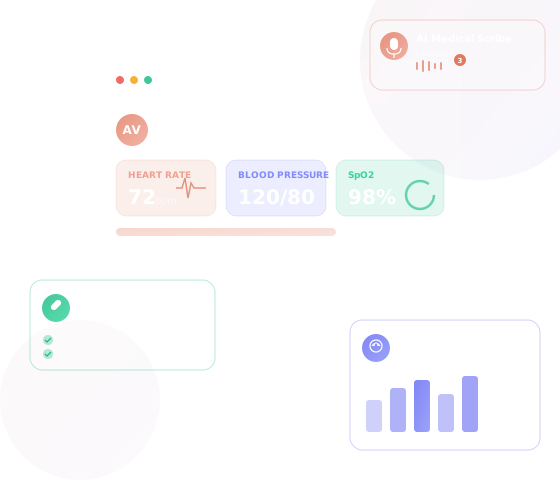
Structured patient records: Centralized digital charts help teams view demographics, visit history, diagnoses, prescriptions, notes, and follow-up plans in one place. This supports continuity across OPD and IPD interactions.
OPD management: Consultation workflows can be organized around appointments, walk-ins, queue handling, encounter notes, and follow-up scheduling. This is useful for clinics that need a predictable process from registration to doctor review.
IPD documentation support: For hospitals, the EMR can support admission-linked records, progress notes, discharge summaries, and care transitions so inpatient documentation remains connected to the broader patient history.
AI-assisted notes: Clinicians can use assisted documentation features to speed up note creation while still reviewing and finalizing the clinical record. This can help reduce repetitive typing during busy OPD sessions.
Multilingual documentation: Teams serving diverse patient populations may need flexibility in how information is captured and communicated. Multilingual support can improve usability for staff and clarity in records.
Role-based access: Different users need different levels of visibility and editing rights. Role-based controls support workflows aligned with privacy and operational governance, especially when multiple teams access the same record.
ABDM/ABHA readiness: Where organizations are planning for interoperable digital health workflows, the platform is designed with readiness in mind rather than making blanket compliance claims. This is relevant for providers thinking ahead about connected health record ecosystems in India.
How It Works
The rollout approach for EMR software in Chennai should be phased so teams can adopt it without disrupting care delivery. A practical implementation usually follows these steps:
- Set up intake and registration workflows: Start by configuring patient registration fields, visit types, identifiers, and front-desk processes. This creates a consistent intake flow for new and returning patients and ensures the patient chart begins with structured data rather than free-text fragments.
- Build consultation and charting templates: Configure documentation templates for consultations, clinical notes, diagnoses, prescriptions, investigations, and follow-up plans. For hospitals, extend this to admission notes, progress updates, and discharge summaries. AI-assisted notes can support faster drafting, while clinicians retain control over final entries.
- Enable team roles and access controls: Assign access by role so reception, doctors, nursing staff, and administrators see the information relevant to their work. This matters when handling sensitive records and supports workflows aligned with privacy-conscious documentation practices, including consent-aware handling principles often discussed in Indian digital health policy guidance.
- Train teams during live workflow adoption: Move from pilot use to daily operations by training staff on registration, consultation charting, medication documentation, discharge workflows, and follow-up scheduling. The goal is to make the EMR part of routine care rather than an extra administrative layer.
- Review records, reporting, and optimization: After go-live, audit documentation quality, turnaround time, template usage, and reporting needs. Refine templates, improve data capture consistency, and adjust workflows for OPD and IPD teams so the system continues to fit real clinical operations.
Local context
Chennai providers often balance high outpatient demand, specialist referrals, repeat visits, and growing expectations for digital coordination. In this environment, EMR software in Chennai should help teams retrieve history quickly, maintain consistent records across encounters, and reduce dependency on paper-heavy processes. Clinics may prioritize faster consultation documentation and follow-up tracking, while hospitals may need stronger support for admission-linked records and cross-team visibility.
Local adoption decisions are also shaped by practical concerns such as staff training, multilingual use, phased implementation, and readiness for evolving digital health frameworks in India. For organizations planning future interoperability, it is useful to choose a system designed to align with ABDM-oriented record workflows without assuming one-size-fits-all deployment requirements.
Use cases
Multi-doctor clinics: Maintain a shared patient history across repeat visits, reduce duplicate data entry, and standardize consultation notes.
Single-specialty hospitals: Connect OPD consultations with IPD admissions, progress notes, discharge summaries, and follow-up plans in one record structure.
General hospitals: Support multiple user roles, department handoffs, and documentation consistency across varied care settings.
Growing practices: Replace fragmented paper files and spreadsheets with a more organized digital record system that can scale with patient volume.
Providers planning digital readiness: Use structured records and controlled access as a foundation for future interoperability and better internal reporting.
FAQ
Is this EMR suitable for both clinics and hospitals?
Yes. The platform is built to support clinic consultations as well as hospital workflows, including structured records, OPD processes, and IPD-related documentation.
Can the EMR support multilingual documentation?
Yes. Multilingual documentation support can help teams capture and review records in ways that fit their operational needs and patient communication context.
Does it support Indian digital health initiatives?
The system is designed to align with relevant digital health workflows in India, including ABDM-oriented interoperability readiness, where applicable. It should not be treated as a blanket certification claim.
How long does implementation usually take?
Implementation timelines vary by organization size, workflow complexity, and training needs. A phased rollout is generally the most practical approach for stable adoption.
Why choose EMR software Chennai healthcare teams can actually use daily?
The right system should fit real registration, consultation, charting, discharge, and follow-up workflows. Usability, structured records, and team adoption matter more than feature lists alone.
CTA
If you are comparing options for EMR software in Chennai, focus on workflow fit, documentation quality, and ease of adoption. A practical EMR should support clinics and hospitals with structured records, OPD/IPD continuity, and implementation guidance that helps teams transition smoothly. Explore the product, review features, and assess how it can support your Chennai healthcare operations with a phased, workflow-first approach.