Introduction
Healthcare teams need digital systems that reduce paperwork without disrupting patient care. EMR software in Thane can help clinics, multispecialty centres, and hospitals move from scattered files and manual registers to structured, searchable records. For providers managing busy OPD schedules, admissions, follow-ups, and internal coordination, an EMR should support day-to-day clinical work rather than add extra clicks.
This page explains how EMR software supports registration, consultation, charting, discharge planning, and reporting in a practical way. The focus is on reusable product value for Indian healthcare settings, with local relevance for providers in Thane who want better visibility into patient history, documentation consistency, and team workflows. The platform is designed for structured patient records, OPD and IPD operations, multilingual documentation, and policy-aware record handling. It is also designed to align with evolving digital health workflows in India, including ABDM-oriented interoperability readiness where relevant.
Whether you run a single clinic or a growing hospital unit, the goal is simple: make records easier to capture, easier to review, and easier to use across the care journey.
Department workflow
Even without a department-specific setup, most providers follow a repeatable care path. A patient is registered, prior history is reviewed, consultation notes are captured, orders or care plans are documented, and the patient is either scheduled for follow-up or moved into admission and discharge workflows. In many facilities, these steps are still split across paper files, spreadsheets, and messaging groups, which creates delays and incomplete records.
EMR software in Thane is most useful when it mirrors this real workflow. Front-desk teams need fast registration and visit creation. Doctors need structured charting with room for narrative notes. Nursing and support staff need visibility into active encounters. Administrators need reporting that reflects actual operations rather than manually compiled summaries. A well-designed EMR helps connect these touchpoints so the patient record remains consistent from first visit to follow-up.
For hospitals and larger clinics in Thane, workflow support also matters because patient volumes can vary by day, specialty, and season. A digital record system should help teams standardize documentation while still allowing flexibility for different consultation styles and care pathways.
Features mapped to workflow
The value of an EMR becomes clearer when features are tied directly to clinical tasks:
- Structured patient records: Centralized demographics, visit history, diagnoses, notes, and treatment plans in one longitudinal chart.
- OPD management: Visit creation, queue visibility, consultation documentation, and follow-up planning for outpatient care.
- IPD support: Admission-linked records, progress documentation, discharge summaries, and continuity across inpatient episodes.
- AI-assisted notes: Helps clinicians draft or organize consultation notes faster while preserving the need for clinical review and final approval.
- Multilingual documentation: Useful for teams that document in English while communicating with patients in multiple languages common across urban Maharashtra.
- Role-based access: Supports workflows aligned with privacy and operational control by limiting who can view, edit, or approve different parts of the record.
- Reporting and audit visibility: Helps administrators review documentation completeness, visit trends, and operational bottlenecks.
These capabilities make EMR software in Thane relevant not only for digitization, but for improving consistency across front office, clinicians, and management teams.
How It Works
The rollout of an EMR works best in phases so teams can adopt it without interrupting care delivery. A practical implementation usually follows these steps:
- Set up intake and registration workflows: Start by configuring patient registration fields, visit types, clinician schedules, and OPD/IPD intake flows. This creates a consistent base for demographics, encounter creation, and patient identification across the facility.
- Build documentation templates for consultations and admissions: Configure structured templates for history, examination, assessment, treatment plans, progress notes, discharge summaries, and follow-up instructions. This helps doctors and care teams chart faster while keeping records standardized and searchable.
- Enable role-based access and record controls: Assign permissions for reception, doctors, nursing staff, and administrators. This supports workflows aligned with privacy, consent-aware handling, and internal accountability without claiming any legal certification. It is especially useful when multiple users contribute to the same patient journey.
- Train teams on live clinical use: Front-desk staff learn registration and appointment-linked visit creation. Clinicians use structured charting and AI-assisted note support during consultation. Inpatient teams document progress and discharge steps. Follow-up scheduling and record retrieval become part of the routine workflow.
- Review audit trails and optimize reporting: After go-live, administrators and implementation teams review documentation completeness, turnaround times, and usage patterns. Templates, access rules, and reports are then refined to better match actual operations in clinics or hospitals.
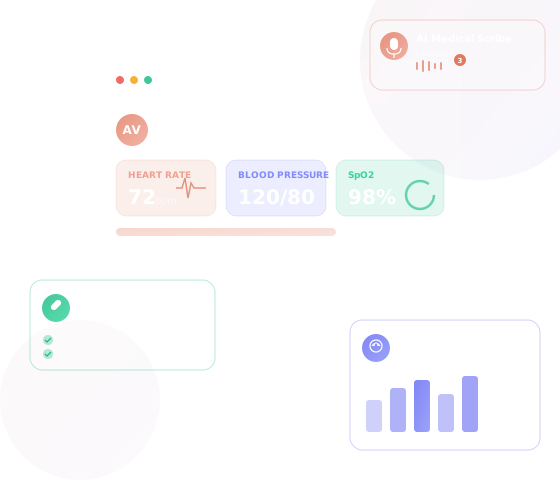

This phased approach is why many providers evaluating EMR software in Thane prefer implementation playbooks over one-time setup. The system should fit the care process first, then expand into reporting, optimization, and interoperability-oriented workflows.
Local context
Thane has a mix of independent clinics, specialty centres, day-care facilities, and hospitals serving both local residents and patients commuting from nearby urban areas. In such settings, patient continuity can be difficult when records are fragmented or when repeat visits depend on paper files being available at the right time. A digital system helps teams retrieve prior notes quickly, maintain cleaner follow-up records, and reduce dependence on manual handovers.
For providers exploring EMR software in Thane, local practicality matters more than generic software promises. Teams often need a system that can support high-volume OPD days, recurring chronic care visits, and inpatient documentation without forcing every user into the same rigid workflow. They may also want documentation practices designed to align with broader Indian digital health directions such as ABDM readiness, while keeping implementation grounded in current operational needs.
This is where EMR software Thane healthcare buyers typically look for a balance between structured records, ease of adoption, and room to scale as the organization grows.
Use cases
- Single-doctor or group clinics: Maintain visit history, document consultations consistently, and plan follow-ups without relying on paper files.
- Multispecialty outpatient centres: Standardize records across clinicians while preserving specialty-specific templates and note styles.
- Hospitals managing OPD and IPD: Connect outpatient consultations with admissions, progress notes, discharge documentation, and future visits.
- Facilities with repeat chronic care patients: Review longitudinal history quickly for diabetes, hypertension, respiratory, or other ongoing care pathways.
- Growing organizations: Use implementation playbooks, role-based access, and reporting to support team expansion and process maturity.
These use cases show why EMR software in Thane is not only about replacing paper, but about making clinical information more usable across the full care cycle.
FAQ
Is EMR software suitable for both clinics and hospitals?
Yes. The same core platform can support outpatient documentation, structured patient history, and broader hospital workflows such as admissions, progress notes, and discharge summaries, depending on configuration.
Can the system support Indian digital health workflows?
It is designed to align with Indian healthcare digitization needs, including ABDM-oriented readiness and workflows aligned with health data governance principles where relevant. Actual implementation depends on your operational setup and integration scope.
How long does adoption usually take?
Adoption depends on facility size, number of users, and how many workflows are being digitized first. Many organizations begin with registration and consultation documentation, then expand to inpatient and reporting workflows in phases.
Does it help with multilingual teams?
Yes. Multilingual documentation support can help teams work more comfortably in diverse care environments while keeping records structured and clinically useful.
What should providers evaluate before choosing an EMR?
Look at workflow fit, template flexibility, role-based access, reporting, implementation support, and how easily the system can scale from current needs to future operational requirements.
CTA
If you are comparing options for EMR software in Thane, focus on how well the platform supports real clinical work: registration, consultation, charting, discharge, follow-up, and reporting. A practical EMR should help your team document faster, retrieve records easily, and standardize care workflows without unnecessary complexity.
Explore the product pathways for hospitals, doctors, and feature-level requirements to see how the system can fit your setup. For clinics and hospitals in Thane, the right EMR is one that supports daily operations today and gives you a structured foundation for future digital health workflows.