Introduction
Healthcare teams need digital systems that support daily care without adding unnecessary complexity. EMR software in Singapore is increasingly evaluated not just for record keeping, but for how well it supports registration, consultation, charting, follow-up, and operational visibility across clinics and hospitals. A practical EMR should help teams move from fragmented notes and disconnected processes to structured patient records, clearer workflows, and more consistent documentation.
This EMR platform is designed for hospital and clinic environments that want structured records, OPD and IPD workflow support, implementation playbooks, and documentation practices aligned with operational and policy needs. It supports teams that want better continuity of care, easier retrieval of patient history, and a more organized way to manage encounters across departments and care settings. For organizations reviewing EMR software in Singapore, the focus is often on usability, role-based access, and documentation controls that are designed to align with privacy expectations under frameworks such as the PDPA.
The product approach is practical: standardize intake, structure clinical notes, support multilingual documentation where needed, and make records easier to review over time. That makes it relevant for specialist clinics, multispecialty centers, day-care facilities, and hospitals looking for a scalable digital record foundation.
Department workflow
Although this page is not limited to one specialty, the workflow needs are familiar across most care settings. Front-desk teams need fast registration and patient lookup. Clinicians need a clear consultation view with history, complaints, assessments, and plans in one place. Nursing and support teams need visibility into orders, progress notes, and follow-up instructions. Administrators need reporting that reflects actual activity without relying on manual consolidation.
In outpatient settings, the workflow usually starts with registration, appointment confirmation, and demographic capture. During consultation, clinicians document symptoms, findings, diagnoses, medications, and care plans. After the visit, the team may generate prescriptions, follow-up instructions, referral notes, or revisit reminders. In inpatient or extended-care workflows, the record must also support admission details, progress documentation, discharge summaries, and continuity across shifts.
EMR software in Singapore should therefore do more than store notes. It should support a repeatable workflow that reduces missing information, improves handoffs, and keeps patient history accessible in a structured format. For organizations with multiple users and locations, consistency in templates and access controls becomes especially important.
Features mapped to workflow
The value of an EMR is strongest when features map directly to real clinical operations. Structured patient records help teams capture demographics, visit history, diagnoses, medications, allergies, and treatment plans in a format that is easier to search and review. OPD management capabilities support day-to-day outpatient flow, while IPD-oriented documentation helps teams maintain continuity for admitted patients or longer episodes of care.
AI-assisted notes can help clinicians draft documentation faster from structured inputs, while still allowing review and editing before finalization. Multilingual documentation support is useful in settings where teams serve diverse patient populations or where staff workflows benefit from flexible language handling. Role-based access helps ensure that reception, nursing, doctors, and administrators each see the information relevant to their responsibilities.
Implementation playbooks are also important. Many clinics do not struggle because software lacks features; they struggle because rollout is inconsistent. A guided implementation approach helps teams define templates, standardize note structures, train users, and review adoption patterns. For buyers comparing EMR software in Singapore, this operational layer often matters as much as the software itself.
Additional value comes from reporting and audit visibility. When records are structured, organizations can review encounter trends, documentation completeness, and workflow bottlenecks more easily. This supports internal quality improvement and more reliable operational oversight without claiming any guaranteed compliance outcome.
How It Works
The rollout model is designed as a phased workflow so clinics and hospitals can move from setup to stable adoption with less disruption.
- Configure intake and registration workflows: Start by defining patient registration fields, visit types, and front-desk intake steps. This creates a consistent foundation for demographic capture, appointment-linked visits, and patient lookup so records begin cleanly from the first touchpoint.
- Set up documentation templates for consultations and admissions: Build structured templates for common encounters, including history, examination, assessment, plan, medication notes, and follow-up instructions. For hospitals or facilities with longer episodes of care, teams can also configure admission, progress, and discharge documentation flows.
- Enable charting, notes, and role-based access: Clinicians document consultations in structured records, supported by AI-assisted notes and multilingual documentation where appropriate. Role-based access controls help limit who can view, edit, or finalize different parts of the chart, supporting workflows aligned with internal privacy and governance practices.
- Train teams across consultation and follow-up workflows: Reception teams learn registration and scheduling-linked intake, clinicians adopt charting templates, and care teams standardize discharge or follow-up documentation. This step is where implementation playbooks matter most, because adoption depends on repeatable habits rather than one-time setup.
- Review reporting, audit trails, and optimization opportunities: Once live, administrators and clinical leads can review documentation patterns, reporting outputs, and workflow gaps. Templates, permissions, and note structures can then be refined to improve consistency, retrieval, and operational visibility over time.
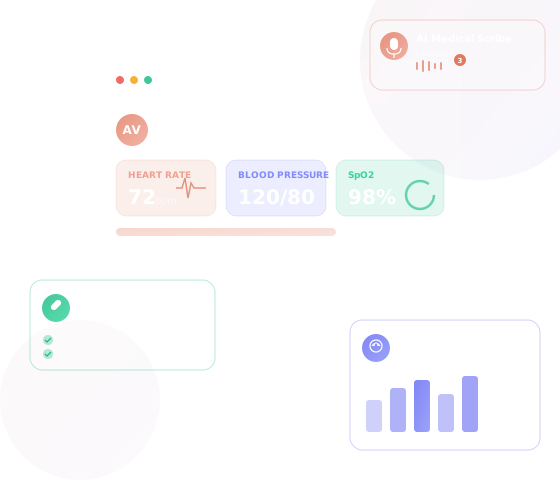

This phased approach makes EMR software in Singapore more practical to adopt because it connects software configuration to actual clinical actions: registration, consultation, charting, discharge, follow-up, and reporting.
Local context
Healthcare providers in Singapore often evaluate digital systems with close attention to privacy, operational discipline, and long-term maintainability. That means an EMR should support clear data governance practices, controlled access, and reliable documentation workflows. In this context, systems are often expected to align with baseline privacy considerations under the Personal Data Protection Act (PDPA), especially around collection, use, disclosure, and protection of personal data.
For local providers, the practical question is not only whether a system has the right modules, but whether it fits the pace of care delivery. Clinics may prioritize quick consultation documentation and follow-up management, while hospitals may need stronger support for multi-user coordination, structured inpatient records, and implementation planning across teams. EMR software in Singapore should therefore be assessed for workflow fit, documentation quality, and ease of controlled rollout rather than feature lists alone.
Use cases
This EMR is suitable for single-location clinics that want to move from paper or basic digital notes to structured records. It also fits multispecialty practices that need standardized templates across doctors while preserving flexibility for different consultation styles. Hospitals and larger care facilities can use it to support OPD and IPD documentation, improve record continuity, and create a more consistent framework for admissions, progress notes, and discharge summaries.
Another common use case is organizations that want better visibility into patient history across repeat visits. When records are structured, clinicians can review prior complaints, diagnoses, medications, and plans more efficiently. This is especially useful in chronic care, follow-up-heavy specialties, and settings where multiple providers contribute to the same patient journey.
Teams comparing EMR software in Singapore may also value multilingual documentation support, AI-assisted note drafting, and implementation guidance that helps users adopt the system in phases rather than all at once. These capabilities can reduce friction during transition and improve consistency in day-to-day use.
FAQ
Is this EMR suitable for both clinics and hospitals?
Yes. The platform is designed for clinic and hospital workflows, with support for structured records, outpatient documentation, and inpatient-oriented processes such as progress and discharge documentation.
Can the system support different user roles?
Yes. Role-based access is part of the workflow design so reception, clinicians, nursing teams, and administrators can work within permissions aligned with their responsibilities.
Does it help with documentation standardization?
Yes. Structured templates and implementation playbooks help teams standardize consultation notes, follow-up records, and other recurring documentation patterns.
How should providers evaluate EMR software Singapore healthcare needs?
Providers should review workflow fit, ease of adoption, record structure, reporting visibility, and whether the system supports documentation and access controls aligned with internal governance and PDPA-aware practices.
CTA
If your organization is reviewing EMR software in Singapore, the next step is to assess how the platform fits your actual care workflow. Map your intake process, consultation style, charting needs, follow-up steps, and reporting expectations, then evaluate whether the EMR supports those actions in a structured and scalable way. A practical rollout plan, clear templates, and role-based controls can make the difference between software that is merely installed and software that is consistently used.
Explore the platform for clinics and hospitals that want structured records, better workflow continuity, and a more organized foundation for digital care delivery.