Introduction
Andrology care depends on clear documentation, longitudinal follow-up, and coordinated clinical workflows across consultation, diagnostics, treatment planning, and review visits. For clinics and hospitals looking for EMR software in India, the priority is usually not just digitisation, but a system that helps teams capture structured records, reduce fragmented notes, and support consistent patient journeys. In andrology, where concerns may include fertility evaluation, sexual health, hormonal assessment, and procedure-linked follow-up, a well-designed EMR can help clinicians document sensitive information with more clarity and control.
This page outlines how EMR software can support andrology departments in India with practical workflow design, structured charting, OPD operations, and policy-aware record handling. The focus is on reusable product value for healthcare organisations that want better visibility into patient history, smoother handoffs between staff, and documentation processes designed to align with Indian healthcare workflows. Rather than promising shortcuts, the goal is to support better day-to-day operations for doctors, nurses, front-desk teams, and administrators.
Department workflow
Andrology workflows often begin with registration and referral capture, followed by consultation, examination notes, lab or imaging review, treatment planning, counselling, and follow-up scheduling. In many settings, these steps are spread across paper files, messaging threads, and disconnected software. That creates delays when clinicians need prior history, medication records, semen analysis trends, hormonal workup details, or procedure notes during a review visit.
An EMR built for hospital and clinic operations helps centralise these touchpoints into one structured record. Front-desk teams can capture demographics and visit context. Clinicians can document presenting complaints, reproductive history, examination findings, assessment, and plan in a consistent format. Follow-up visits can then build on prior notes instead of restarting from scratch. For andrology departments, this is especially useful when care involves repeated counselling, staged treatment decisions, or coordination with urology, endocrinology, fertility, or laboratory teams.
For organisations evaluating EMR software in India, the operational benefit is often strongest when the system supports both standard OPD flow and department-specific documentation depth. That means the software should help with appointment-linked records, structured charting, multilingual documentation where needed, and reporting views that make clinical and administrative review easier.
Features mapped to workflow
Structured patient records: A unified chart helps teams view demographics, visit history, complaints, diagnoses, medications, investigations, and follow-up plans in one place. In andrology, this supports continuity across sensitive and often longitudinal cases.
OPD management support: Consultation queues, visit documentation, and follow-up scheduling can be aligned to outpatient workflows. This is useful for high-volume clinics where repeat visits and counselling sessions are common.
AI-assisted notes: Clinicians often need to document detailed histories while maintaining consultation flow. AI-assisted note support can help speed up draft creation, while the doctor remains responsible for review and final sign-off.
Multilingual documentation: In India, patient communication and internal documentation may involve more than one language. Multilingual support can help teams work more comfortably while preserving structured records.
Role-based access: Sensitive andrology records may require tighter visibility controls. Role-based access helps define who can view, edit, or manage specific parts of the record based on operational responsibility.
Implementation playbooks: Adoption matters as much as features. A phased rollout with templates, training, and review checkpoints helps clinics move from paper or fragmented systems to more reliable digital workflows.
Reporting and review: Department leads often need visibility into visit volumes, follow-up patterns, documentation completeness, and operational bottlenecks. Reporting tools support internal review without changing clinical intent.
These capabilities make EMR software in India more useful when it is mapped to actual care delivery rather than treated as a generic record repository.
How It Works
The rollout of an andrology-focused EMR works best in phases, starting with intake and moving toward documentation quality, team adoption, and ongoing optimisation.
- Set up intake and registration workflows: Configure patient registration fields, referral source capture, appointment types, and OPD visit flows. Front-desk staff can begin each encounter with consistent demographic and visit data, reducing duplicate entry and improving chart availability for consultation.
- Build consultation and charting templates: Create structured templates for history taking, examination findings, assessment, treatment plans, counselling notes, and follow-up instructions. This helps doctors document common andrology scenarios more consistently while keeping room for narrative detail where needed.
- Enable consultation-day documentation: During the visit, clinicians can review prior records, add AI-assisted notes, update medications, attach investigation summaries, and record next steps. This supports smoother charting for registration, consultation, and follow-up planning in one workflow.
- Coordinate discharge and follow-up actions: After the consultation or procedure-linked visit, teams can record advice, prescriptions, review timelines, and discharge or follow-up instructions. This is especially useful for staged treatment plans and repeat counselling visits.
- Train teams with role-based access and controls: Doctors, nurses, coordinators, and administrators can be assigned access based on their role. This supports workflows aligned with privacy-conscious record handling without making unsupported compliance claims.
- Audit usage and optimise reporting: Once live, the department can review documentation completeness, follow-up capture, and operational reporting. Templates and workflows can then be refined to improve adoption and reduce missed information over time.
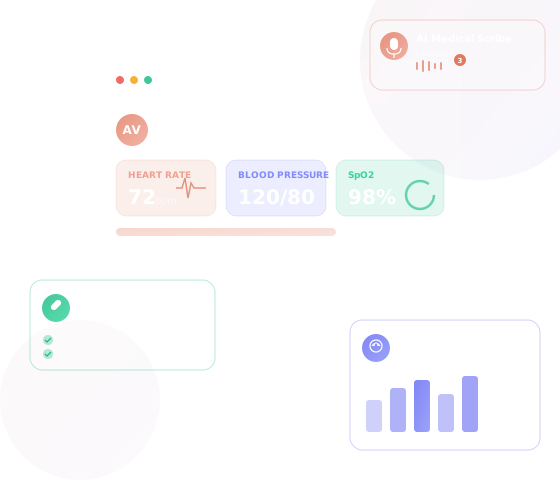
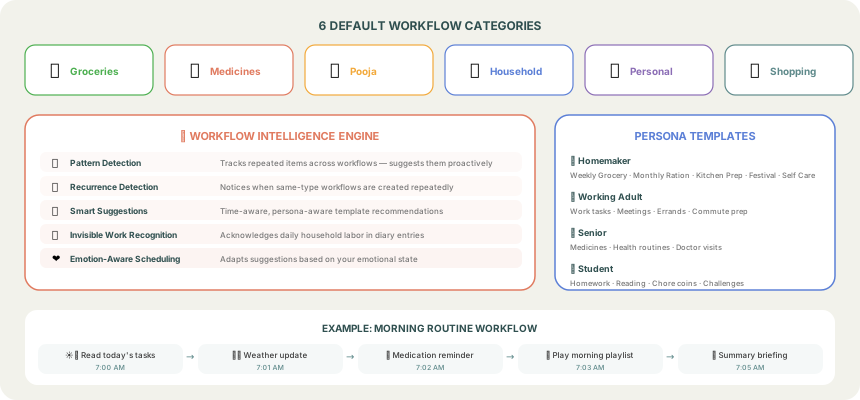
This approach reflects how healthcare teams typically adopt EMR software in India: start with core workflows, standardise documentation, train users by role, and then improve reporting and operational consistency.
Local context
Healthcare organisations in India often need software that fits mixed operational realities: busy OPDs, variable documentation habits, multilingual communication, and growing expectations around digital records. For andrology departments, this can be even more important because patients may return over multiple visits for counselling, investigations, treatment review, and outcome tracking.
When evaluating EMR software in India, clinics and hospitals usually benefit from a system designed for Indian healthcare workflows rather than a generic note-taking tool. Features such as ABHA readiness, structured records, and implementation support can help teams move toward more standardised digital operations. At the same time, organisations should look for software that supports workflows aligned with internal policies and documentation practices, especially where sensitive records and role-based access are important.
The broader need in EMR software India healthcare settings is practical usability: software that clinicians will actually use, staff can learn without excessive friction, and administrators can review for operational improvement.
Use cases
Standalone andrology clinics: Manage repeat consultations, structured histories, medication tracking, and follow-up scheduling in one chart.
Multi-specialty hospitals: Support coordination between andrology, urology, endocrinology, fertility, and laboratory teams through a shared patient record.
Doctor-led specialty practices: Use templates and AI-assisted notes to reduce documentation burden while preserving clinical review and control.
High-volume OPD settings: Standardise registration, consultation notes, and review workflows to improve consistency across staff shifts and providers.
Growing healthcare groups: Use implementation playbooks and stable workflow design to roll out digital records across locations with less variation in documentation quality.
FAQ
Can this EMR support sensitive andrology records?
Yes. Structured records and role-based access can help teams manage sensitive documentation more carefully, with access aligned to operational responsibilities.
Is it suitable for both clinics and hospitals?
Yes. The workflow model supports outpatient consultations and broader hospital operations, including structured charting, follow-up planning, and reporting.
Does it help with repeat visits and long-term follow-up?
Yes. A longitudinal patient record makes it easier to review prior notes, investigations, medications, and treatment plans during follow-up consultations.
Can teams use templates for andrology consultations?
Yes. Documentation templates can be configured to support common consultation patterns, helping improve consistency without removing clinician judgment.
How should a department start implementation?
A phased rollout usually works best: begin with intake and registration, standardise consultation templates, train staff by role, and then review usage and reporting for optimisation.
CTA
If your organisation is comparing options for EMR software in India, start by assessing how well the platform fits your andrology workflow from registration to follow-up. Look for structured records, OPD support, practical implementation guidance, and controls that support policy-aware documentation. A well-planned EMR rollout can help clinics and hospitals improve continuity, reduce fragmented records, and create a more dependable digital foundation for specialty care.
Explore the product, feature, and India-specific EMR pathways to evaluate whether the workflow design matches your department’s operational needs.